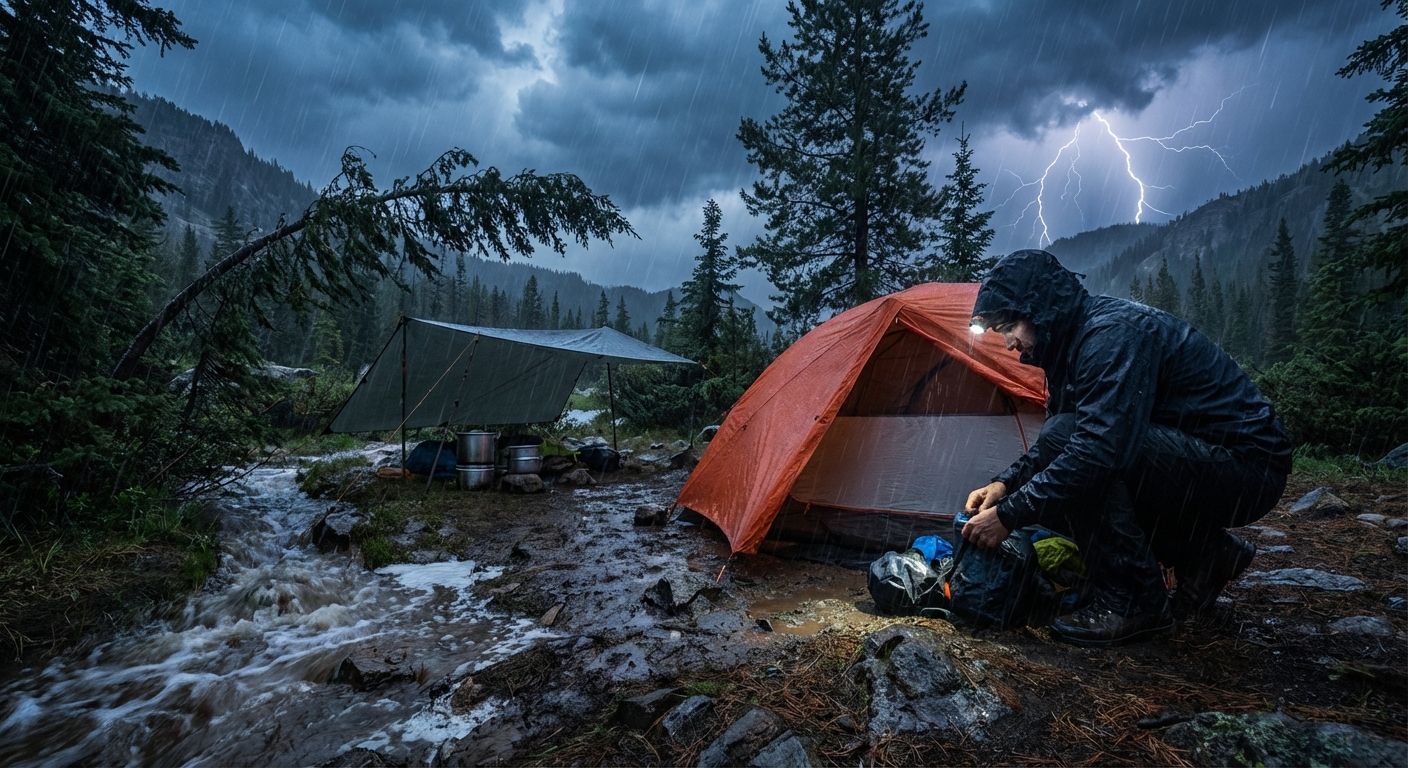
How to survive a storm while camping begins long before the first drop of rain. With the right planning, gear, and situational awareness you can dramatically reduce risks from lightning, flash floods, high winds and hypothermia. This guide explains practical steps for storm survival at the campsite, focused on prevention, safe responses and recovery.
Why planning matters: the foundation of storm safety
Many dangerous outcomes are avoidable with basic preparation. Before you leave, check forecasts from reliable sources like the National Weather Service and local mountain weather reports. Understand the difference between a thunderstorm, severe thunderstorm, and flash flood watch or warning.
Key planning actions
- Monitor weather frequently in the 72 hours before your trip and set alerts on your phone.
- Plan alternate routes and campsites higher and away from flood-prone terrain.
- Share your itinerary and expected return time with a trusted contact.
- Pack essential storm gear (detailed checklist below).
Essential gear for surviving storms
Good gear reduces exposure and helps you respond to emergencies. Prioritize items that protect from water, cold, lightning risks and allow communication.
Must-have items
- Waterproof shelter (tarp + repair kit or a reliable tent with a full rainfly)
- Quality rain jacket and rain pants (breathable, rated for multi-day use)
- Insulating layers to prevent hypothermia when wet (fleece, synthetic puffy)
- Reliable sleeping system with a waterproof stuff sack for the bag
- Headlamp and spare batteries, lighter and waterproof matches
- Portable weather radio or a phone with NOAA alerts
- Emergency shelter options: bivy sack, emergency blanket, and cordage
Consider carrying a compact shovel (to dig drainage trenches), an inflatable sleeping pad (adds insulation when wet), and a small first-aid kit including materials for treating cuts and hypothermia.
Site selection: avoid risk before the storm arrives
Choosing the right campsite is one of the most important preventive actions. Even a sturdy tent can fail in a bad location.
Where not to camp
- In dry creek beds, gullies or depressions that can become flash flood channels.
- Under isolated tall trees or lone dead trees (strike risk from lightning or falling limbs).
- On ridge tops during lightning-prone storms—remove yourself from the highest point.
Safer campsite choices
- On gentle slopes above potential flood lines, with natural wind protection from multiple directions.
- Near dense, healthy tree stands (not single tall trees) that can break wind into lower speeds.
- On firm ground with good drainage; avoid saturated ground where staking is difficult.
Recognizing storm risks and warning signs
Learning to read the sky and environment helps you react in time. Combine observation with forecast data.
Natural warning signs
- Rapidly darkening skies and a deepening cloud base.
- Sudden temperature drops and rising winds.
- Distant thunder that becomes progressively closer and louder.
- Water beginning to rise in nearby streams or channels.
How to survive a storm: immediate actions when it starts
When a storm arrives, move quickly but deliberately. Prioritize life-threatening risks: lightning, flooding, and exposure.
Lightning safety
Lightning is one of the most dangerous and unpredictable storm hazards. If you hear thunder, you are at risk. Follow these steps:
- Time the thunder: if the gap between lightning and thunder is under 30 seconds, a lightning strike is within 6 miles—move to safer shelter immediately.
- Avoid open areas and isolated high points. Move to a cluster of low trees or a valley, not under a single tall tree.
- Use the lightning crouch only as a last resort if no shelter exists: feet together, squat low, minimize contact with the ground and avoid touching metal objects.
- Stay inside hard-topped vehicles if available; vehicles are often safer than tents during lightning storms.
For authoritative lightning guidance see the NOAA Lightning Safety resources.
Flood and water surge response
- Evacuate low ground immediately if water begins to rise or if heavy rain intensifies rapidly.
- Move to higher ground and avoid crossing moving water; a few inches of fast-moving water can sweep a person away.
- Protect gear and food by moving them to higher points or sealing in waterproof bags.
Wind and structural threats
High winds can collapse tents or turn debris into hazards. Reinforce shelter and reduce sail area early.
- Lower guylines and secure all stakes; use rocks to anchor additional points if the ground is too soft.
- Face the narrowest tent profile into prevailing winds and sit on the leeward side to reduce wind exposure.
- Abandon tent if it’s unsafe—seek low, sheltered terrain or a constructed shelter; don’t stay inside a tent that could be crushed.
Survival priorities during extended storms
When storms last for hours or days, focus on shelter, warmth, hydration, and communication.
- Prevent hypothermia: change out of wet clothes immediately, insulate from the ground and eat high-energy food.
- Maintain hydration: collect rainwater safely (boil or treat) if potable supplies run low.
- Preserve phone battery by using airplane mode and turning off non-essential apps; use a solar charger or power bank sparingly.
After the storm: assessment and recovery
When conditions allow, evaluate damage and safety of the area before moving. Check for downed trees, unstable slopes, and water crossings that may have changed.
- Inspect everyone for injuries and signs of hypothermia; administer first aid as needed.
- Repair or reinforce shelter before resuming normal campsite activities.
- Document and report severe conditions to park rangers or authorities if necessary.
Practical checklist: quick-reference for campers
- Weather forecast checks and NOAA alerts
- Waterproof shelter, tarp, and repair kit
- Waterproof clothing, dry insulating layers
- Headlamp, spare batteries, lighter
- Portable radio or satellite communicator
- First-aid and hypothermia supplies
- Means to move to higher ground quickly
Useful external resources
- National Weather Service (NWS) — forecasts and alerts
- American Red Cross — emergency sheltering and first aid guidance
- NOAA Lightning Safety — lightning risk reduction
Frequently asked questions
Can I stay in my tent during lightning?
It depends. A tent offers little protection from lightning. If a hard-top vehicle or substantial shelter is nearby, move there. If not, seek lower elevation and avoid isolated trees or metal objects. Use the caveat: tents can still be safer than open exposure but are not equivalent to a solid structure.
How fast can flash floods arrive?
Flash floods can arrive within minutes of intense rainfall, especially in narrow valleys or dry washes. Always move to high ground on early signs of rising water.
Closing: preparedness prevents panic
Knowing how to survive a storm while camping is a mix of good planning, correct gear, and calm, informed decisions. Prioritize prevention—choose your campsite wisely, monitor weather, and pack the essentials. If a storm hits, focus on reducing exposure to lightning, avoiding flood zones, and staying warm and dry. With practice and respect for the elements, you can continue to enjoy the outdoors while managing severe weather risks safely.
Note: This guide is for educational purposes and does not replace professional training. Consider formal wilderness first aid and weather-awareness courses for advanced preparation.