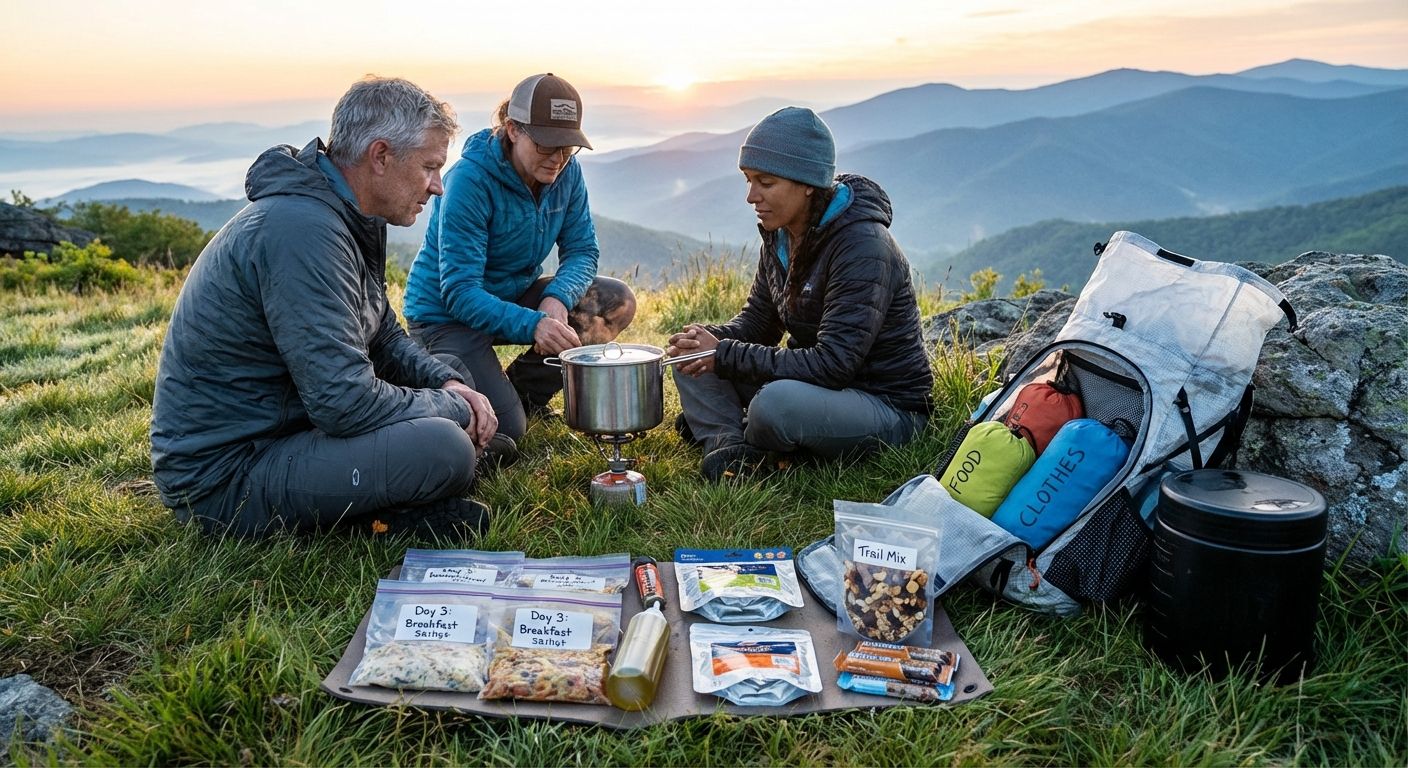
Food planning is the single most impactful step you can take before a long camping or backpacking trip. Getting it right means more energy on the trail, less weight on your back, and fewer surprises when you’re miles from civilization.
Why food planning matters for long trips
Extended camps challenge both logistics and physiology. You need enough calories to power long hiking days, balanced macros for sustained performance, and meals that are light, compact, and safe. Good food planning helps you:
- Optimize backpack weight by choosing calorie-dense and compact foods.
- Reduce waste and avoid unnecessary resupply stops.
- Maintain consistent energy to avoid fatigue and injury.
- Ensure food safety and avoid spoilage or contamination.
Start with calories and macronutrients
Your baseline is total daily energy needs. For most multi-day hikers, that ranges from 2,500 to 5,000 kcal per day, depending on body size, terrain, pack weight, and intensity. Use conservative planning:
- Estimate per-person needs and add a safety buffer of 10–15%.
- Plan macronutrient balance: aim for 50–60% carbs for quick energy, 20–30% fats for calorie density and satiety, and 10–20% protein for recovery.
Calorie density (kcal per 100 g) is a critical metric; prioritize foods offering high kcal per weight to reduce pack bulk.
Meal strategies for different trip styles
Ultralight backpacking (minimal weight, limited cooking)
- Rely on dehydrated and freeze-dried meals, instant oats, and nut-butters.
- Choose ready-to-eat, high-calorie items like energy bars and trail mixes.
- Rehydrate with boiled or filtered water to save fuel and time.
Basecamp and semi-stationary camps
- Bring bulk ingredients (pasta, rice, beans) and a stove for varied meals.
- Include some fresh items early in the trip (fruit, cheese) and plan to finish perishables within the first days.
Group trips and long sections
- Plan shared, calorie-efficient dinners (one-pot meals) to spread weight and fuel costs.
- Use meal kits: pre-measured, vacuum-sealed bags for each meal reduce cooking complexity.
Choosing foods: categories and examples
Balance convenience, nutrition, and weight. Key categories:
- Dry goods: oats, instant rice, pasta—light and shelf-stable.
- Dehydrated/freeze-dried meals: quickest to prepare, wide variety.
- Compressed calories: nut butters, chocolate, olive oil, powdered creamer.
- Proteins: powdered whey or plant protein, vacuum-packed tuna, jerky.
- Electrolytes and snacks: electrolyte tablets, sports gels, trail mix.
- Fresh items: apples, carrots, hard cheeses—plan to consume early.
Preservation and packaging
Preserving food reduces weight and spoilage risk. Use a mix of methods:
- Dehydration: removes moisture to prevent spoilage; DIY or store-bought.
- Freeze-drying: best rehydration quality but costlier.
- Vacuum sealing: reduces volume and extends shelf life—great for bulk meals.
- Resealable bags and dry sacks: keep food organized and dry inside the pack.
Safe storage in the field
Food security matters for wildlife safety and human health. Follow these rules:
- Bear canisters or bear hangs where required—check local regulations. (See NPS guidelines and local park rules.)
- Separate cooking and sleeping areas in camp to reduce attractants.
- Use smell-proof bags and store containers in a sheltered, cool place.
External reference: U.S. National Park Service on food storage policies (NPS Food Storage).
Packing and organization tips
Good organization saves time and prevents waste. Consider:
- Pre-portion meals into day packs using labeled small bags—reduces cooking decisions and waste.
- Compress and stack denser calories at the bottom near the pack frame and lighter, frequently used snacks in hip-belt pockets.
- Meal kits: assemble dinner ingredients in one bag, breakfast in another—each labeled with day number.
- Weigh food before the trip and track consumed weight to refine future planning.
Cooking systems and fuel efficiency
Match cooking gear to menu plans. For long trips, consider:
- Canister stoves for simplicity and speed.
- Alcohol stoves for ultralight trips where fuel availability is ensured.
- One-pot cooking reduces fuel use and cleanup time.
- Carry a lightweight pot, spork, and a small stuff-sack for washing gear.
Hydration and electrolyte strategy
Water planning is part of food planning. Dehydrated meals require rehydration; hot drinks add comfort and calories. Plan:
- Sources and distances between water points.
- Water treatment (filter, chemical, boiling).
- Electrolyte supplements for hot or high-exertion days.
Sample menu plans (calories approximated)
Below are modular templates to adapt by calorie need.
3-day ultralight sample (≈3,500 kcal/day)
- Breakfast: instant oats with powdered milk and peanut butter (≈700 kcal).
- Lunch: tortillas, salami/jerky, cheese, trail mix (≈900 kcal).
- Snacks: energy bars and gels (≈700 kcal).
- Dinner: freeze-dried meal + olive oil or cheese (≈1,200 kcal).
7-day mixed approach (rotate fresh + dried)
- Days 1–2: include fresh fruit and hard cheese; pre-cooked grains for dinner.
- Days 3–5: switch to dehydrated and vacuum-packed meals.
- Days 6–7: rely on high-calorie dense foods to finish trip.
Reducing waste and minimizing resupply
Carry out packaging where required and avoid single-use waste by:
- Buying bulk and repackaging into reusable silicone bags.
- Using concentrated foods (powdered milk, instant soup mixes) to reduce packaging weight.
- Planning portion sizes accurately; pre-weigh to avoid leftovers.
Food safety and hygiene
Prevent foodborne illness with these practices:
- Cook food thoroughly and rehydrate with boiled water if unsure.
- Practice hand hygiene—use biodegradable soap away from water sources; sanitize hands before eating.
- Store perishables in cool, shaded areas and consume early in the trip.
Reference: USDA food safety tips are a helpful baseline (USDA Food Safety).
Practical checklist before departure
- Calculate daily calorie needs and total food weight.
- Pre-portion all meals and label by day.
- Test-cook any new recipes at home for timing and flavor adjustments.
- Pack smell-proof storage and verify local food storage rules.
- Confirm stove/fuel compatibility with your route and altitude.
Tips for refining your food planning
- Log your consumption after trips—note what you ate, what you wasted, and how you felt.
- Adjust calorie goals seasonally; cold weather increases needs.
- Experiment with tastes and textures on short trips before committing to a long route.
- Share bulk items among group members to reduce individual weight.
Further reading and external resources
- NOLS Wilderness Medicine and backcountry food safety guidelines (NOLS).
- REI Expert Advice on backpacking food and cooking systems (REI).
Conclusion
Effective food planning balances nutrition, weight management, and logistics. By calculating calorie needs, choosing high-density foods, pre-portioning meals, and using proper preservation and storage, you’ll maintain energy, reduce pack weight, and minimize waste on extended trips. Start small—test menus on weekend outings—and refine your system until you’ve found the balance that keeps you fueled and comfortable across days in the wild.
Note: This guide is for educational purposes and does not replace professional training. Consider consulting a nutritionist for more details on how to efficiently prepare calorie and nutrient amounts.