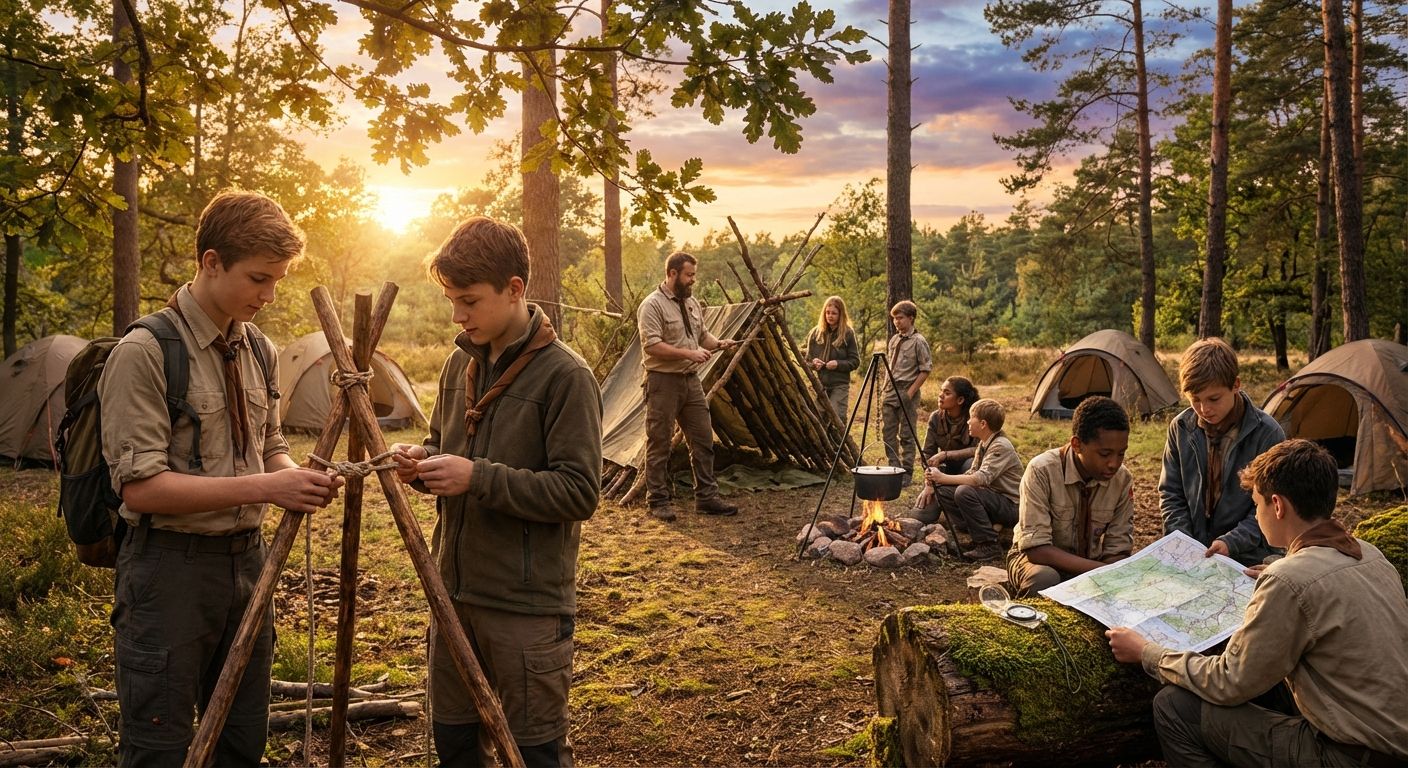
Scouting has shaped millions of young people through outdoor experiences, community service and personal challenge. In the sections below you’ll find a concise history, practical tips for participants and leaders, curious facts, and an introductory guide to learning survival techniques in the forest responsibly and safely.
1. A brief history of scouting
The roots of modern scouting date to the early 20th century. In 1907, Robert Baden-Powell ran the first experimental camp on Brownsea Island in England, aiming to teach skills, teamwork and self-reliance to boys from varied backgrounds. The experiment proved successful and, in 1908, Baden-Powell published Scouting for Boys, which became the foundation of a rapidly growing international movement. The movement spread globally and diversified to include girls, younger youth sections and many independent scout associations.
Key milestones:
- 1907 – First Brownsea Island camp led by Baden-Powell.
- 1908 – Publication of Scouting for Boys.
- World War I and II – Scouts supported communities with first aid, communications and civil support.
- 1920s–present – Growth into a global movement; formation of the World Organization of the Scout Movement (WOSM).
2. Core values and benefits
At the heart of scouting are a few consistent principles: duty to self, duty to others and duty to the outdoors/environment. These translate into practical benefits for youth and communities.
Personal development
Scouting fosters resilience, leadership, responsibility and emotional intelligence. Activities like patrol leadership, camping planning and merit badges offer repeated chances to practice decision-making and goal-setting.
Social and civic skills
Through community projects and team-based challenges, young people learn cooperation, empathy and public-spiritedness—qualities that support long-term civic engagement.
Outdoor and practical skills
From knot-tying and map-reading to basic first aid and low-impact camping, scouts develop hands-on abilities that increase self-sufficiency and confidence in nature.
3. Practical tips for participants, educators and parents
Whether you’re a young scout, an educator running a troop, or a parent supporting involvement, consider these pragmatic suggestions to get the most from scouting.
For youth
- Be curious: Try activities outside your comfort zone—hiking, navigation, or public speaking.
- Record progress: Keep a journal of activities, reflections and skills learned; it helps with badges and growth tracking.
- Practice leadership: Volunteer for small responsibilities like gear checks or leading warm-ups.
For educators and troop leaders
- Plan progressive learning: Build skills in stepped modules—e.g., basic knots first, then advanced lashing.
- Prioritize safety and consent: Use clear risk assessments, parental permissions and first aid readiness for every outdoor event.
- Create inclusive programs: Adapt activities for different abilities, cultural backgrounds and genders.
- Encourage reflective debriefs: After each activity, ask scouts: What worked? What did you learn? What would you change?
For parents
- Support, don’t fix: Allow children to attempt tasks and learn from small failures while remaining available if safety is at risk.
- Reinforce values at home: Talk about teamwork, resilience and community involvement.
- Volunteer: Helping with logistics, driving or merit badge coaching strengthens the troop and models engagement.
4. Learning survival techniques in the forest: responsible introduction
Many people associate scouting with wilderness skills. Learning to thrive in the forest can be empowering when taught ethically and safely. Below are core principles and beginner techniques, meant for supervised practice.
Principles before techniques
- Leave No Trace: Minimize environmental impact—pack out waste, avoid damaging vegetation and follow local rules.
- Safety first: Always practice survival skills with qualified adults, a communication plan and first aid resources.
- Know your limits: Distinguish basic survival preparedness (shelter, water, signaling) from advanced survivalism or risky behaviors.
Beginner forest survival techniques
- Navigation basics: Map-reading, compass use and natural navigation (sun, stars) are foundational—start with maps and simple orienteering courses.
- Shelter building: Learn to build emergency lean-tos using tarps or natural materials. Focus on weatherproofing and site selection (avoid flood-prone or exposed ridges).
- Fire safety: Fire is a survival tool. Teach fire-starting with tinder, kindling and safe fire circles, but emphasize local fire regulations and alternative heat sources.
- Water purification: Know how to find water and make it safe—boiling, filtering and purification tablets are reliable methods.
- Signaling and communication: Practice using whistles, mirrors and signaling fires; ensure a plan for rejoining group or contacting help.
- Basic first aid: Treat hypothermia, dehydration, cuts and insect bites; carry a well-stocked first aid kit and know when to escalate to professional medical help.
For structured courses on wilderness first aid and survival, consider recognized providers such as REI and accredited first aid trainers. Always align training with youth protection policies and local laws.
5. Curiosities and lesser-known facts
- Scouting is global: Millions of scouts and volunteers operate in nearly every country, often adapting programs to local cultures and environments.
- Girl Guides and Scouts grew separately at first: While Baden-Powell inspired early female scouting, organizations for girls evolved their own structures and traditions.
- Badges evolved into varied merit systems: Modern badges reflect contemporary skills—environmental stewardship, digital literacy and community health are common additions.
- Scouts in wartime: During world conflicts, scouts often assisted with civil defense, message carrying and local logistics—showing the movement’s community role beyond camping.
6. Common challenges and how to address them
Like any youth program, scouting faces recruitment, retention and resource challenges. Practical strategies include:
- Active outreach: Host open nights, community service events and school partnerships to showcase activities.
- Mentorship: Pair new scouts with experienced youth to accelerate integration and belonging.
- Adaptability: Offer flexible meeting times and mixed indoor-outdoor programming to weather seasonal or logistical constraints.
7. How to get involved and suggested resources
Interested in joining or supporting scouting? Start locally—search for nearby scout groups or contact national associations. Useful starting points:
- World Organization of the Scout Movement (WOSM) – global resources and links to national organizations.
- Scouting (Wikipedia) – overview and historical references.
8. Final thoughts: the lasting value of scouting
Scouting remains relevant because it combines adventure, practical learning and ethical formation. Young people who participate gain a toolkit of life skills—leadership, problem-solving and environmental respect—that carry into adulthood. For educators and parents, supporting scouts is an investment in resilient, community-minded citizens.
If you’re starting out, focus on safety, progressive learning, and enjoyment. If you lead programs, emphasize inclusion, reflection and service. The woods are an exceptional classroom—when approached with responsibility and curiosity, they teach more than techniques; they help shape character.
Suggested next actions:
- Attend a local meeting or open day to meet leaders and youth.
- Enroll in a basic first aid and wilderness safety workshop.
- Start a simple orienteering activity with friends or your troop next weekend.
For a deeper dive into program design, leadership curricula and advanced survival training, consult national scout associations and accredited wilderness education providers.