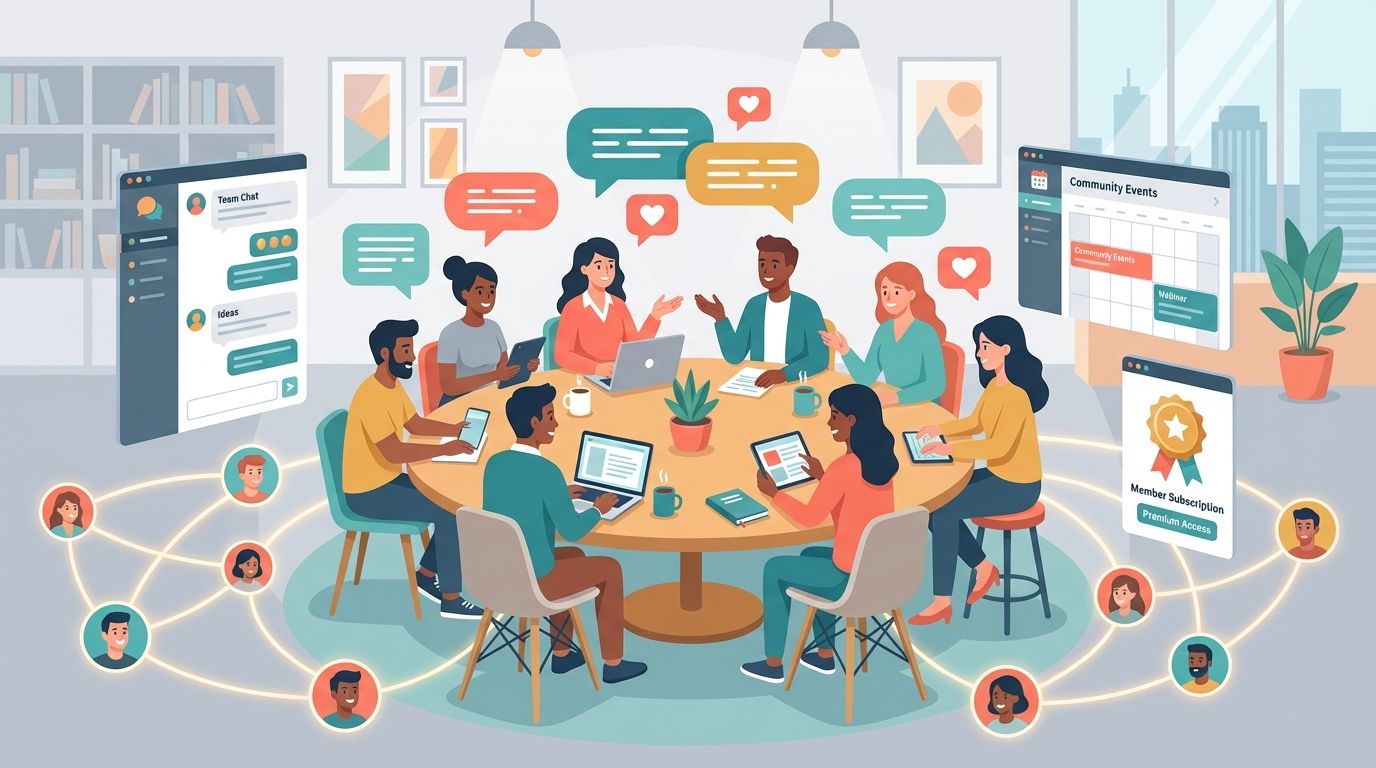
Community-based business models are shifting the way brands create value, turning passive audiences into active partners. In this guide you’ll find a practical, step-by-step roadmap to structure, launch, and scale a community-driven venture that is financially sustainable and rooted in member engagement.
Why a community-based business?
A community-based business prioritizes relationships, shared purpose, and ongoing participation. Unlike traditional transactional businesses, community-first ventures derive long-term value from trust, network effects, and member contributions. Benefits include:
- Higher customer lifetime value through retention and recurring revenue.
- Organic growth driven by referrals and word-of-mouth.
- Product-market fit improved by direct member feedback and co-creation.
- Resilience against price competition because members are emotionally invested.
Step 1 — Define purpose, value proposition and community promise
Start by clarifying why the community exists. The foundation of a successful community-based business is a compelling mission and a clear value proposition:
- Mission: What shared problem, identity, or aspiration unites members?
- Value proposition: What unique outcomes will members get? Learning, access, status, jobs, collaborations?
- Community promise: A short statement describing member expectations and what you’ll deliver consistently.
Example: “A supportive network for early-stage founders to get feedback, pilot customers, and mentorship.”
Step 2 — Choose the right platform and tech stack
Your platform shapes member behavior. Choose based on your goals (asynchronous discussion, live events, courses, or transactions).
Hosted community platforms
- Mighty Networks — great for membership courses, events, and native monetization.
- Circle — flexible community spaces integrated with course platforms and newsletters.
- Tribe.so — embeddable community with strong customization.
General-purpose platforms
- Discord — excellent for high-engagement, real-time communities, especially creators and gaming.
- Slack — ideal for professional communities and cohort-based programs.
- Facebook Groups — large reach and discoverability but less control over data.
Tools for events, content, and payments
- Zoom or Hopin for live events and workshops.
- Patreon, Gumroad, Stripe for subscription and one-time payments.
- Substack for newsletter-first communities with paid subscriptions.
External resources: check community research and trends at CMX and analysis at Harvard Business Review.
Step 3 — Build an MVP community and recruit founding members
Operate like a product launch. Build a Minimum Viable Community (MVC) to test assumptions quickly:
- Define an MVP experience (one-channel support, weekly event, or small cohort).
- Recruit 10–100 founding members who share your mission—seek early adopters from your network and warm audiences.
- Run a pilot for 6–12 weeks, gather feedback, and iterate.
Founding members are crucial: they create initial content, set norms, and attract others. Consider incentives like discounted lifetime access, exclusive sessions, or recognition to recruit them.
Step 4 — Design engagement loops and rituals
Engagement is the heartbeat of a community. Build predictable patterns that nudge members to return and contribute.
Core engagement mechanics
- Onboarding ritual: Welcome message, clear next steps, and a simple task to participate (introduce yourself, post a question).
- Weekly cadence: Regular events, curated topics, or spotlight features.
- Recognition systems: Member of the month, badges, leaderboards, or case study features.
- Cohorts and small groups: Create accountability groups or mastermind circles to deepen ties.
Use analytics to measure engagement: DAU/MAU, retention cohorts, posts per user, and time-to-first-post. Tie these metrics to business KPIs like churn and LTV.
Step 5 — Create shared value and co-creation pathways
An effective community-based business treats members as contributors, not just consumers. Enable co-creation:
- Open feedback loops: Product forums and idea boards where members vote and shape roadmaps.
- User-generated content: Case studies, tutorials, templates, and events hosted by members.
- Mentorship and peer support: Structured mentorship programs that deliver value and leadership opportunities.
Co-creation improves retention and reduces content costs while increasing perceived ownership.
Step 6 — Monetization strategies that scale sustainably
Monetization should follow value. Prioritize revenue models that align incentives between members and the organization.
Common and sustainable models
- Membership subscriptions: Monthly or annual tiers with graduated benefits.
- Tiered offerings: Free tier for discovery, paid tiers for exclusive access and premium services.
- Events and workshops: Paid masterclasses, conferences, or paid recordings.
- Marketplace and services: Facilitate member-to-member transactions or sell professional services.
- Sponsorship and partnerships: Brand sponsorships for high-value events or channels (careful to maintain trust).
- Affiliate programs: Curated tools and services with transparent recommendations.
Sequence monetization: provide core free value, prove outcomes, then introduce paid offers targeted to specific member segments.
Step 7 — Governance, rules and moderation
Healthy communities have clear norms and consistent moderation. Define rules, escalation paths, and roles:
- Community Guidelines: Visible, concise, and enforced fairly.
- Moderation team: Paid or volunteer moderators with documented responsibilities.
- Escalation process: How to handle disputes, harassment, or rule violations.
- Member governance: Invite senior members to advisory councils to co-govern topical decisions.
Step 8 — Measure and iterate
Make data-driven decisions with qualitative and quantitative signals:
- Engagement metrics: DAU/MAU, retention cohorts, content creation rate.
- Business metrics: ARR, churn rate, ARPU, CAC, LTV.
- Qualitative insights: Member interviews, Net Promoter Score (NPS), and feedback threads.
Run deliberate experiments: pricing A/B tests, event formats, or onboarding flows. Use learnings to refine your roadmap every quarter.
Examples of successful community-based businesses
- Patreon: Enables creators to monetize communities through memberships and exclusive content.
- Substack: Newsletter communities that convert engaged readers into paid subscribers.
- Glossier: Built product ideas and brand loyalty through a passionate beauty community.
- Peloton: Combines hardware, content, and a highly engaged social fitness community.
Study these models to see how community drives product decisions, advocacy, and recurring revenue.
Practical tips to strengthen bonds between brand and members
- Be transparent: Share roadmaps, decisions, and financial choices to build trust.
- Celebrate member wins: Feature case studies, testimonials, and success stories.
- Make it easy to contribute: Provide templates, brief prompts, and low-friction ways to add value.
- Prioritize accessibility: Ensure events and content are inclusive and accommodating.
- Compensate top contributors: Honor contributions with revenue share, discounts, or paid roles.
Common pitfalls to avoid
- Monetizing too early: Charging before delivering clear outcomes damages trust.
- Ignoring moderation: Toxic spaces erode engagement quickly.
- Lack of onboarding: New members who don’t know how to participate often churn.
- Over-centralizing control: Not empowering members to lead reduces ownership.
Launch checklist (first 90 days)
- Week 0–2: Define mission, value proposition, platform choice, and pilot design.
- Week 3–6: Recruit founding members and run onboarding sessions.
- Week 7–12: Host regular events, gather feedback, iterate on rules and content.
- End of 90 days: Review metrics, refine pricing plan, and prepare paid offers if product-market fit is evident.
Suggested external links
External references: CMX for community best practices, Harvard Business Review for strategy and research, and platform docs like Mighty Networks and Circle.
Final thoughts
Creating a community-based business is a long-term strategy that combines product thinking, human-centered design, and operational discipline. Start small, prove value to members, and scale deliberately. When members feel ownership, your brand gains advocates, co-creators, and sustainable revenue streams.