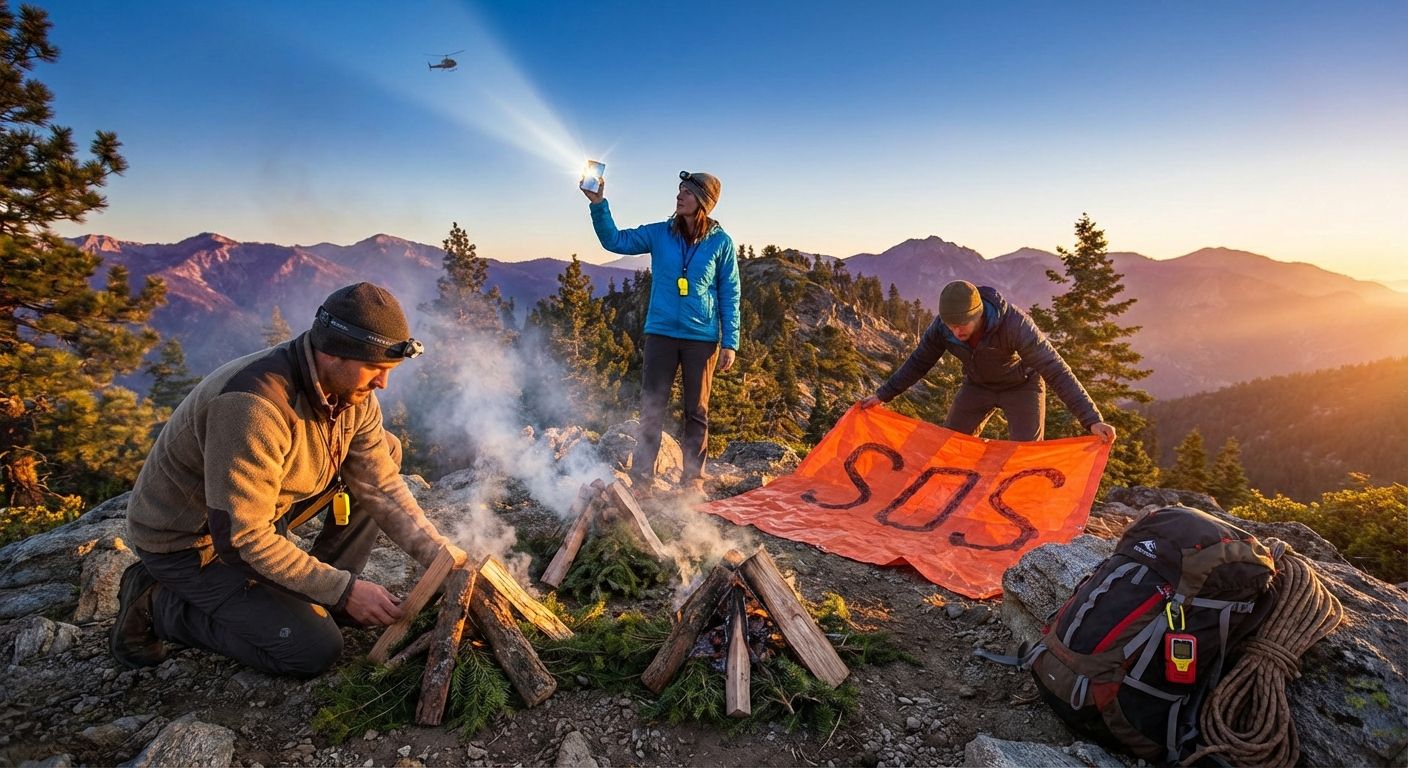
How to call for help in the wilderness is one of the most important skills any hiker, camper or outdoor enthusiast can master. In an emergency, clear and recognizable signals—visual, auditory, and improvised—dramatically improve your chances of being found. This guide explains international distress methods, practical strategies, and equipment options so you can respond calmly and effectively.
Why effective signaling matters
Search and rescue teams prioritize victims based on likelihood of detection, available information, and speed of notification. If rescuers can quickly identify your location from a distance, response time shortens and outcomes improve. Learning how to call for help in the wilderness equips you to communicate your situation even without cell coverage.
Immediate priorities after an incident
- Stay calm: Panic can lead to poor decisions. A clear head makes signaling more effective.
- Assess injuries: Treat immediate life threats and stabilize yourself or companions.
- Secure shelter: Protection from elements increases survival time and keeps you visible if you remain in one place.
- Conserve energy and supplies: Ration food, water and battery power.
- Decide whether to stay or move: When lost, staying put is often best—especially if you have signaled your location or have a device that can be tracked.
Universal and internationally recognized distress signals
Using internationally recognized signals reduces ambiguity for rescuers. The most widely accepted principle is the rule of three: three of anything—three whistles, three fires, three flashes—communicates distress.
Visual signals
- Three ground-to-air signals: Three large fires in a triangle, three bright panels or three piles of rocks. Make them as large and contrasting as possible.
- SOS: The Morse code SOS (… — …) is internationally recognized. If you have a flashlight, strobe or mirror, flash the pattern—three short, three long, three short.
- Signal mirror: A mirror or polished metal can reflect sunlight and be seen from miles away. Aim toward aircraft or distant people and use a short, sharp flash pattern. Practice using a sighting hole or making an ‘X’ with your fingers to aim.
- Bright colors: Lay out clothing, tarps or emergency blanket to form high-contrast shapes. An orange or red tarp contrasts with most natural backgrounds.
- Smoke by day, firelight at night: Smoke attracts attention during the day—add damp leaves or green vegetation to make thick white smoke. At night, bright flames and reflected light stand out.
Auditory signals
- Whistle: Three blasts repeated at intervals is an easily recognized distress call. Whistles carry farther than shouting and require less energy.
- Shouting: Use sparingly and only if you hear searchers nearby; shouting exhausts energy and may not carry far in wind or dense forest.
- Firearm or noise maker: If available and safe, three shots in sequence is a distress signal—use extreme caution and respect local regulations.
Modern emergency devices and best uses
Technology has dramatically improved survival odds. Familiarize yourself with the devices before relying on them.
Personal Locator Beacons (PLBs)
PLBs send a distress signal via satellite to emergency responders and provide precise GPS coordinates. Activate only in life-threatening emergencies. They do not require subscription fees and are rugged. Register your PLB with the manufacturer and local authorities so rescuers have your details.
Satellite messengers and two-way devices
Devices like Garmin inReach or Zoleo allow two-way texting via satellite networks and can trigger SOS alerts. They require a subscription plan but provide situational updates and messaging with rescue coordinators.
Cell phones and apps
When you have a signal, call local emergency numbers; in many countries, 112 or 911 are standard. Use location-sharing apps to send coordinates to friends or rescuers. If no service, place the phone in a high open position, conserve battery, and attempt intermittent checks for signal.
VHF/UHF radios and personal radios
Handheld radios can reach search teams, park rangers or other groups nearby. Know local frequencies and carry fresh batteries. A two-way radio is particularly useful when traveling in a group or organized expedition.
Improvised signaling techniques
If you lack equipment, improvised methods can still be effective when done consistently and visibly.
Ground signals
- Use rocks, logs or branches to form large letters: HELP, SOS or an arrow. Make letters at least 3–6 meters high and contrast with the ground.
- Clear a landing area: Create a flat, debris-free rectangle or cross to increase the chance of helicopter detection.
Fire and smoke
- Three fires in a triangle or three columns of smoke are strong daytime signals.
- At night, a single large fire or multiple fires arranged for visibility is effective.
Reflective and light signaling
- Shiny objects such as a CD, mirror, or foil reflect sunlight and are surprisingly visible. Angle flashes toward likely aircraft paths.
- Use a torch or phone flashlight to produce the SOS Morse pattern when you see or hear aircraft nearby.
Practical strategies to increase detection
- Stay in an open area if safe—clearing or ridge tops increase visibility to aircraft and distant searchers.
- Make a large, contrasting signal visible from the air; size matters.
- Repeat signals methodically—consistency helps search teams recognize a pattern.
- Keep a signaling kit in your pack: whistle, mirror, headlamp with red lens, emergency blanket, bright cloths, and a compact PLB or satellite messenger.
- Document and share your plan before trips: leave a route plan and expected return time with someone reliable. This is often the most effective way to ensure rescue if you do not return.
When to stay vs. when to move
Generally, if you are uninjured, in a survivable location and have signaled or expect rescuers, staying put increases chances of detection. Move only when:
- You are in immediate danger (flood, avalanche, unstable terrain).
- You have a clear, safe route to a known trail or road and the move increases the chance of encountering people quickly.
- You have left clear markers of your travel route and communicate your new plan when possible.
Safety and ethical considerations
Use distress signals responsibly. False alarms divert resources and endanger lives. Only deploy international distress signals (three of anything, SOS, PLB activation) for genuine emergencies. If you mistakenly trigger a device, cancel the alert immediately via the device protocol or contact the appropriate authority.
Checklist: What to carry and practice
- Whistle (attached to pack strap)
- Mirror or signal device
- Headlamp with extra batteries
- Personal Locator Beacon or satellite messenger
- Bright tarp or emergency blanket
- Fire-starting kit and tinder
- Map, compass and knowledge of the area
Additional resources and further reading
Official and well-regarded sources on survival and signaling include the American Red Cross (redcross.org), National Park Service guidance on backcountry safety (nps.gov/backcountry), and general information about SOS and distress signals (Wikipedia – SOS signal).
Final recommendations
Mastering how to call for help in the wilderness combines knowledge, preparation and calm execution. Train with your devices before heading into remote areas, rehearse signaling techniques like mirror flashes and whistle blasts, and always share your itinerary with someone who can raise the alarm if you don’t return. With the right habits and tools, you significantly increase the chance of a prompt and successful rescue.
Stay prepared, stay visible, and prioritize safety.
Quick reference: Distress signals summary
- Three of anything (three whistles, three fires, three flashes) = distress
- SOS in Morse: … — … (use light or sound)
- Signal mirror flashes toward aircraft or distant people
- Use PLB or satellite messenger for fastest organized rescue