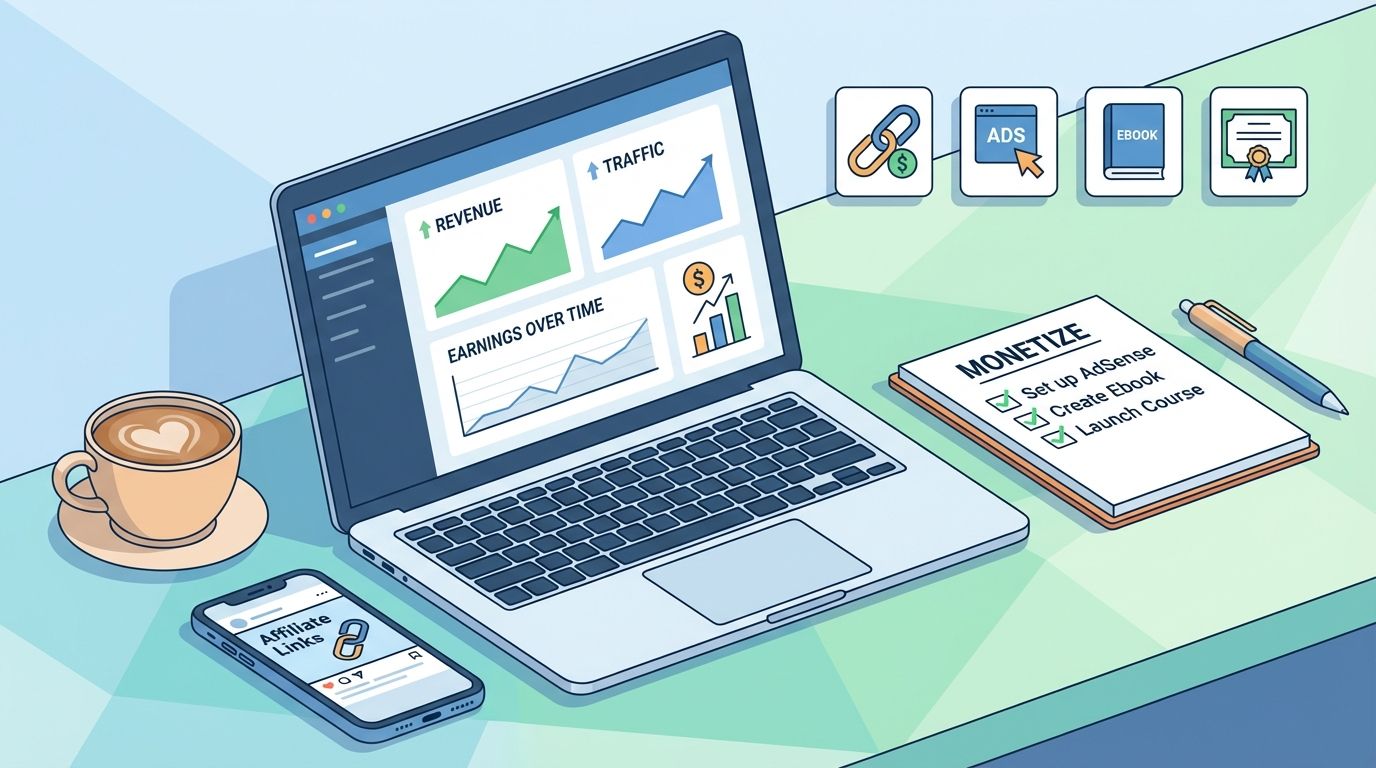
Monetization of blogs is not a one-size-fits-all process — it’s a deliberate strategy that combines audience building, content design, SEO, and diversified revenue streams. In the first 150 characters of this introduction you’ll find the core idea: monetize strategically by matching offers to audience intent and building systems that convert traffic into predictable income.
Why Treat Your Blog as a Business Asset?
Many bloggers treat content creation like a hobby. To build an asset that generates recurring revenue you must treat your blog like a business. A true digital asset has:
- Recurring revenue (ads, memberships, subscriptions)
- High-value audience that trusts your recommendations
- Systems for conversion: email funnels, lead magnets, optimized landing pages
- Scalability through productized offers and automation
Core Monetization Models
To maximize the monetization of blogs, combine several models suited to your niche and traffic level.
1. Affiliate Marketing
Affiliate marketing is often the fastest way to monetize because you can recommend products and earn commissions without building inventory. Best practices:
- Promote products that match your audience’s intent and needs.
- Create evergreen comparison posts, reviews, and “best of” lists.
- Use contextual CTAs and dedicated landing pages for high-converting traffic.
- Disclose affiliate relationships transparently for trust and compliance.
Useful platforms include Amazon Associates, ShareASale, CJ Affiliate, and niche-specific programs. Track affiliate links with UTM parameters and a link management tool.
2. Advertising (Display & Programmatic)
Display ads (e.g., Google AdSense) are simple to implement but require significant traffic to be lucrative. For higher RPMs, consider:
- Direct ad sales and sponsored placements
- Private programmatic deals (header bidding)
- Native advertising and in-content sponsorships
Tip: Optimize ad viewability and placement for user experience—too many ads hurt engagement and SEO.
3. Digital Products
Digital products (e-books, templates, toolkits) scale well and increase average revenue per visitor. Create products that solve a clear problem for your audience. Steps:
- Validate demand with surveys or pre-sales.
- Create a minimal viable product (MVP) and iterate.
- Build a sales page with clear benefits, social proof, and a money-back guarantee.
- Use a reliable payment gateway (e.g., Stripe) and delivery system.
4. Online Courses and Workshops
Courses can command higher prices than simple digital downloads. Host on platforms like Teachable or Thinkific, or use a membership area on your own site. Effective course tactics:
- Modular content with clear learning outcomes
- Free mini-courses or webinars to capture leads
- Limited-time discounts and cohort-based launches to increase urgency
5. Memberships and Subscriptions
Memberships create dependable monthly income. Offer exclusive content, community access (forums, Slack), and ongoing mini-courses. Keep churn low by delivering consistent value and engagement.
6. Sponsored Posts & Partnerships
As authority grows, brands will pay for sponsored content or long-term partnerships. Maintain editorial integrity by labeling sponsored content clearly and choosing partners aligned with your audience.
Traffic, SEO and Content Strategy
Monetization of blogs depends on targeted traffic. Without visitors, conversions are impossible. Focus on search intent and a structured content plan.
1. Keyword Strategy and Topic Clusters
Create topic clusters: one pillar page and multiple supporting posts that link to the pillar. This helps Google understand topical authority and improves internal linking. Target long-tail keywords for higher intent and lower competition.
2. On-Page SEO Essentials
- Use the primary keyword in the title, slug, meta description, and within the first 150 characters of the introduction.
- Optimize headings (H2/H3) and use semantic variations (e.g., “blog monetization”, “how to make money from a blog”).
- Improve readability with short paragraphs, bullet lists, and visual elements.
- Add structured data (Schema) for articles, products, and FAQs to increase SERP real estate.
3. Technical SEO and Performance
Site speed, mobile friendliness, and secure hosting impact rankings and conversions. Use tools like Google PageSpeed Insights and monitor Core Web Vitals. Consider a CDN and image optimization to improve load times.
Audience Growth and Engagement
Convert traffic into a valuable audience—your email list is the single most important asset.
Build an Email List
Offer lead magnets (checklists, mini-courses, templates) and use a reliable email provider (ConvertKit, Mailchimp). Nurture subscribers with a welcome sequence and targeted offers tailored to their interests.
Increase Time-on-Page & Repeat Visits
- Use internal links to related posts to reduce bounce rate and increase pageviews.
- Add related posts, content upgrades, and recommended next reads.
- Host regular live events (webinars, AMAs) to deepen relationships.
Conversion Optimization
Traffic without conversions is wasted. Optimize to maximize revenue:
- Clear CTAs aligned with content intent
- A/B test headlines, CTAs, and layout using tools like Google Optimize
- Use urgency and scarcity ethically (limited seats, limited-time pricing)
- Showcase testimonials, case studies and social proof prominently
Monetization Roadmap: Step-by-Step Plan
- Define your niche, ideal reader persona and core problems you solve.
- Publish pillar content and supporting cluster posts focused on commercial intent keywords.
- Set up analytics (Google Analytics / GA4) and conversion tracking.
- Install basic monetization: affiliate links in product reviews + a simple ad unit.
- Launch a lead magnet and email welcome sequence.
- Create your first digital product or mini-course based on audience feedback.
- Test price points, optimize funnels, and scale traffic via SEO and paid campaigns.
Important Metrics to Track
- Organic traffic and keyword rankings
- Conversion rate (email signups, product sales)
- Average revenue per visitor (ARPV) and RPM
- Customer lifetime value (LTV) for paid products or memberships
- Churn rate for subscriptions
Scaling and Diversification
Once you have working revenue channels, scale by:
- Replicating top-performing content for new keywords
- Outsourcing content production while maintaining quality guidelines
- Creating higher-ticket offers (coaching, mastermind groups)
- Expanding distribution: podcasting, YouTube, guest posts
Common Mistakes to Avoid
- Relying on a single revenue source—diversify to reduce risk.
- Ignoring email marketing—owning the audience beats rented social traffic.
- Prioritizing ads over user experience; excessive ads kill engagement.
- Skipping validation—don’t build expensive products without proof of demand.
Examples and Case Studies (Brief)
Many successful blogs earned their first product sales via an email sequence and a low-cost paid lead magnet. For example, a niche travel blog combined affiliate gear recommendations with an email course and later launched a paid itinerary guide—resulting in a 3x increase in revenue within six months.
Resources and Further Reading
- Google Search Central (SEO best practices)
- Moz Beginner’s Guide to SEO
- Neil Patel – SEO & Traffic Strategies
Checklist to Turn Your Blog into an Asset
- Define niche and audience
- Publish 10+ pillar and cluster posts
- Install analytics and conversion tracking
- Launch lead magnet and email funnel
- Set up at least two revenue streams (affiliate + product/ad)
- Iterate product-market fit using audience feedback
Conclusion
Monetization of blogs is a long-term process that rewards strategy, consistency, and empathy with your audience. By combining SEO-driven content, diversified monetization methods, and strong audience relationships (email + community), you can transform a blog into a reliable income-generating asset. Start small, validate ideas, and scale what works.
Next step: Pick one monetization channel to implement this month—affiliate reviews, a short digital product, or a lead magnet—and measure results for 90 days.