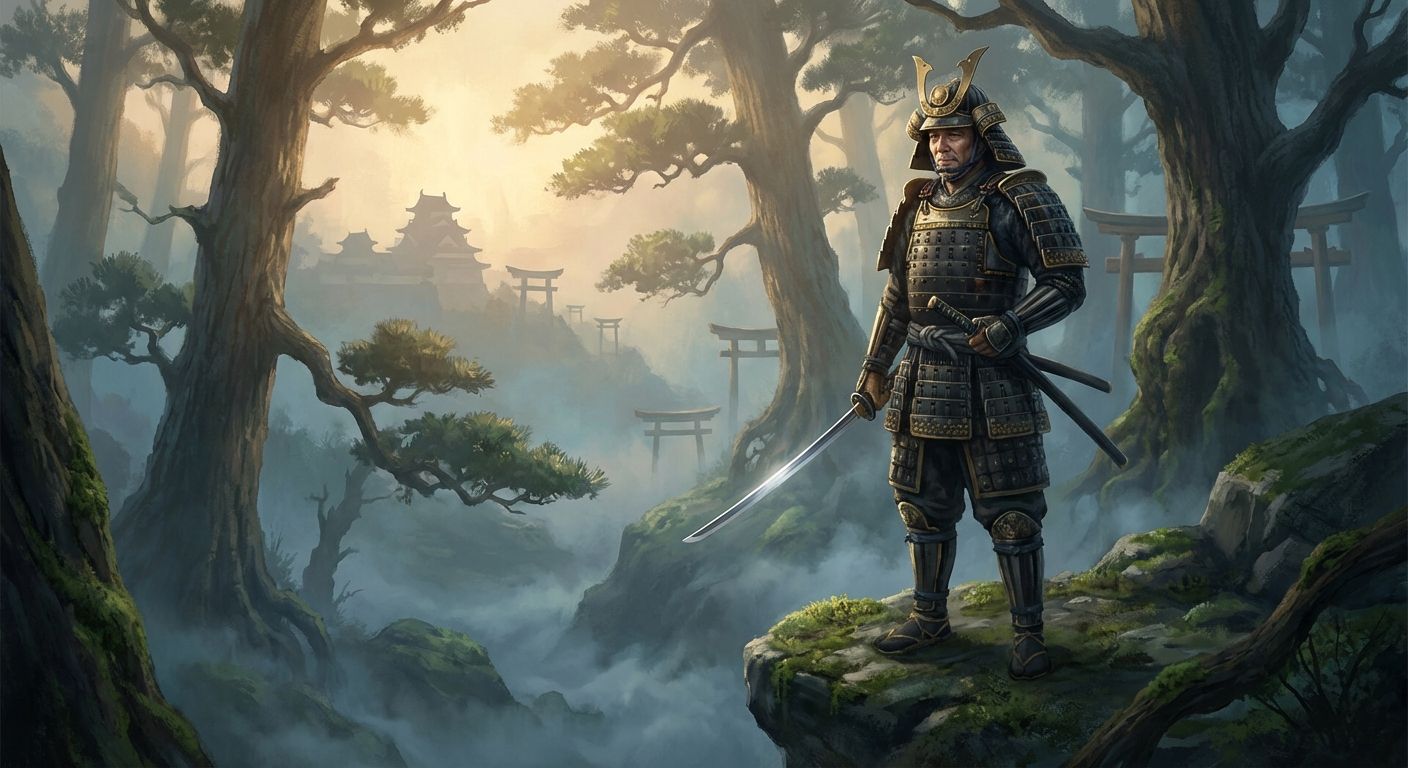
The history of the samurai begins within the turbulent landscape of early medieval Japan and quickly develops into a central thread of the nation’s identity. In this article, we examine how the samurai class evolved, the moral principles that guided them, and their enduring influence on Japanese culture, society and philosophy.
Introduction: A short overview
The term samurai originally referred to those who “serve” — retainers and mounted warriors who rose to prominence during the Heian (794–1185) and Kamakura (1185–1333) periods. Over centuries, the samurai became not only a military elite but also a social class that embodied ideals of honor, duty, and refinement. To understand their full impact, it is essential to look beyond battlefield exploits and explore the bushidō traditions, philosophical influences, and social structures that defined them.
Origins and historical development
The samurai’s origins are rooted in the decentralized politics of early Japan. As provincial landholders (gōzoku) and rising military families organized to protect estates, they formed the nucleus of what would become a powerful warrior class. Key periods in samurai history include:
- Heian Period — emergence of warrior bands and early aristocratic warriors.
- Kamakura Period — establishment of the first samurai-led government (shogunate), institutionalizing samurai rule under Minamoto no Yoritomo.
- Mongol Invasions (1274, 1281) — which tested samurai military organization and loyalty.
- Sengoku Period (Warring States) — intense internal conflict that elevated military leaders (daimyō) and professionalized warfare.
- Tokugawa (Edo) Period — samurai at the center of a rigid social order, often shifting from battlefield command to bureaucratic and cultural leadership.
Samurai as social and political actors
Beyond combat, samurai functioned as administrators, magistrates, and cultural patrons. The Tokugawa shogunate (1603–1868) particularly institutionalized samurai roles:
- Governance: Many samurai served as local officials, implementing law and collecting taxes in daimyo domains.
- Education and culture: They cultivated arts like calligraphy, poetry (waka, haiku), tea ceremony (chanoyu), and Nō theater.
- Class structure: As a formal social class, samurai were placed above peasants, artisans, and merchants, which reinforced hierarchical values and responsibilities.
From warriors to bureaucrats
During long periods of peace, particularly in the Tokugawa era, samurai increasingly took on civil roles. They learned administrative skills, Confucian ethics, and literary arts, contributing to a refined ethical ideal that combined martial prowess with cultural sophistication.
Values and the bushidō code
At the heart of samurai identity is the set of values often summarized by the term bushidō — literally “the way of the warrior.” While bushidō is not a single codified law from early medieval times, it emerged from a blend of Shinto ethics, Confucian social thought, and Zen Buddhist insights. Key virtues associated with bushidō include:
- Honor (meiyo): A samurai’s reputation and moral standing were paramount.
- Loyalty (chūgi): Absolute fidelity to one’s lord (daimyō) was expected.
- Courage (yū): Bravery in the face of danger, tempered by prudence.
- Rectitude (gi): Moral uprightness and the ability to make just decisions.
- Self-control and discipline: Both in warfare and in daily conduct.
Bushidō evolved over centuries, absorbing philosophical inputs and adapting to social shifts. Notably, Confucianism supplied an ethical framework for hierarchical duty, while Zen emphasized presence and clarity of mind — qualities valuable to a warrior whose decisions are life-and-death matters.
Ethics in practice: seppuku, loyalty, and reputation
Seppuku (ritual suicide) is often highlighted as an extreme expression of samurai ethics — a means to preserve honor, atone for failure, or avoid capture. While sensationalized in popular culture, seppuku was a formalized practice governed by ritual and social context. It illustrates how deeply reputation and honor shaped choices in samurai society.
Philosophical influences: Confucianism, Zen, and Shinto
The samurai worldview was syncretic. Three major influences stand out:
- Confucianism: Provided models of hierarchical duty, filial piety, and responsible governance.
- Zen Buddhism: Emphasized discipline, meditation, and mental clarity. Zen practices were especially valued for improving focus in combat and fostering acceptance of mortality.
- Shinto: Native practices reinforced loyalty to land and community, ritual purity, and reverence for ancestors.
These philosophies combined into an ethical matrix that helped samurai reconcile martial violence with moral purpose and social responsibility.
Cultural contributions and arts
Samurai left a profound cultural legacy beyond the battlefield. Their patronage and personal practice advanced multiple art forms:
- Tea ceremony (chanoyu): Embraced as a disciplined aesthetic practice tied to self-cultivation.
- Literature and poetry: Many samurai composed waka and later haiku; some wrote treatises on strategy and ethics.
- Martial arts (bujutsu and budō): Codified techniques (kenjutsu, kyudo) evolved into modern martial arts with philosophical dimensions.
- Armor and craftsmanship: Samurai armor (yoroi) and sword-making (katana) achieved technical and artistic excellence.
Modern institutions such as museums preserve samurai artifacts; for deeper historical context see the Encyclopaedia Britannica entry on samurai (Britannica) and the Metropolitan Museum of Art’s overview (MetMuseum).
Social impact and legacy
The samurai shaped Japanese society in multiple, lasting ways:
- Legal and administrative systems: Samurai administrators influenced bureaucracy, law enforcement, and local governance.
- Social values: Concepts of duty, honor, and public service filtered into wider societal expectations.
- Cultural nationalism: In the Meiji Restoration era and beyond, samurai imagery was invoked to craft a modern national identity.
Even after the formal abolition of samurai privileges during the Meiji reforms (late 19th century), their cultural influence persisted in military ethos, literature, and popular media. Modern Japan continues to engage with samurai imagery through films, novels, and education — often balancing myth with historical nuance.
Misconceptions and popular portrayals
Popular culture frequently simplifies samurai into romanticized warriors. Common misconceptions include the ideas that samurai were uniformly noble, that bushidō was a static ancient code, or that all samurai lived only by the sword. Scholarship shows a more complex reality: samurai were diverse in behavior and status, shaped by historical circumstances, and often involved in politics, administration, and cultural life.
Case studies: notable figures and moments
Examining individuals and turning points clarifies samurai roles:
- Minamoto no Yoritomo: Founder of the Kamakura shogunate — transformed samurai power into political authority.
- Oda Nobunaga, Toyotomi Hideyoshi, Tokugawa Ieyasu: Key unifiers during the Sengoku and early Edo eras, each reshaping samurai culture in governance and warfare.
- Saigō Takamori: Often portrayed as the “last samurai,” his rebellion during the Meiji period symbolizes tensions between tradition and modernization.
How to study the history of the samurai
For students and enthusiasts seeking reliable sources, consult primary documents (translated war tales and treatises), academic works, and museum collections. Recommended starting points:
- Encyclopaedia Britannica: Samurai
- Metropolitan Museum of Art overview: Samurai: The Warrior Culture
- Primary sources: translated war chronicles (e.g., Heike monogatari) and ethical treatises.
Conclusion: The samurai as complex cultural symbols
The history of the samurai reveals a multifaceted legacy: martial skill and battlefield innovation, yes, but also ethical reflection, artistic refinement, and administrative leadership. Understanding samurai means acknowledging both their violence and their contributions to governance, culture, and philosophy. By studying the intersections of bushidō, Zen, Confucian thought, and historical context, readers can appreciate how samurai became enduring symbols in Japan and beyond.
For students and curious readers, approaching samurai history with nuance — separating romantic myth from documented practices — provides a richer view of how values and institutions shape societies. The samurai were more than warriors: they were a social class that helped define what it meant to serve, govern, and live with honor in premodern and modern Japan.
Further reading and resources
- Britannica — Samurai (overview and bibliography)
- Metropolitan Museum — Samurai (artifacts and cultural context)
- Academic monographs on bushidō, Japanese political history, and martial culture.