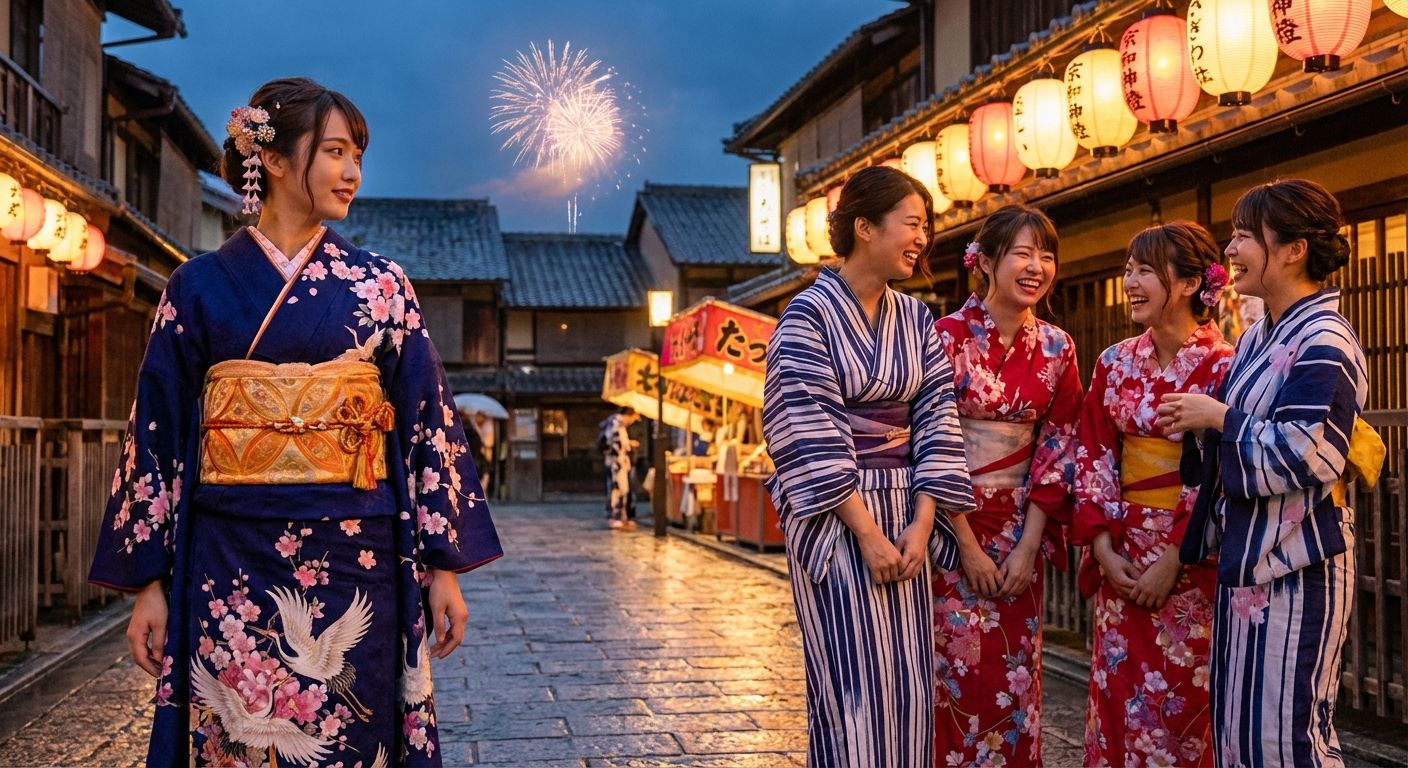
Japanese culture is richly expressed through clothing, and few garments capture that heritage as clearly as the kimono and the yukata. In the first 150 characters of this introduction, the phrase Japanese culture appears to emphasize how these garments function as living symbols of identity, ceremony, and craft.
Introduction: Why kimono and yukata matter
The kimono and yukata are often confused by visitors and newcomers, yet each has its distinct history, materials, and social meanings. Both garments reflect aesthetics, seasonal awareness, social status and changing tastes over centuries. This article breaks down those differences, explores the symbolic language woven into patterns and colors, and explains how these garments continue to shape and be shaped by modern fashion and cultural preservation efforts.
Quick definitions
- Kimono: A formal, traditional Japanese robe made from silk or other fine fabrics, worn with multiple layers and an obi (wide sash). It appears at ceremonies, festivals, and formal events.
- Yukata: A lighter, casual cotton robe, often worn in summer festivals, hot springs (onsen), or as comfortable loungewear. Usually simpler to wear than a kimono.
Historical evolution
From the Heian period to modern times
The kimono’s roots trace back to the Heian period (794–1185), when layered robes known as jūnihitoe signaled court rank and aesthetic sensibilities. Over centuries, Japanese dress consolidated into a straight-seamed garment—what became known as the kimono—during the Edo period (1603–1868). Techniques in dyeing, weaving and tailoring refined the kimono into a canvas for social signaling: patterns, motifs and the quality of fabric conveyed age, marital status and class.
The yukata’s origins
The yukata began as a bathrobe—its name literally means “bathe in a shower”—used after bathing at communal baths and hot springs. It evolved into casual summer wear in part because cotton fabrics and simplified construction made it lightweight and breathable. By the Meiji era (1868–1912), the yukata became a common choice for festivals and leisure, distinguishing itself from the more formal kimono.
Material and construction differences
Fabric is one of the clearest differences. Kimonos are most often made from silk, though modern kimonos can use wool, rayon or synthetic fibers for affordability and ease of care. The kimono’s construction emphasizes precise tailoring, often lined and carefully finished for formal wear.
Yukatas are characteristically made of cotton or cotton blends, unlined, and manufactured to be breathable and easy to wash. The cut is similar to a kimono but simpler: fewer layers, lighter collar, and often machine-prepared seams.
Occasions and social contexts
When to wear a kimono
- Formal ceremonies: weddings, tea ceremonies (sado), coming-of-age celebrations (seijin shiki).
- Seasonal and ritual events: New Year’s visits, funerals (with specific mourning kimonos) and other rites.
- Professional and artistic contexts: performers (like geisha, kabuki actors) and traditional artisans.
When to wear a yukata
- Summer festivals (matsuri) and fireworks (hanabi).
- Ryokan and onsen stays, where guests receive yukata to wear in communal areas.
- Casual outings and home loungewear during hot months.
Symbolic meanings and visual language
In Japanese culture, clothing functions as non-verbal communication. Patterns, colors and motifs convey seasonality, wishes for good fortune, and social cues.
- Seasonal motifs: cherry blossoms (sakura) imply spring; maple leaves (momiji) evoke autumn.
- Symbolic motifs: cranes (longevity), waves (resilience), and pine trees (steadfastness).
- Color codes: certain colors historically indicated rank or marital status; for example, bright colors and elaborate patterns were traditionally associated with younger, unmarried women.
Etiquette and wearing conventions
Kimono-wearing follows strict rules: garments are wrapped left-over-right for the living (right-over-left is reserved for the deceased), and the obi knot, collar height, and length must match the wearer’s age and the formality of the occasion. Yukata etiquette is more relaxed but still respects the left-over-right rule and proper tying of a simpler obi.
Regional and class variations
Within Japan, variations exist by region, artisan tradition and social role. For instance, Kyoto’s kimono styles reflect that city’s historical role as a cultural center; certain dyeing techniques like yuzen are associated with particular workshops. The quality and complexity of a kimono could historically indicate social class, much as high-quality tailoring does in other cultures.
Influence on contemporary fashion
The kimono and yukata have informed global fashion designers and contemporary Japanese streetwear. Elements like the obi, layered silhouettes, and traditional textiles inspire hybrid designs in high fashion and everyday clothing. Designers such as Issey Miyake and Yohji Yamamoto have cited traditional Japanese garments as conceptual influences.
Contemporary trends include:
- Modern kimono-inspired jackets and dresses that adapt cut and print for Western wardrobes.
- Fusion wear that pairs a simplified obi with jeans or a cardigan.
- Revival of artisanal crafts: renewed interest in hand-dyed fabrics (shibori, yuzen) supports local weavers and dyers.
Preservation and cultural transmission
Preserving kimono and yukata traditions requires both craft training and social practice. Cultural institutions, museums and festivals play roles in education. Organizations and workshops teach sewing, dyeing and proper dressing techniques to younger generations. In addition, rental businesses and tourism experiences allow people to wear kimono and yukata, creating new appreciation while raising concerns about commodification.
Practical tips for students and travelers
- Try before you travel: Experience renting a yukata at a ryokan to learn how it’s worn and appreciate its comfort.
- Respect the rules: When wearing a kimono or yukata in public, follow local etiquette—avoid clothing mistakes like reversed overlap.
- Learn terminology: Knowing words like obi, juban (undergarment), and geta (wooden sandals) enriches the experience.
- Support craftspeople: Purchase or rent from honest sources that credit artisans and explain care instructions.
Care, storage and sustainability
Traditional kimonos require careful storage—folded in specific ways to avoid creasing and humidity damage. Modern alternatives such as washable synthetics and simplified yukata help reduce maintenance barriers. From a sustainability perspective, repairing and reusing vintage kimonos or choosing locally-made yukata can reduce environmental impact and preserve artisan livelihoods.
Common misconceptions
- All Japanese wear kimono daily: False. Most Japanese wear Western clothing daily; kimono and yukata are reserved for special occasions or leisure contexts.
- Yukata are always informal: Generally true, but some festival yukata can be quite decorative and considered semi-formal within specific contexts.
- Kimono are impractical: While more complex, many wearers value the ritual of dressing as a meaningful cultural practice rather than an inconvenience.
Conclusion: Why they remain central to Japanese culture
The kimono and yukata are both garments and cultural texts. They encode history, seasonal awareness, artistic techniques and social signals that make them central to understanding Japanese culture. Whether admired in museums, worn at festivals, or adapted into modern fashion, these garments continue to bridge past and present, offering tangible connections to Japan’s rich cultural narrative.
Further reading and references
- “Kimono: A Modern History” — Explore academic texts and museum catalogues for deeper study.
- Britannica: Kimono
- Japan Guide: Kimono and Yukata
- National Museum of Asian Art (Smithsonian)
Author’s note: This post is tailored for students, travelers and enthusiasts seeking a respectful, informed understanding of kimono and yukata within the broader tapestry of Japanese culture. For practical experiences, consider a guided kimono dressing session or a stay at a traditional ryokan.