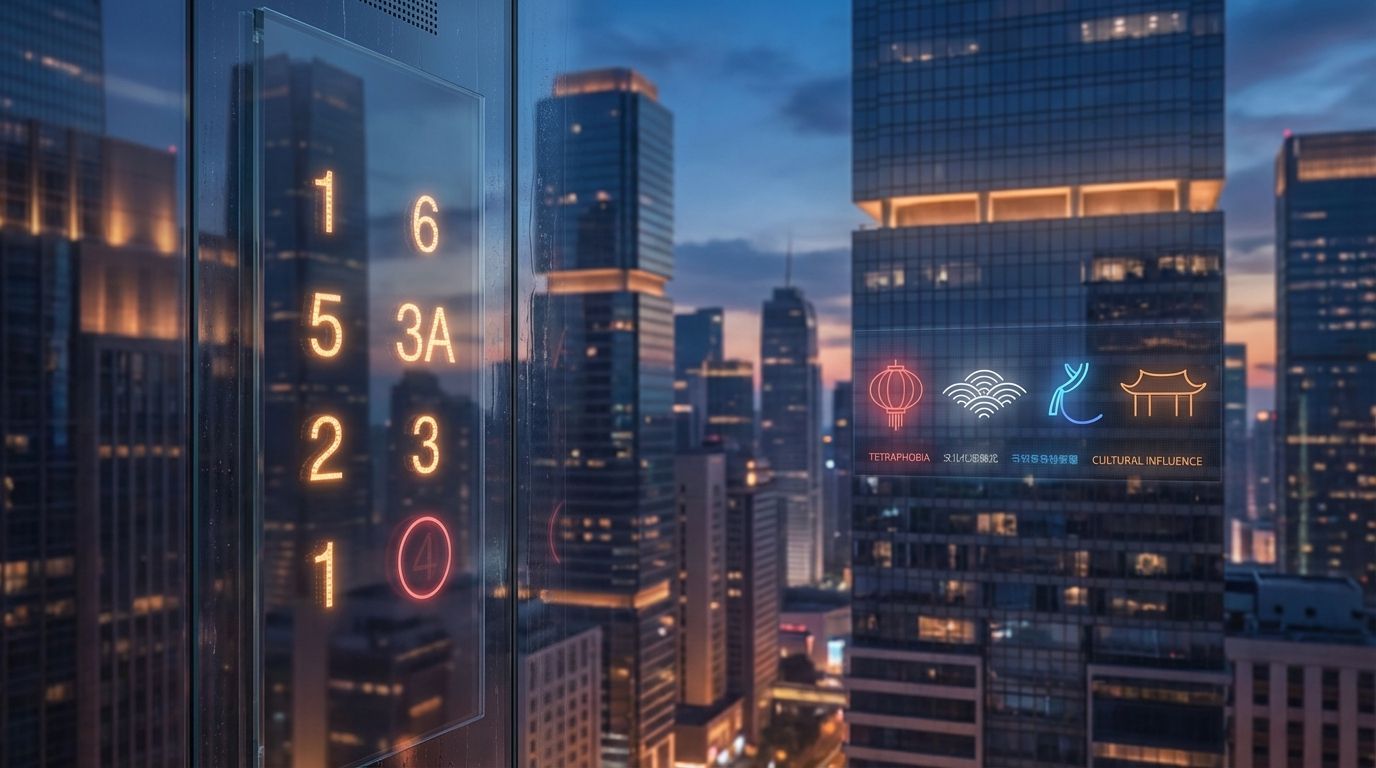
Tetraphobia in Asia is a widespread cultural superstition that affects numbering, architecture, business practices and social behavior across several East Asian societies. Understanding its linguistic roots and practical manifestations will help travelers, students and professionals navigate social norms with respect and avoid awkward or costly mistakes.
What is Tetraphobia?
Tetraphobia is the irrational fear or avoidance of the number four. In many East Asian languages, the word for “four” sounds similar or identical to the word for “death.” Because of this phonetic association, the number is often considered unlucky or inauspicious. The superstition is most strongly associated with regions where Chinese characters and Sino-influenced pronunciations are used—primarily China, Taiwan, Hong Kong, Singapore, Japan and Korea.
Linguistic origins
The core reason behind tetraphobia is linguistic. In Mandarin Chinese, the character for four (四, pronounced sì) closely resembles the word for death (死, pronounced sǐ) in tone and vowel sound. Similarly in Cantonese, the words for four (“sei”) and death (“sei”) are virtually identical. In Japanese the Chinese reading of the character is shi, which also means death; contemporary Japanese often prefer to use yon for the number to avoid the homophone. In Korean, the Sino-Korean pronunciation is sa, which can be evocative of death in certain contexts.
Because the connection is phonetic rather than semantic, the superstition travels with language and cultural exchange. Regions with significant Chinese linguistic or cultural influence, including Taiwan and Hong Kong, show strong manifestations of tetraphobia. Even in multiethnic cities like Singapore, the preference to avoid the number 4 is visible in business practices and consumer choices.
How tetraphobia manifests in daily life and built environments
Tetraphobia appears in practical, visible ways that affect urban design, real estate marketing and service delivery. The most common manifestations include:
- Omission of floor numbers: Many buildings skip the 4th floor, labeling it as 3A or 5 instead. In high-rises, you may find sequences like 1, 2, 3, 3A, 5, or use Western numbering but omit any floor with a 4 digit (e.g., 14, 24, 40–49).
- Elevator buttons: Elevators often lack a button marked “4.” In some cases, pressing “4” might redirect to a differently labeled floor.
- Room numbering in hotels and hospitals: Hospital room numbers, hotel rooms and apartment units frequently avoid 4, and some wards skip the number entirely to reassure patients and guests.
- Phone numbers and license plates: People and businesses may avoid purchasing phone numbers, license plates or addresses with too many 4s. Conversely, numbers like 8 (associated with luck in Chinese culture) are highly prized.
- Product packaging and pricing: Special editions, promotions or product model numbers might avoid the number 4 when targeting markets sensitive to tetraphobia.
Examples in architecture and urban planning
In cities across East Asia you will find practical examples: high-rise residential towers marketed with luxurious “floors” that skip certain numbers, office buildings where the 4th floor is branded differently, and new developments that emphasize auspicious numbering to appeal to buyers. Hospitals may avoid room numbers with 4 to reduce anxiety among patients and families.
Country-by-country view: China, Japan, South Korea and Taiwan
The expression and intensity of tetraphobia vary by country and context. Here’s a comparative overview:
China
- Strong cultural presence: In mainland China tetraphobia is widely recognized, especially in Mandarin-speaking communities.
- Real estate and business impact: Developers frequently avoid the number 4 in floor plans and addresses. Luxury properties avoid 4 and highlight floors with 8s or 9s instead.
- Practical note: In public buildings and modern complexes you may still find 4 omitted; expect some variation depending on the city and developer.
Japan
- Hybrid practice: Japanese usage reflects both native language patterns and the influence of Chinese-derived readings. Japanese people often prefer yon over shi to avoid negative connotations.
- Medical and hospitality sectors: Hospitals and hospitals’ wards sometimes avoid the word shi when naming rooms or wards; funeral-related vocabulary is managed carefully.
South Korea
- Sensitive but variable: Tetraphobia exists in Korea due to the Sino-Korean reading sa, but the level of avoidance is often milder and more situational compared with Greater China.
- Corporate practices: Some companies avoid the number 4 in product versions or office floors, particularly when dealing with Chinese partners.
Taiwan
- High sensitivity: Taiwan, with its Chinese linguistic base, shows strong tetraphobic practices. You will often find omitted floor numbers, careful room numbering in hospitals and strong consumer behavior around auspicious numbers.
- Cross-cultural commerce: Taiwanese businesses catering to mainland Chinese tourists or investors often emphasize number choices that seem lucky or neutral.
Business and social implications
Tetraphobia can have measurable impacts on commerce, marketing and negotiation. Companies operating in Asia—especially in real estate, hospitality, healthcare and telecommunications—must be sensitive to numbering choices and symbolic signals. Practical implications include:
- Branding decisions: Avoid model names or versions with multiple 4s when targeting East Asian markets.
- Office and meeting arrangements: When booking meeting rooms, be aware that assigning a client to “floor 4” or “room 404” may be unconsciously off-putting.
- Property valuation: Residential and commercial properties without the number 4 in prime positions sometimes command a price premium.
Being proactive about such small details demonstrates cultural fluency and builds trust with local partners.
Practical tips for travelers and professionals
Whether you are visiting as a tourist or on business, a few practical maneuvers will help you show respect and avoid misunderstandings:
- Watch elevator panels: If a building omits a 4th button or labels a floor as 3A, accept the local numbering instead of insisting on “Floor 4.”
- Avoid gifts with four items: Presenting a gift set of four items may be considered inauspicious. Opt for pairs or sets of three or five instead.
- Choose accommodation carefully: When booking a hotel, request a room on a non-4 floor if it makes you or your hosts more comfortable.
- Be mindful in negotiations: When assigning seats, rooms or offices, prefer neutral numbers to avoid signaling bad luck.
- Ask politely: If you’re unsure, asking a local colleague or hotel staff about their numbering system is a respectful approach.
When tetraphobia matters most
The superstition is most consequential in contexts involving health (hospitals), life events (weddings, funerals), property transactions and business deals with high symbolic stakes. In everyday life it may be less visible—young people and globalized urbanites often treat the belief as cultural background rather than a rigid rule—but public signage and building design continue to reflect it.
Curiosities and lesser-known facts
- Numeric balancing: In many markets the avoidance of 4 increases demand for 8 and 9, which are associated with prosperity or long life.
- Partial omission: Some buildings omit only single-digit floors with 4 but keep floors like 40–49 if renumbering is impractical, leading to mixed systems.
- Superstition meets law: In some regulated contexts (like government documents or numbered permits) authorities must keep legal numbering despite cultural preferences, creating tension between formal numbering and public expectation.
- Global influence: Multinational companies adapt product names or versions when launching in East Asia to avoid negative connotations related to 4.
Sources and further reading
For readers who want to explore more, consult reputable articles and research:
- BBC: Why the number four is so unlucky
- South China Morning Post: Tetraphobia and China’s love of eight
- JSTOR: Scholarly discussions on number symbolism
Final thoughts
Tetraphobia in Asia is a clear example of how language shapes belief and behavior. While the superstition may feel foreign to visitors, recognizing its linguistic roots and practical expressions—like omitted floors, careful numbering in hospitals and sensitivity in business—will help you navigate East Asia with cultural intelligence. Respect for such seemingly small details often signals broader cultural sensitivity and can improve both travel experiences and professional relationships.
If you’re planning travel or business in the region, consider the simple steps above, and when in doubt, ask a local: most people appreciate polite interest in their customs.