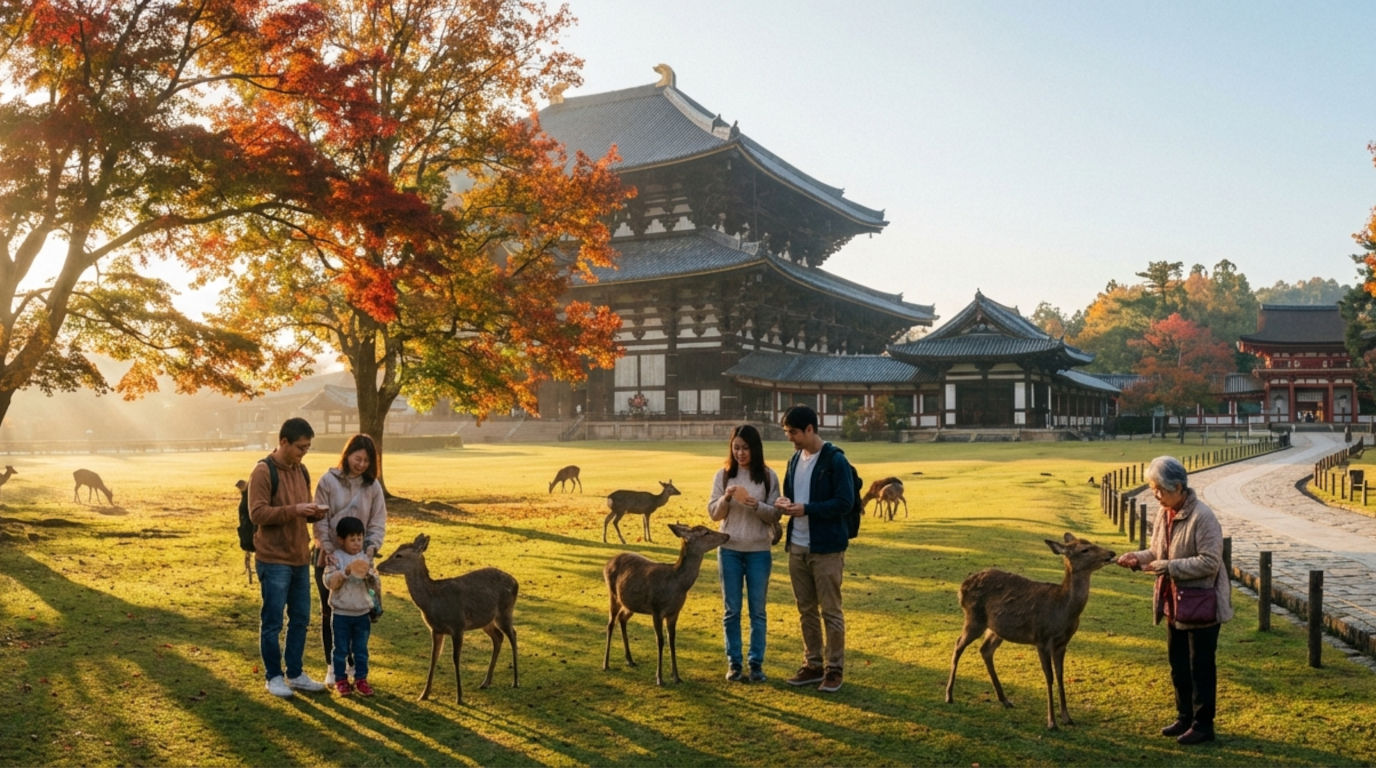
Nara Park sits at the crossroads of nature and history: within its expansive grounds, centuries-old temples share space with roaming, inquisitive deer and peaceful gardens. Located in the heart of Nara city, this park is a must-visit for travelers seeking an authentic Japanese cultural experience blended with natural beauty.
Why Visit Nara Park?
Nara Park offers an exceptional combination of experiences in one accessible area. Visitors come for:
- Historic temples and shrines—including the monumental Todai-ji and the lantern-lit Kasuga Taisha.
- Iconic wildlife encounters—the park’s free-roaming deer, regarded as national treasures, are tame and approachable.
- Designed landscapes—seasonal highlights such as cherry blossoms in spring and fiery maples in autumn.
- Compact accessibility—many attractions are walkable from Nara Station and clustered within the same area, making it ideal for day trips from Kyoto or Osaka.
History and the Cultural Heart: Temples and Shrines
The park anchors several historically significant sites:
Todai-ji: The Great Buddha
Todai-ji houses the world-famous Daibutsu (Great Buddha) and is one of Japan’s most important Buddhist temples. Constructed in the 8th century, the temple reflects the historical role of Nara as Japan’s first permanent capital. The scale of the Great Buddha Hall (Daibutsuden) and the bronze Buddha statue are deeply impressive and steeped in centuries of religious importance. Learn more at the official Todai-ji page or cultural resources such as Japan National Tourism Organization.
Kasuga Taisha: Lanterns and Shinto Heritage
Kasuga Taisha is renowned for its thousands of hanging bronze and stone lanterns, creating an especially poetic atmosphere during festivals and evening visits. The shrine’s approach through cedar-lined paths links nature and spirituality, echoing Shinto reverence for the natural world.
Museums and Smaller Temples
Near the park you’ll find the Nara National Museum and a series of smaller temples and gardens that provide context for the region’s art, archaeology and religious traditions. These stops are perfect for visitors who want deeper cultural insight beyond the main monuments. For scholarly context, UNESCO and other cultural heritage resources provide detailed background on Nara’s historical sites (UNESCO World Heritage – Historic Monuments of Ancient Nara).
The Deer of Nara: Symbols, Behavior and Etiquette
One of the park’s most endearing features is its population of tame Sika deer. Considered messengers of the gods in Shinto belief, these animals have lived among Nara’s temples for centuries and are protected as cultural assets.
Interacting Responsibly
- Feeding: Special deer crackers (shika senbei) are sold near the park. Offer them gently—some deer may bow in anticipation.
- Safety: Although friendly, deer are wild animals; approach calmly, avoid sudden movements, and keep belongings secure—bucks can be curious and bold during mating season.
- Respect local rules: Follow signs and staff guidance, especially during festivals or busy periods.
Understanding the deer’s role in local culture enhances the experience: they are not simply tourist attractions but part of Nara’s living heritage.
Landscapes and Seasonal Highlights
Nara Park is beautiful year-round, with each season offering unique visual and sensory experiences:
- Spring: Cherry blossoms frame temple roofs and reflect in ponds—ideal for photography and hanami-style strolls.
- Summer: Lush greenery and cool shaded paths provide a refreshing retreat from the city heat.
- Autumn: Vibrant maple leaves turn the park into a tapestry of reds and golds—one of the best times for landscape photography.
- Winter: Crisp air and quieter paths showcase architectural details with a serene backdrop, sometimes dusted with snow.
Top Spots and Things to Do
- Visit Todai-ji: See the Daibutsu and explore the vast hall and temple grounds.
- Walk to Kasuga Taisha: Enjoy the lantern-lined paths and the intimate shrine precincts.
- Meet the deer: Buy shika senbei and observe their social behavior—watch for gentle bows and group dynamics.
- Explore Nara National Museum: Learn about Buddhist art, sculpture and history.
- Stroll Isuien and Yoshiki-en Gardens: Experience classic Japanese garden design with quiet tea houses and ponds.
Practical Tips for Travelers
To make the most of your visit to Nara Park, consider these practical tips:
- Best time to visit: Arrive early (before 09:30) to avoid crowds around Todai-ji and to enjoy calm interactions with deer.
- Getting there: Nara is a short train ride from Kyoto (35–45 minutes) and Osaka (about 45 minutes). The park is within walking distance from Kintetsu Nara Station and JR Nara Station.
- Tickets and fees: Some temple interiors and museums charge admission—check official websites before you go.
- Day trip vs overnight: A day trip from Kyoto or Osaka covers major highlights, but staying overnight gives more time for evening strolls and quieter temple visits.
- Packing: Comfortable walking shoes, a refillable water bottle, season-appropriate clothing and a small amount of cash for shrine donations and deer crackers.
Suggested Half-Day and Full-Day Itineraries
Half-Day (Morning)
- Start at Todai-ji to see the Great Buddha.
- Walk through Nara Park and feed deer near the central lawn.
- Finish at Kasuga Taisha for a tranquil shrine visit.
Full-Day
- Morning: Todai-ji and Nara National Museum.
- Lunch: Try local specialties in Naramachi (the preserved merchant district).
- Afternoon: Gardens (Isuien/Yoshiki-en) and Kasuga Taisha; explore smaller temples and tea houses.
- Evening: Leisurely walk through the park as lanterns and lights bring a different mood.
Responsible Tourism: Protecting a Living Heritage
When visiting Nara Park, remember you are stepping into a living cultural landscape. Practice responsible behaviors:
- Do not chase or tease the deer.
- Dispose of trash properly and respect smoking rules and restricted areas around temples.
- Support preservation: Pay entrance fees where required, follow shrine etiquette, and consider guided tours to deepen cultural understanding.
Further Reading and Resources
For planning and historical context, consult official sources and trusted guides:
- Japan National Tourism Organization (JNTO) — planning and travel advice for Nara and surrounding regions.
- UNESCO — Historic Monuments of Ancient Nara — background on protected cultural assets.
- Todai-ji official pages and the Nara City tourism site for up-to-date opening hours and events.
Conclusion: An Unforgettable Blend of Nature and Culture
Nara Park is a rare destination where cultural heritage, sacred animals and scenic landscapes coexist within a single, walkable area. Whether you’re drawn by the grandeur of Todai-ji, the lantern-lit mystique of Kasuga Taisha, or the charming deer that roam the lawns, Nara Park delivers a memorable encounter with Japan’s past and natural beauty. Plan with respect, arrive curious, and leave with a deeper appreciation of this uniquely Japanese place.