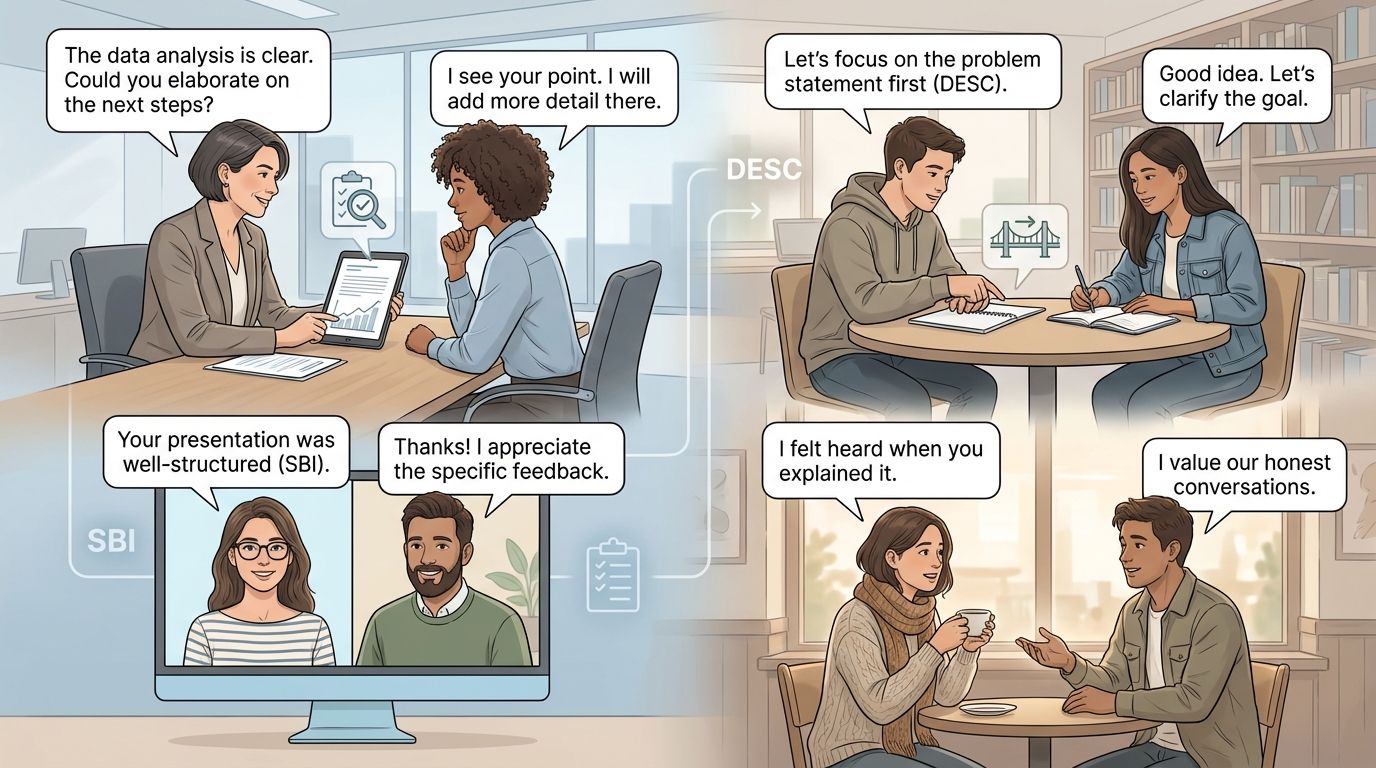
How to give feedback clearly and constructively is a core communication skill that improves performance, strengthens relationships, and reduces misunderstandings. This guide offers practical frameworks, scripts and context-specific advice so you can deliver feedback with confidence and respect.
Why feedback matters
Feedback is a vehicle for learning and growth. Whether you are a leader conducting a performance review, a peer addressing collaboration issues, a student offering critique in a group project, or a friend discussing boundaries, feedback helps align expectations and accelerate improvement. When done poorly, feedback can demotivate, create conflict, or be ignored. When done well, it becomes a routine tool for development and trust-building.
Core principles for effective feedback
Before practicing specific models, anchor your approach in these foundational principles:
- Be specific: Vague comments like “do better” are unhelpful. Identify behaviors and outcomes.
- Be timely: Provide feedback close to the event, while allowing for an appropriate setting.
- Be balanced and fair: Recognize strengths alongside areas for improvement.
- Focus on behavior, not identity: Address actions and impact, not character.
- Be actionable: Offer clear next steps or options for change.
- Listen actively: Feedback is a conversation, not a monologue. Invite perspective and follow-up.
- Respect context: Adapt tone, medium and depth depending on relationship and setting.
Practical models and frameworks
Using a structured approach helps you remain constructive under pressure. Here are widely used models you can practice:
1. SBI (Situation-Behavior-Impact)
SBI keeps feedback factual and focused. Structure:
- Situation: Describe when and where the behavior occurred.
- Behavior: State the specific actions you observed.
- Impact: Explain the effect on you, the team, or outcomes.
Example: “In yesterday’s team meeting (Situation), when you interrupted Sarah three times (Behavior), it made it harder for her to present her ideas and slowed the agenda (Impact).” Follow with a collaborative question: “How do you see it, and what could help next time?”
2. DESC (Describe-Express-Specify-Consequences)
DESC adds an emotional and directive component, useful for behavior change:
- Describe the situation objectively.
- Express how you feel about it.
- Specify the change you want to see.
- Consequences explain the outcomes if the change occurs or not.
Example: “When reports are submitted late, I feel stressed because deadlines shift. I would like reports on the agreed date. If they arrive on time, the team can deliver client commitments reliably.”
3. Feedforward (instead of feedback)
Developed by Marshall Goldsmith, feedforward focuses on future improvement rather than past mistakes. Ask: “What one change would make the biggest positive difference next time?” This keeps the conversation optimistic and actionable.
4. The Clear-Concrete-Consider model
Useful in coaching contexts:
- Clear: State the desired standard or expectation.
- Concrete: Cite observable facts.
- Consider: Offer options and invite the recipient to choose an approach.
How to prepare before delivering feedback
Preparation raises the chance your message will be received. Steps to prepare:
- Clarify your objective: Is your goal to inform, correct behavior, coach for development, or change a process?
- Collect examples: Note dates, actions and measurable impacts. Avoid relying on hearsay.
- Predict reactions: Think through how the person might respond and prepare to listen.
- Choose the right setting: Private for sensitive feedback; public recognition when praising.
- Plan follow-up: Decide what success looks like and how you’ll check progress.
Delivering feedback: tone, timing and language
When you deliver feedback, pay attention to:
- Tone: Use calm, respectful language. Avoid sarcasm or accusatory phrasing.
- Pacing: Pause and allow space for response.
- Questions over statements: Use curiosity, e.g., “What was your thinking behind that?”
- Avoid absolutes: Replace “You always…” or “You never…” with specific instances.
Context-specific guidance
One-on-one manager to direct report
Managers should blend performance expectations with support. Structure a conversation around growth:
- Open with an observation using SBI.
- State the desired standard and offer resources or coaching.
- Agree on measurable next steps and timelines.
- Schedule brief check-ins to review progress.
Example: “In last week’s demo, the product roadmap slide missed the timeline details (SBI). Let’s align on the data needed—can I support you with a template? We’ll review a draft by Friday.”
Performance reviews
For formal evaluations, collect evidence across multiple sources (self-assessment, peers, metrics). Begin with strengths, move to growth areas, and finish with a development plan. Link feedback to objectives and career goals.
Peer-to-peer and peer review
Peers should emphasize reciprocity and psychological safety. Use neutral language, make it brief, and offer to reciprocate. Example: “I noticed in our pair coding session you committed without tests; it slowed integration. Could we agree on adding a quick unit test next time?”
Remote and written feedback
Remote work increases reliance on written feedback. In writing:
- Be concise and structured.
- Use bullets and headings.
- Where tone could be misread, invite a follow-up call.
Example subject line: “Feedback on Client Pitch — 3 suggestions and a follow-up”. In the body, use the SBI model and close with an invitation to discuss.
Students and academic feedback
In academic settings, align feedback to learning objectives. Be formative (aimed at learning) and summative (grading). Provide examples and improvement tasks so students can iterate.
Personal relationships
Feedback with friends or family requires extra sensitivity. Prioritize feelings and consent: ask if it’s a good time to share. Use “I” statements and avoid prescribing change. Example: “I felt left out when plans changed last minute. Could we agree on a heads-up in future?”
Language: sample phrases and scripts
Here are ready-to-use templates for common scenarios. Adapt tone to fit your relationship.
To correct a behavior (SBI)
“In yesterday’s meeting (Situation), when you spoke over Maria twice (Behavior), she couldn’t finish her point and the team missed an important detail (Impact). Can we try pausing after others speak to ensure everyone is heard?”
To praise with development
“You delivered a clear presentation and handled questions well. One opportunity: adding a summary slide will help busy stakeholders capture the decisions faster. Could you include that next time?”
To request change from a peer
“I appreciate your initiative on the project. When code is pushed without tests it causes extra work for the integration team. Could we agree on a short checklist before merging?”
Common pitfalls and how to avoid them
- Giving feedback only once: Make feedback an ongoing habit with regular check-ins.
- Mismatched intensity: Avoid overreacting to small issues or underplaying serious ones.
- Using public forums for negative feedback: Deliver corrective feedback privately.
- Mixing feedback with unrelated grievances: Stay focused on the specific topic.
Measuring impact and following up
Feedback is effective when it leads to change. To measure impact:
- Define success criteria (e.g., fewer late reports, improved survey scores).
- Set timelines and short checkpoints (7–30 days depending on the change).
- Collect input from multiple stakeholders when appropriate.
- Recognize improvement publicly to reinforce behavior.
Resources and further reading
To deepen your practice, explore these reputable sources:
- Harvard Business Review — The Feedback Fallacy (insights on effective coaching)
- MindTools — Giving Feedback (practical tips and models)
- SHRM (guidance on performance management and HR best practices)
Quick checklist before you deliver feedback
- Have a clear objective.
- Use specific examples.
- Choose the right time and place.
- Offer next steps and resources.
- Invite conversation and commit to follow-up.
Final tips to build a feedback-friendly culture
Organizations and teams can normalize high-quality feedback by:
- Modeling vulnerability: leaders share their own development needs.
- Teaching frameworks (SBI, DESC, feedforward) in onboarding.
- Encouraging peer recognition systems and regular check-ins.
- Tracking development goals and celebrating progress.
How to give feedback well is a learned skill. With structured approaches, practice, and empathy, anyone can turn feedback into a tool for continuous improvement—at work, in school, and in life.