Understanding the Bowing: Cultural Meaning Across Asian Countries
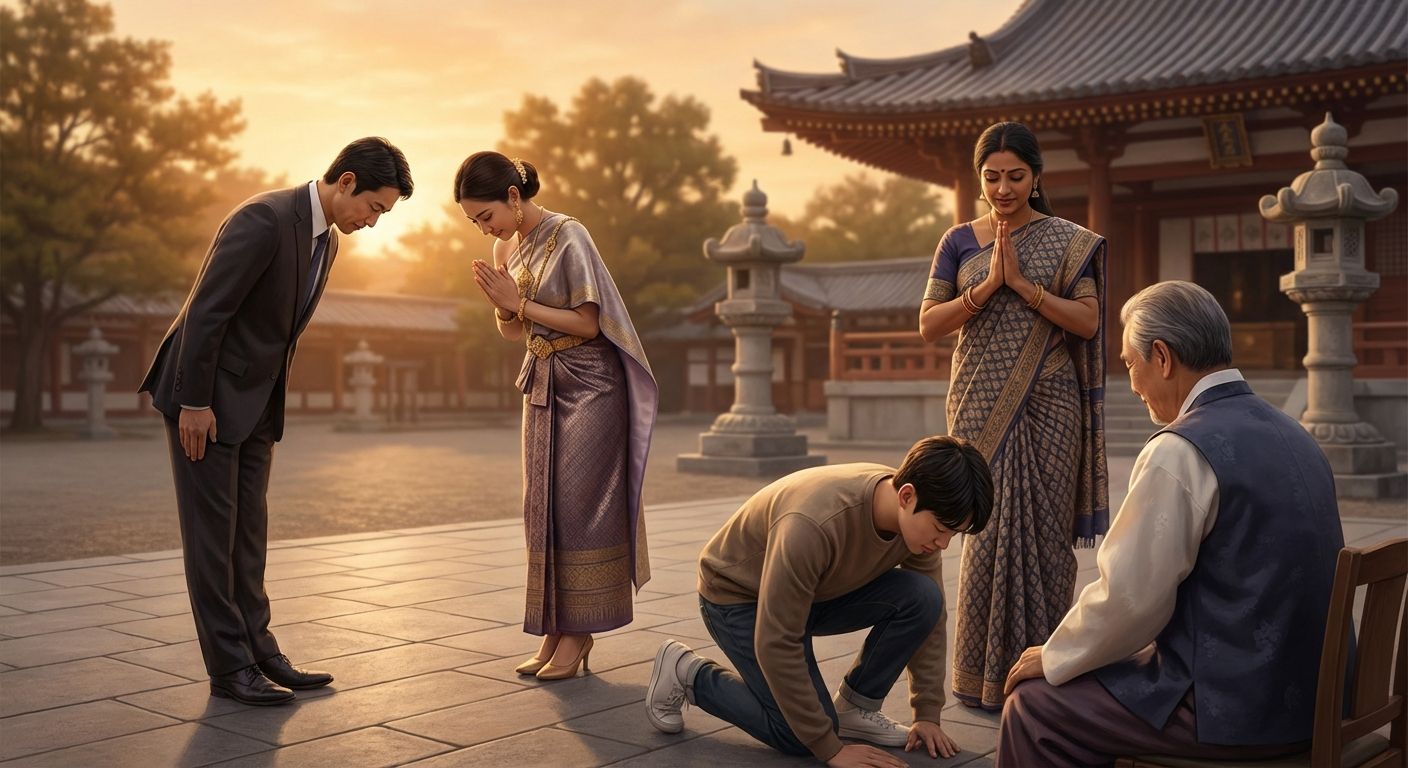
People from different Asian countries demonstrating various forms of bowing — Japanese ojigi, Thai wai, Indian namaste and Korean jeol — in a respectful temple or courtyard setting.

This article explores the cultural significance of the bowing across multiple Asian countries, explaining how variations in depth, duration and hand posture communicate respect, apology, or devotion. It highlights social contexts — from business to religion — and gives practical tips for travelers to navigate local etiquette.
How Tibetan Monks Preserve Tibet’s Cultural Identity: Religion, Manuscripts, and Monasteries

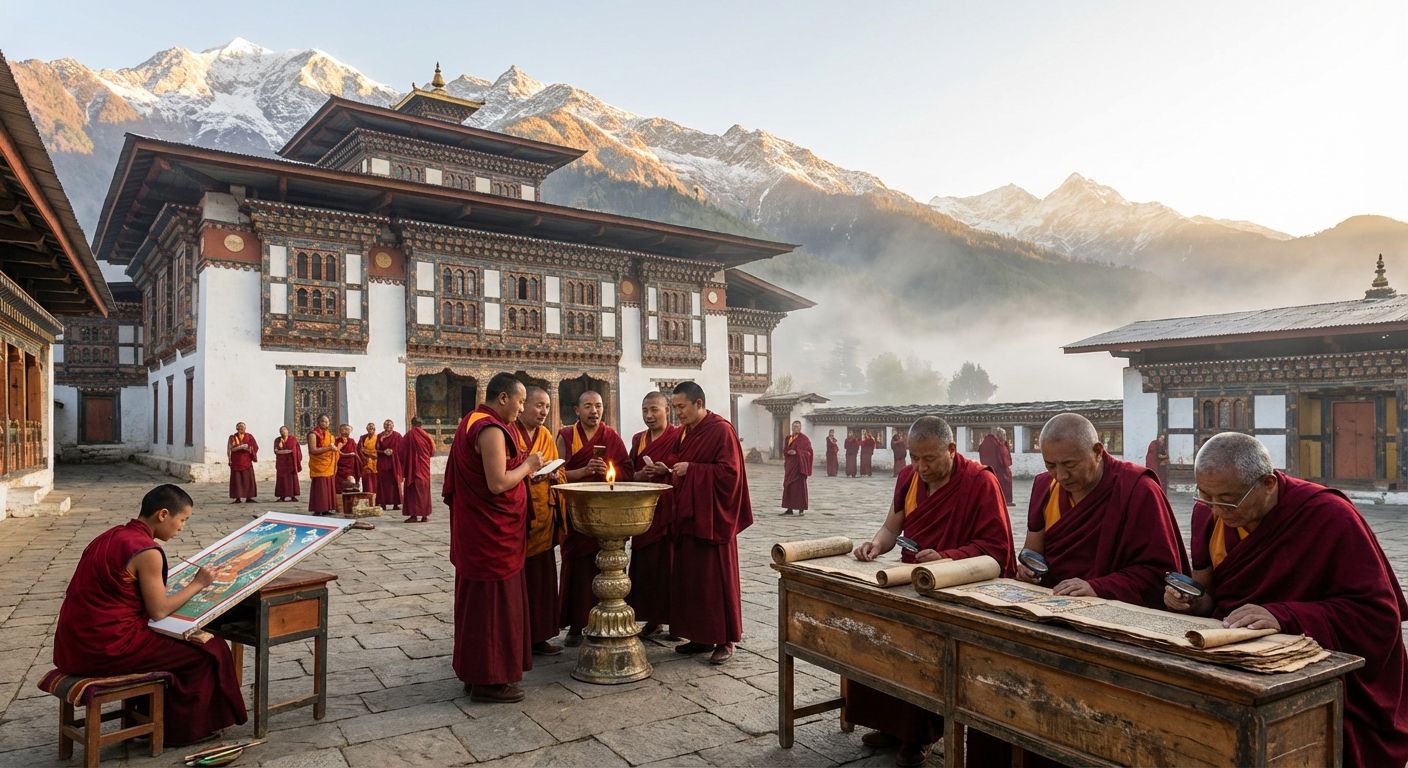
Tibetan monks in maroon and saffron robes examining illuminated manuscripts and painting a thangka in a monastery courtyard at sunrise, with Himalayan peaks in the background.

Tibetan monks play a central role in safeguarding Tibet’s cultural, religious, and historical identity through ritual practice, oral transmission, manuscript conservation, and monastery stewardship. This article examines their traditions, educational roles, and the modern challenges they face, offering concrete examples of preservation efforts and ways readers can support them.