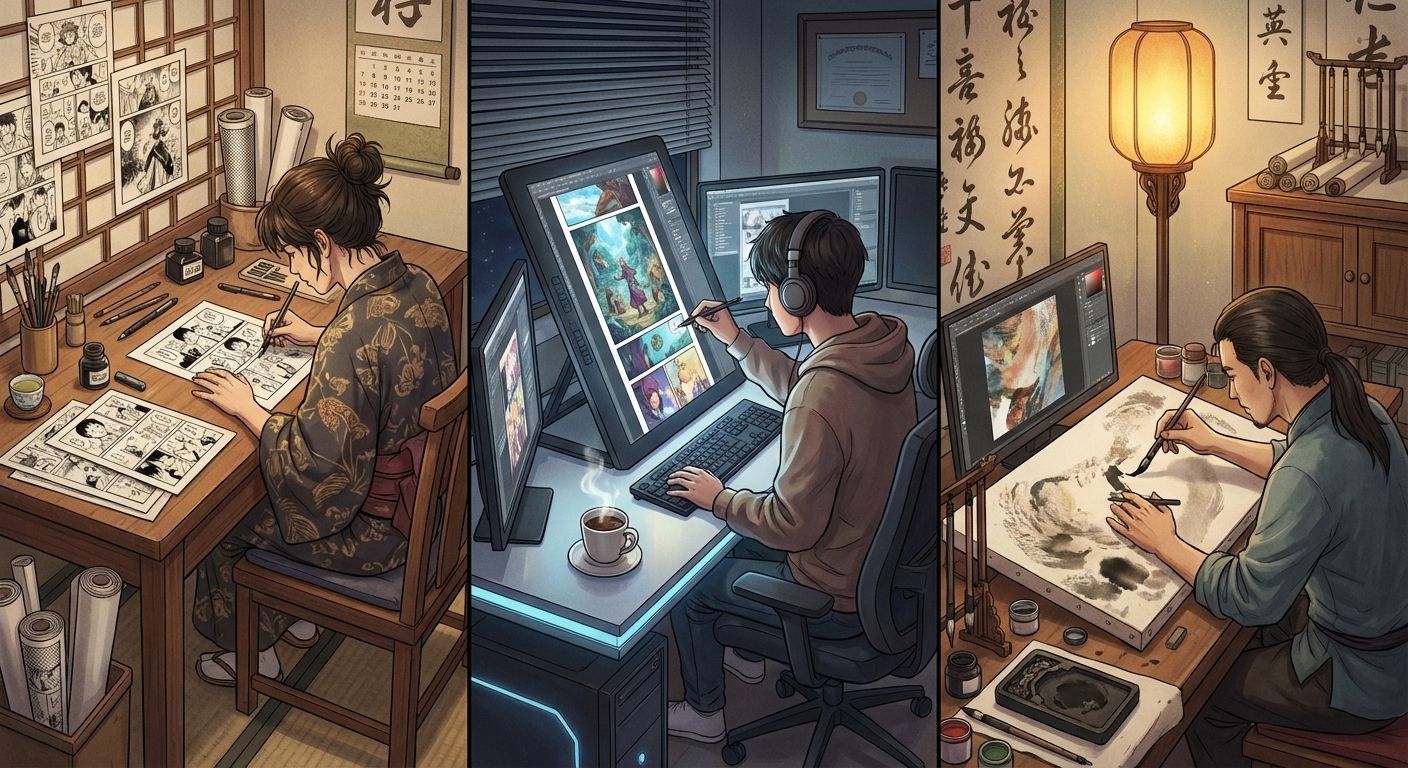
Differences between manga, manhwa and manhua are more than just national labels — they reflect distinct histories, production systems, reading formats and career realities for creators. This guide breaks down origins, styles, workflows, markets and behind-the-scenes curiosities so fans, aspiring artists and culturally curious readers can understand what makes each tradition unique.
Quick overview: origins and definitions
Manga (Japan), manhwa (Korea) and manhua (China, Taiwan and Hong Kong) are the major East Asian comic traditions. Each term carries cultural and industrial context:
- Manga: Japanese comics with long serialized histories and a global market presence. (See Wikipedia: Manga.)
- Manhwa: South Korean comics that modernly evolved into webtoons and digital-first formats. (See Wikipedia: Manhwa.)
- Manhua: Chinese-language comics with varied regional styles and growing digital platforms. (See Wikipedia: Manhua.)
Production models and publication formats
Manga: print-first, weekly/monthly magazines
Traditionally, manga creators (mangaka) work with editors at publishing houses and serialize chapters in anthology magazines (weekly like Weekly Shonen Jump or monthly seinen/josei publications). After serialization, chapters are compiled into tankobon volumes. The print model shapes story pacing, chapter length and artist schedules. While digital distribution is growing, print magazines still heavily influence production rhythms.
Manhwa: digital-first and the webtoon revolution
In Korea, the rise of platforms like Naver Webtoon and KakaoPage changed the model. Many manhwa are produced as vertical-scroll webtoons optimized for smartphones, favoring full-color art and episode lengths tuned to mobile reading. The webtoon format encourages different storytelling beats and often allows single-creator teams or small studios to publish directly through platforms that support ad revenue, microtransactions, and episode tipping.
Manhua: hybrid models and regional differences
Manhua production varies widely. Mainland China increasingly favors digital platforms (Tencent, Bilibili) with monetization via paid chapters, while Taiwan and Hong Kong historically had print traditions. Manhua creators may publish serialized print works, online comics, or animated adaptations; regulatory and market differences in Greater China also affect content and distribution.
Artistic styles, paneling and reading direction
Reading direction and layout
- Manga: frequently read right-to-left in print; panel layouts range from cinematic to manga-specific conventions (speed lines, screentones).
- Manhwa: modern webtoons use vertical scrolling left-to-right on mobile (or web interfaces), often simplifying panel transitions for continuous scroll.
- Manhua: reading direction depends on region and format — traditional print can be right-to-left or left-to-right; digital manhua often adapts to platform conventions.
Color, toning and visual language
Color is a major stylistic difference. Most serialized manga chapters and tankobon volumes are black-and-white with screentone textures and inked linework, though color pages and full-color series exist. Manhwa webtoons are commonly full color, taking advantage of screens to employ lighting, gradients and painterly effects. Manhua can be either; many modern Chinese webcomics prefer vibrant palettes and mixed-media textures.
Market structure, monetization and global reach
Japan: established print market and global licensing
The Japanese manga industry remains anchored by large publishers (Shueisha, Kodansha, Shogakukan) and a strong international licensing ecosystem for translations, anime adaptations, and merchandise. Revenue streams include magazine sales, tankobon volumes, digital sales, anime & live-action adaptations, and merchandising.
Korea: platform-driven growth and microtransactions
Korean platforms (e.g., WEBTOON) pioneered monetization methods like episode unlocking, ad shares and creator support. Webtoon formats make series discoverable globally via translations on platform channels, rapidly expanding reach.
China: massive market, regulations and cross-media focus
China’s comic market benefits from a vast domestic audience and integration with adaptations (donghua, adaptations, games). However, content regulation and platform gatekeeping can influence creative choices and release strategies. Successful manhua often become IP for mobile games, animations and streaming series.
The creator’s routine: roles, studios and pressures
Typical roles and team structures
- Mangaka: often lead creator with assistants for backgrounds, screentones and inking; editors coordinate schedules and feedback.
- Manhwa artists/webtoon creators: may work solo or with small teams; colorists and background artists are more common due to full-color demands.
- Manhua creators: range from solo artists to studio-led teams; cross-media staff (animation, game art) may collaborate on big IPs.
Daily schedule and deadlines
Deadlines shape creative life. A weekly manga serialization can demand grueling schedules (multiple pages per week), often resulting in long hours and health strains. Webtoon creators face weekly or biweekly episode deadlines too, but the digital workflow and potential for outsourcing color/lettering can shift workload. Many creators juggle social media, fan engagement and sometimes multiple projects to sustain income.
Common challenges
- Burnout and health: long hours, repetitive tasks and tight deadlines.
- Monetization volatility: income can swing with platform policies or hit-based popularity.
- Editorial constraints: cultural and platform censorship, demographic targeting and commercial pressures.
Techniques, tools and workflows
Traditional techniques
Manga historically uses pen-and-ink, screentones and analog tools (G-pen, Maru pen, India ink, zip-a-tone). Many mangaka still value hand-inked linework and analogue textures for tonal richness.
Digital pipelines
Modern creators across all three traditions increasingly work digitally. Common tools include Clip Studio Paint, Adobe Photoshop, Procreate and graphics tablets (Cintiq, XP-Pen). Webtoon platforms often recommend specific canvas sizes and file formats; knowing platform specs is essential when creating for web distribution.
Storyboarding and pacing
Good pacing differs by format. Manga chapters balance page-turn reveals and serialized hooks. Webtoons use vertical cliffhangers and carefully timed beats to keep readers scrolling. Understanding how layout influences reading rhythm is a core skill for creators.
Cultural differences and storytelling conventions
While stories overlap in themes (romance, action, slice-of-life, fantasy), cultural nuances matter: Japanese works may follow shonen/shoujo genre conventions with target demographics in mind; Korean webtoons often experiment with modern romance tropes, gender-blind casting, and slice-of-life realism; Chinese manhua can draw from historical epics, wuxia traditions and rapid IP-driven genre blends. Audience expectations, serialization length and censorship norms all shape storytelling choices.
Curiosities and professional trivia
- Assistants as training grounds: Many famous mangaka began as assistants—helping with backgrounds or inking—before launching their own series.
- Webtoons and discoverability: Platform algorithms heavily influence which series gain traction; frequent updates and strong thumbnails matter.
- Cross-cultural collaborations: International teams (artists in one country, writers in another) are becoming more common with remote workflows.
- Color budgets: Full-color webtoons require larger color teams or more time, changing cost structures compared to black-and-white manga.
Practical advice for aspiring artists
If you’re an aspiring creator, consider these steps:
- Study format-specific storytelling: practice page-turn tension for manga and vertical pacing for webtoons.
- Build a routine and an MVP: make short one-shots to test style and pacing; platforms often accept short serials or contests.
- Learn digital tools: Clip Studio Paint and webtoon-friendly canvas settings are invaluable.
- Network and find an editor or platform: contests, social media and platform submission portals can open doors. Suggestion: look for platform guidelines on WEBTOON, Tapas, or Tencent.
Suggested resources and links
Further reading and platforms:
Conclusion
Understanding the differences between manga, manhwa and manhua helps readers appreciate the cultural context, storytelling mechanics and production realities behind each format. Whether you’re a fan examining stylistic cues or an aspiring artist choosing a platform, recognizing how format, market and workflow interact will help you make smarter creative and career choices.