Parasitic Insects: Species, Behaviors, and Their Impact on Hosts and Ecosystems
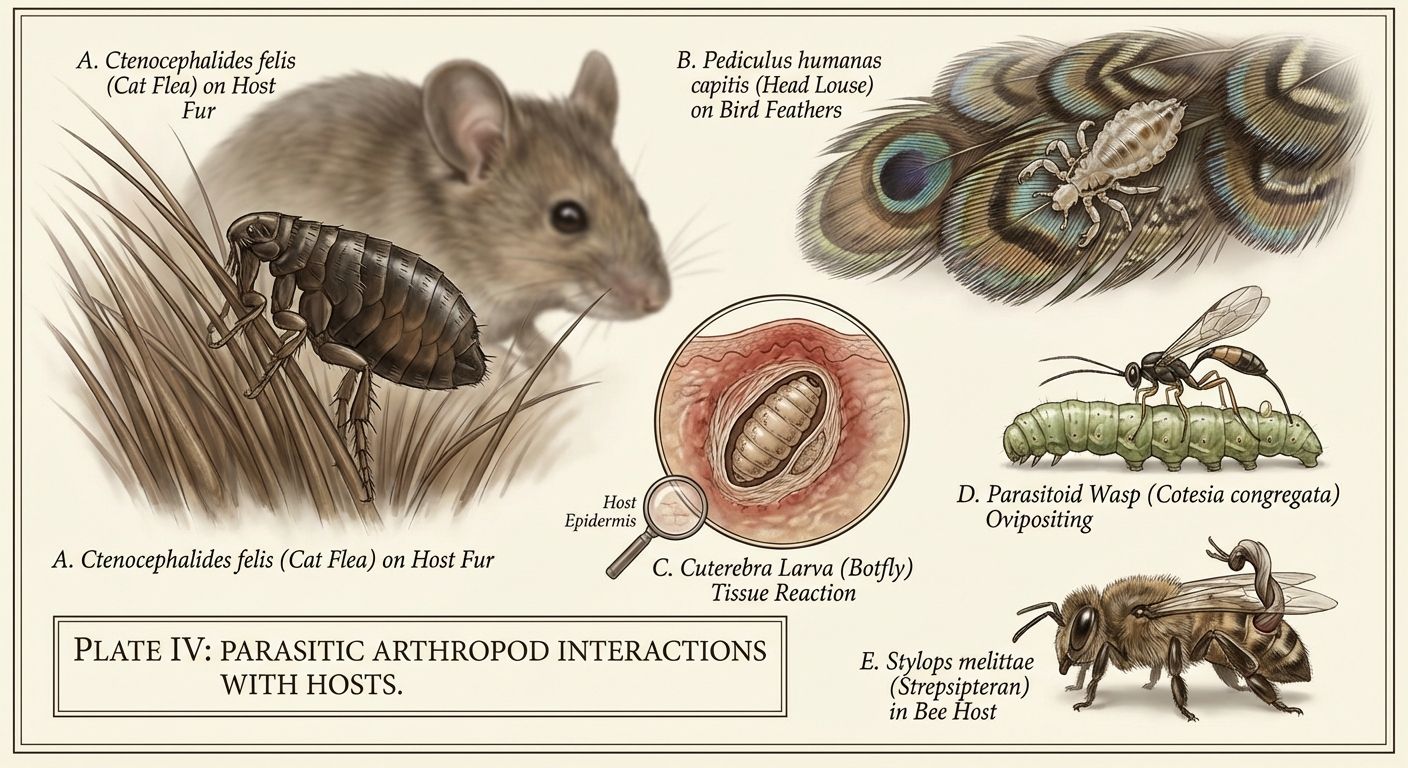
Scientific illustration collage of parasitic insects: flea on a mammal, louse on a bird, botfly larva in tissue, parasitoid wasp ovipositing in a caterpillar, and a strepsipteran in a bee.

Parasitic insects encompass a diverse group of species that exploit other animals for food, reproduction or shelter. This article summarizes major types, survival strategies, host effects and ecological roles, offering practical insights for students, researchers and veterinarians. Learn how parasitic insects shape ecosystems and what current research says about their management.
Rivalry Between Lions and Hyenas: Behavior, Hunting Strategies, and Surprising Facts

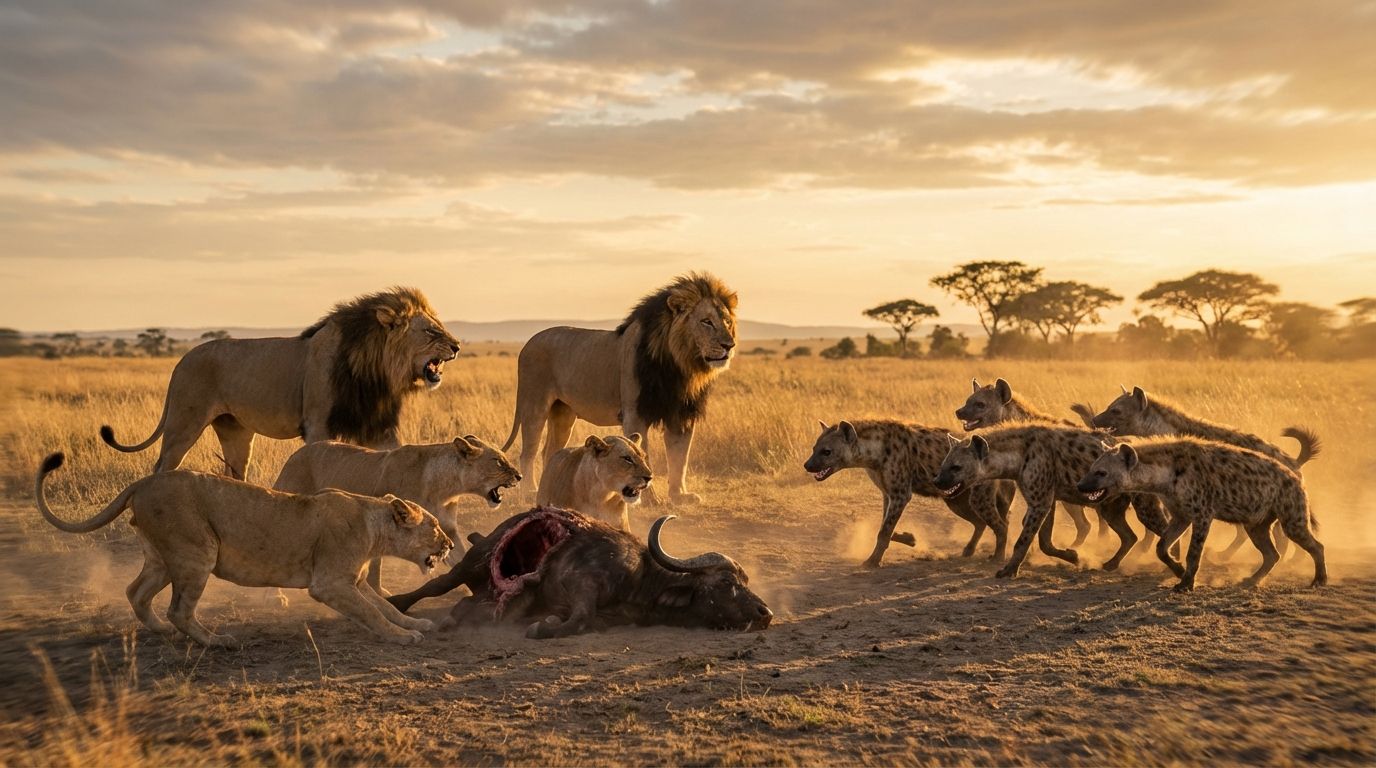
A tense standoff between a pride of lions and a clan of hyenas around a carcass on the African savannah at golden hour, showing aggressive postures and dramatic lighting.

This article examines the rivalry between lions and hyenas, exploring how competition, hunting tactics and social dynamics shape their interactions on the African savannah. It offers concise, evidence-based insights and surprising curiosities crafted for wildlife lovers and biology students.

Expect clear explanations, behavioral examples, and links to reputable sources to deepen your understanding of these iconic predator confrontations.

Venomous Animals: The 20 Most Dangerous Species and Their Effects

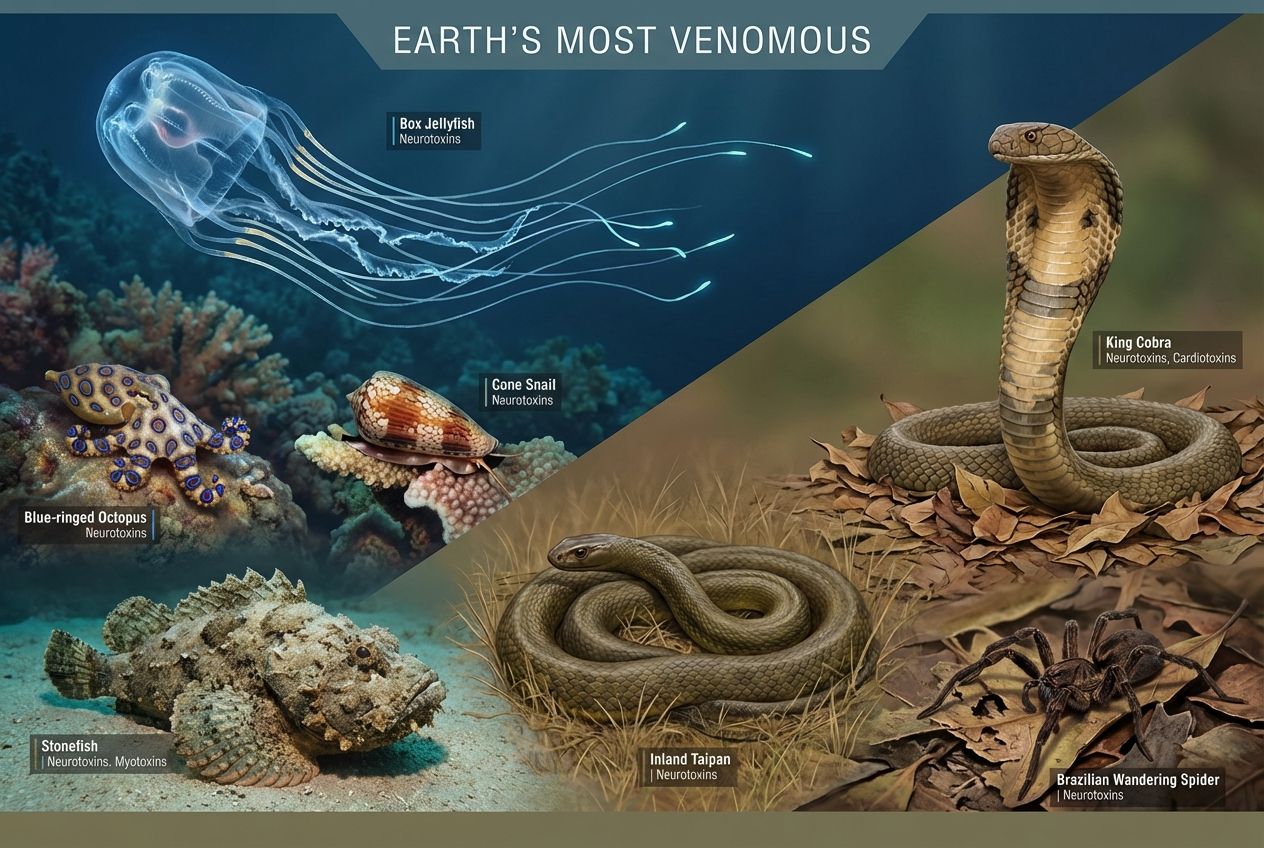
Composite illustration of venomous animals including box jellyfish, taipan snake, blue-ringed octopus, cone snail, stonefish, king cobra and wandering spider, depicted in a realistic scientific style.

This article lists the 20 most venomous animals in the world and explains their toxins, habitats, and the risks they pose. It provides clear, science-based descriptions and practical context for students, wildlife enthusiasts, and curious readers. Use this guide to learn how venom works, recognize high-risk species, and understand safety and first-aid considerations.