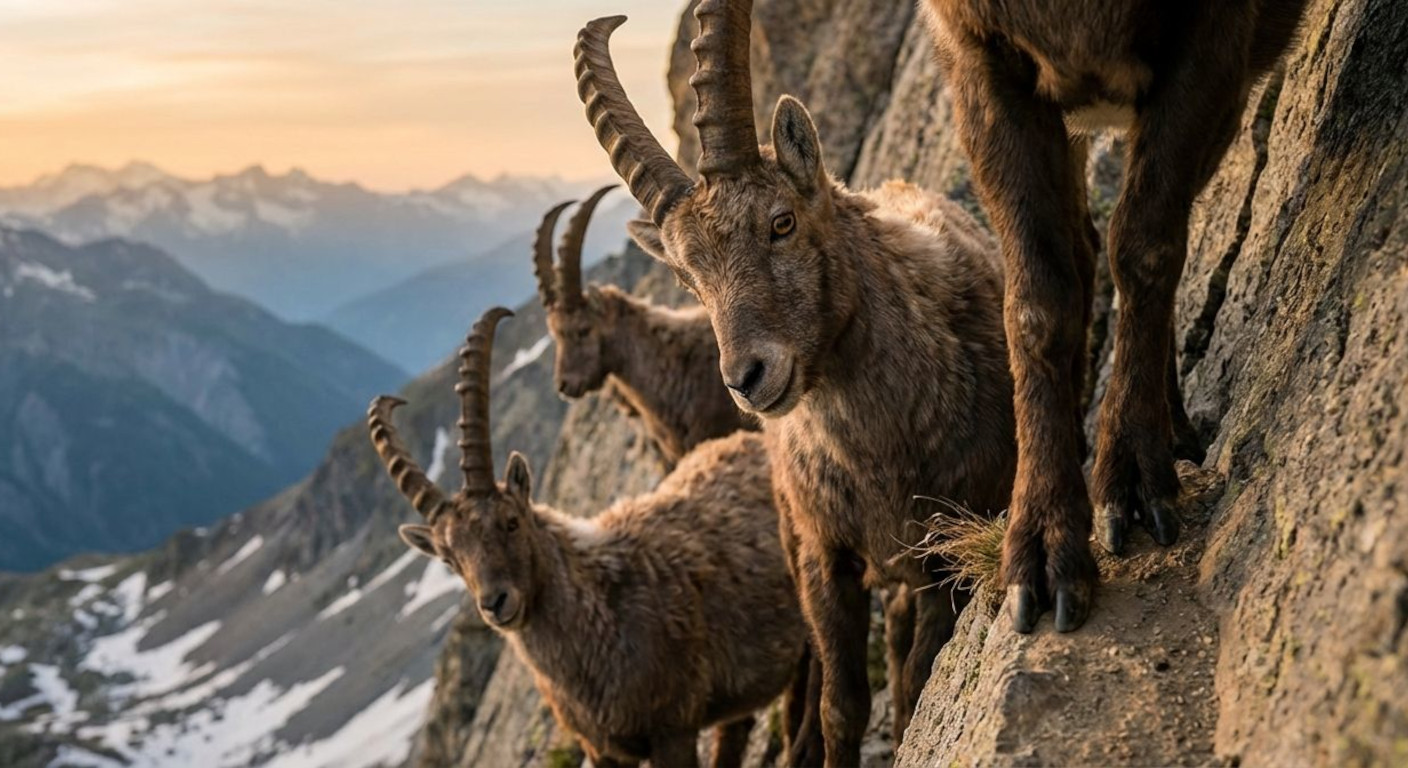
Climbing goats are among the most adept mammalian climbers on Earth, occupying steep talus slopes, cliff faces and high-elevation ranges where few other large herbivores can survive. In this article you will learn what climbing goats are, where they live, how they climb near-vertical surfaces, their main physical and behavioral characteristics, and a selection of surprising curiosities supported by reliable sources.
What are “climbing goats”?
The term climbing goats commonly refers to several species of wild goats and goat-like ungulates that live in mountainous terrain. These include the North American mountain goat (Oreamnos americanus), the European Alpine ibex (Capra ibex), and other wild goats and ibex species across Asia, Europe and Africa. They are characterized by compact, muscular bodies, specialized hooves, and exceptional balance—traits that allow them to navigate precipitous slopes to forage and avoid predators.
Where do climbing goats live?
Climbing goats inhabit a range of high-altitude and rocky environments. Typical habitats include:
- Alpine and subalpine zones (high mountain meadows and rocky ridges).
- Sheer cliff faces and talus slopes beneath feeding areas where vegetation is sparse but accessible.
- Steep canyon walls and escarpments in arid or semiarid regions for species like some wild goats in the Middle East.
These habitats provide safety from predators and access to seasonal forage. For detailed species accounts and range maps, consult resources such as National Geographic (Mountain goat — National Geographic) and the species pages on scientific databases like the IUCN Red List.
How do climbing goats manage to scale steep and near-vertical areas?
The ability of climbing goats to scale steep surfaces emerges from a synergy of anatomical, physiological and behavioral adaptations. Below are the primary mechanisms that enable their extraordinary climbing:
Hoof structure and grip
Climbing goats possess split (cloven) hooves with two toes and a hard outer rim surrounding a soft, rubbery pad. This design allows:
- Precision placement on small ledges and narrow footholds.
- Shock absorption through the cushioned pad, improving friction on uneven rock.
- Independent movement of the two digits, which increases surface contact and grip.
Low center of gravity and muscular build
These mammals have a compact, muscular body with powerful limbs and a relatively low center of gravity, which enhances stability on angled surfaces. Strong hindquarters provide explosive power for short jumps between rocks, while forelimbs stabilize landing and repositioning.
Exceptional balance and proprioception
Climbing goats demonstrate remarkable balance and body awareness (proprioception). Their vestibular system (inner ear balance organs) and highly tuned sensory feedback allow them to make micro-adjustments while moving across unstable substrates.
Behavioral strategies
Behavior matters as much as anatomy. Typical behavioral adaptations include:
- Using switchbacks and small ledges rather than trying to ascend in a straight line.
- Foraging near cliffs but returning to inaccessible ledges when threatened.
- Young animals (kids) learning to climb early through play and maternal guidance.
Key physical characteristics
Some of the most important physical features that define climbing goats include:
- Hooves: cloven with rough outer rim and soft pads for grip.
- Musculoskeletal strength: compact bodies with powerful legs and strong tendons.
- Coat: thick wool or underfur in many species for insulation at altitude.
- Eyes: panoramic vision with horizontally elongated pupils that improve depth perception along steep slopes.
These traits vary between species and populations based on local geology, climate, and predator pressure.
Behavioral traits and social structure
Understanding behavior helps explain how climbing goats survive in demanding environments. Common behavioral patterns include:
- Seasonal movements: descending to lower elevations in winter for better forage in some populations, while others remain at high elevations year-round.
- Social groups: females and young often form nursery groups while males may be solitary or form bachelor groups outside the mating season.
- Territoriality and dominance: during breeding seasons, males engage in displays and head-butting to establish dominance and access to mates.
- Early development: kids are precocial—able to stand and follow their mother within hours—then quickly develop climbing skills through play.
Diet and ecological role
Climbing goats are primarily herbivorous. Their diet includes grasses, sedges, mosses, lichens, shrubs and seasonal herbs. As grazers and browsers in mountain ecosystems, they play key ecological roles such as:
- Shaping alpine vegetation through selective foraging.
- Serving as prey for large predators where ranges overlap (wolves, large eagles, snow leopards in some regions).
- Contributing to nutrient cycling by moving organic material downslope.
Surprising facts and curiosities
Many facts about climbing goats are striking to those unfamiliar with mountain fauna:
- Vertical walkers: Certain ibex populations have been photographed and filmed navigating near-vertical dam faces and cliff walls—behaviors linked to foraging and predator avoidance.
- Quick learners: Goat kids practice climbing within days of birth, quickly acquiring the agility needed to survive.
- Old-world engineering: The Alpine ibex population recovered after protection measures in the 19th and 20th centuries, demonstrating successful conservation outcomes in mountain fauna.
- Not true goats? Some species commonly called “mountain goats” are not in the genus Capra; for example, the North American mountain goat (Oreamnos) is distinct from Capra ibex, though they share ecological niches and convergent adaptations.
Threats and conservation
Despite their rugged lifestyle, climbing goats face multiple threats:
- Habitat changes driven by climate change (altered snow regimes, shifting vegetation zones).
- Human disturbance from recreation, development and infrastructure in mountain areas.
- Overhunting and poaching in regions without effective management.
Conservation efforts include protected areas, hunting regulation, and population monitoring. For conservation status and detailed species assessments, the IUCN Red List is an authoritative resource.
How to observe climbing goats responsibly
If you are a nature lover or student planning to observe climbing goats in the wild, follow these guidelines for ethical and safe wildlife viewing:
- Maintain distance—use binoculars or a zoom lens to avoid stressing animals.
- Stay on marked trails to reduce habitat disturbance.
- Respect seasonal closures, especially during birthing seasons when females are sensitive to disturbance.
- Follow park rules and local regulations; consider joining guided, low-impact wildlife tours.
Practical classroom or field activities
For students and educators, simple activities help illustrate the adaptations of climbing goats:
- Compare hoof models: use clay and rubber pads to simulate how split hooves increase grip.
- Balance tests: demonstrate center of gravity using a weighted model to show stability on sloped surfaces.
- Mapping exercise: plot ranges of different climbing goat species and relate them to geology and climate data.
Final thoughts
Climbing goats are an inspiring example of how evolution shapes life to thrive in extreme environments. Their combination of anatomical specialization, behavioral strategies and ecological roles makes them a rich subject for anyone curious about animal behavior, mountain ecology and conservation. Whether you are a nature lover, student, or an educator, observing and studying these animals deepens our appreciation of biodiversity and the delicate balance of alpine ecosystems.
Further reading and reputable resources:
- National Geographic – Mountain goat facts: https://www.nationalgeographic.com/animals/mammals/facts/mountain-goat
- IUCN Red List – species assessments: https://www.iucnredlist.org/
Author’s note: This article is intended as an educational overview. For species-specific field studies, consult primary research articles and local wildlife authorities.