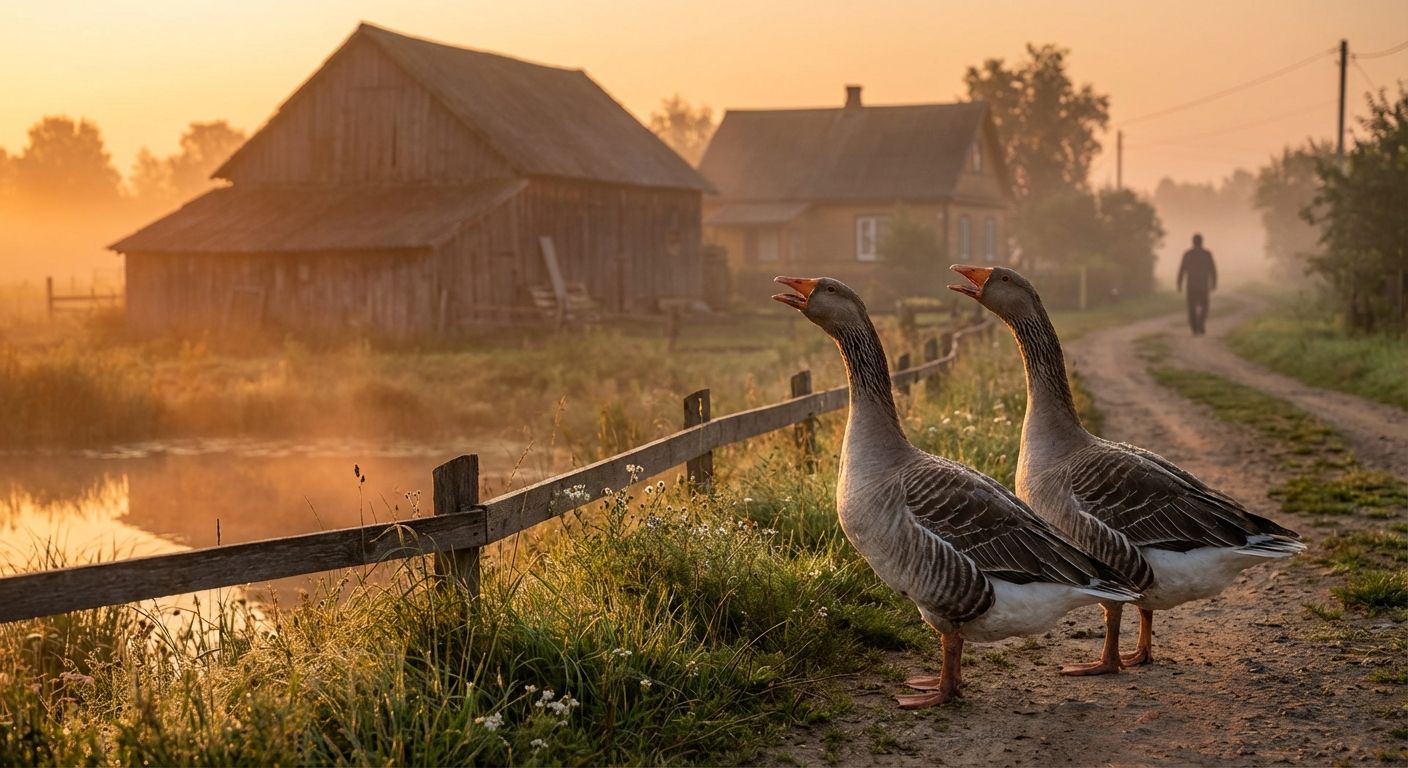
Geese as natural guards are a time-tested, low-cost option to improve security on small farms and rural properties. You learn that geese are alert, territorial birds whose loud alarm calls and strong protective instincts make them useful sentinels for livestock owners and smallholders.
Why consider geese as natural guards?
Many small-scale producers seek affordable, low-maintenance options to deter trespass, theft and predators. Geese combine vigilance, loud vocal alarm, and a bold temperament that often intimidates strangers and smaller predators. Unlike guard dogs, geese require minimal training, provide daytime surveillance, and can contribute additional benefits such as weed control and eggs.
Key advantages
- High vigilance: Geese are naturally alert and will loudly vocalize at unusual activity.
- Low cost: Upfront and maintenance costs are generally lower than trained guard animals.
- Dual-purpose: Many households benefit from eggs, meat (if applicable), and grazing services.
- Continuous daytime coverage: Geese are active through daylight hours and patrol perimeters.
Understanding goose behavior and protective instincts
To use geese as natural guards effectively, you must understand their natural behaviors. Geese are social, territorial birds with a strong pair-bonding instinct and clear hierarchical structures. They are particularly responsive to unfamiliar sounds and movements in their environment.
Territoriality and alarm calls
Geese defend territory through posture, chasing and loud honking. Their alarm calls are sharp and persistent, designed to alert the flock to danger and to attract human attention. Because their calls carry over long distances, a small number of geese can alert an entire property.
Visual and behavioral cues
- Posture: Upright stance, stretched neck and hissing indicate agitation.
- Chasing: Geese will chase intruders—humans, dogs, foxes—especially near nests or goslings.
- Mobbing: When threatened, geese can mob smaller predators, creating a deterrent effect.
Comparing geese with other security methods
Every security option has trade-offs. Below is a practical comparison focused on small farms and rural properties.
Geese vs. guard dogs
- Cost: Geese are cheaper to purchase and keep; dogs require training and veterinary care.
- Reliability: Dogs provide 24/7 protection and can be trained for specific tasks; geese mainly offer daytime deterrence and alarm calling.
- Control: Dogs may be trained to attack or hold intruders at bay; geese rarely injure humans but can effectively deter.
Geese vs. fences, lights and cameras
- Fences/Lights/Cameras: Passive systems provide reliable barriers, evidence collection and night coverage but can be expensive and require power and maintenance.
- Geese: Complement passive systems by providing active, living surveillance and immediate audible alerts when triggered.
Ideally, geese are best used as part of an integrated security plan: combine geese as natural guards with cameras and strategic lighting to maximize deterrence.
Practical setup: How to raise geese as effective guards
Choosing the right breeds
Some goose breeds are more suitable as sentinels due to temperament and size. Consider:
- Embden: Large and confident; visible deterrent.
- Toulouse: Calm but territorial, good for mixed farms.
- Chinese or African geese: Often loud and assertive—excellent alarm callers.
Local extension services can advise breeds well adapted to your climate. See resources such as the University of Minnesota Extension: Raising geese.
Number and placement
A pair or small flock (3–6 geese) often provides sufficient coverage for a typical small property. Place geese where they can see major approach routes: near driveways, farmyards, barns and paddocks. Avoid isolating them far from household activity—you want them close enough that people hear their alarm and can respond.
Housing and fencing
- Shelter: Provide a basic dry shelter for night protection—geese tolerate cold but need dry bedding and wind protection.
- Fencing: Low fencing (2–3 ft) can keep goslings in, but geese can fly short distances—use netting or remove wing flight as needed for containment.
- Water: Geese enjoy water but a small pond or trough suffices; full ponds are optional but beneficial.
Training, socialization and management
While geese require less formal training than dogs, management steps improve their guard performance and welfare.
Habituation and human contact
Early socialization reduces fear of household members and increases responsiveness to strangers. Spend time near geese, feed them by hand and reinforce calm behavior. However, keep a balance—overly tame geese may not alarm as strongly at strangers.
Using routines and cues
Establish consistent routines (feeding times, pen checks). Geese learn patterns and will become alert to deviations. Some farmers use simple auditory cues (e.g., calling) to direct geese or to test their alertness.
Benefits beyond security
- Weed and grass control: Geese graze actively and can reduce pasture maintenance.
- Egg production: Geese lay fewer eggs than chickens but provide an additional food resource.
- Low input: Minimal feed requirements when allowed to graze; hardy in varied climates.
Limitations and ethical considerations
Using geese as natural guards has constraints and responsibilities. Geese primarily guard by making noise and chasing; they are not a replacement for human oversight or secure locks. In addition, keep welfare in mind:
- Noise: Geese are loud—consider neighbors and local regulations.
- Predation risk: Geese and goslings can still fall prey to foxes, raccoons and large raptors—provide safe night housing.
- Legal and safety: Some areas restrict keeping livestock or place limits on noise; check local ordinances.
Health care and husbandry
Basic health care ensures geese remain effective sentinels. Key practices:
- Regular inspections: Check for injuries, parasites and abnormal behavior.
- Vaccination and vet care: Consult a local vet or extension service for region-specific recommendations.
- Nutrition: Provide balanced feed during winter or when forage is limited.
Reliable extension resources can help: for example, Penn State Extension’s guide to waterfowl husbandry (Penn State Extension) and other university sites offer region-specific advice.
Costs, ROI and practical tips
Initial costs include purchasing birds, basic shelter and fencing. Ongoing costs are feed, bedding and occasional veterinary care. The return on investment may include reduced theft, decreased need for paid security, lower lawn maintenance and egg/meat yields. Track simple metrics: number of intrusion events reduced, egg yield, and time saved on patrol.
Case examples and real-world evidence
Smallholders worldwide report successful use of geese for perimeter alerting. For example, vineyards and small homesteads commonly keep geese at farm entrances where they noise at unfamiliar vehicles. Academic and extension observations consistently note geese’s propensity to sound alarms and to chase small predators, which corroborates farmer testimonials. For more scientific background on behavior, see resources from agricultural extensions and animal behavior texts.
Conclusion and best-practice checklist
Using geese as natural guards can be an effective, humane and economical component of a farm security plan, especially for small properties and rural producers. They excel at daytime surveillance, loud alarm calling and low-cost maintenance. To implement successfully, match breed temperament to purpose, ensure welfare and combine geese with passive security measures.
Best-practice checklist:
- Start with 2–6 geese near primary approach routes.
- Provide dry shelter and secure night housing.
- Socialize but avoid over-taming the flock.
- Use geese in combination with fences, lights or cameras for best results.
- Monitor health and local regulations.
Quick implementation checklist
- Choose a suited breed for your climate and temperament.
- Acquire birds from reputable breeders.
- Set up a visible area near major access points.
- Provide shelter, water and balanced feed.
- Socialize birds early and monitor alarm behavior.
External references and further reading: University of Minnesota Extension (raising geese), Penn State Extension (waterfowl husbandry), and USDA/FAO resources on small-scale poultry management.
If you’re a rural producer considering geese, start small, observe behavior, and adapt your approach to local conditions. With proper care and placement, geese as natural guards can add both protection and farm value.