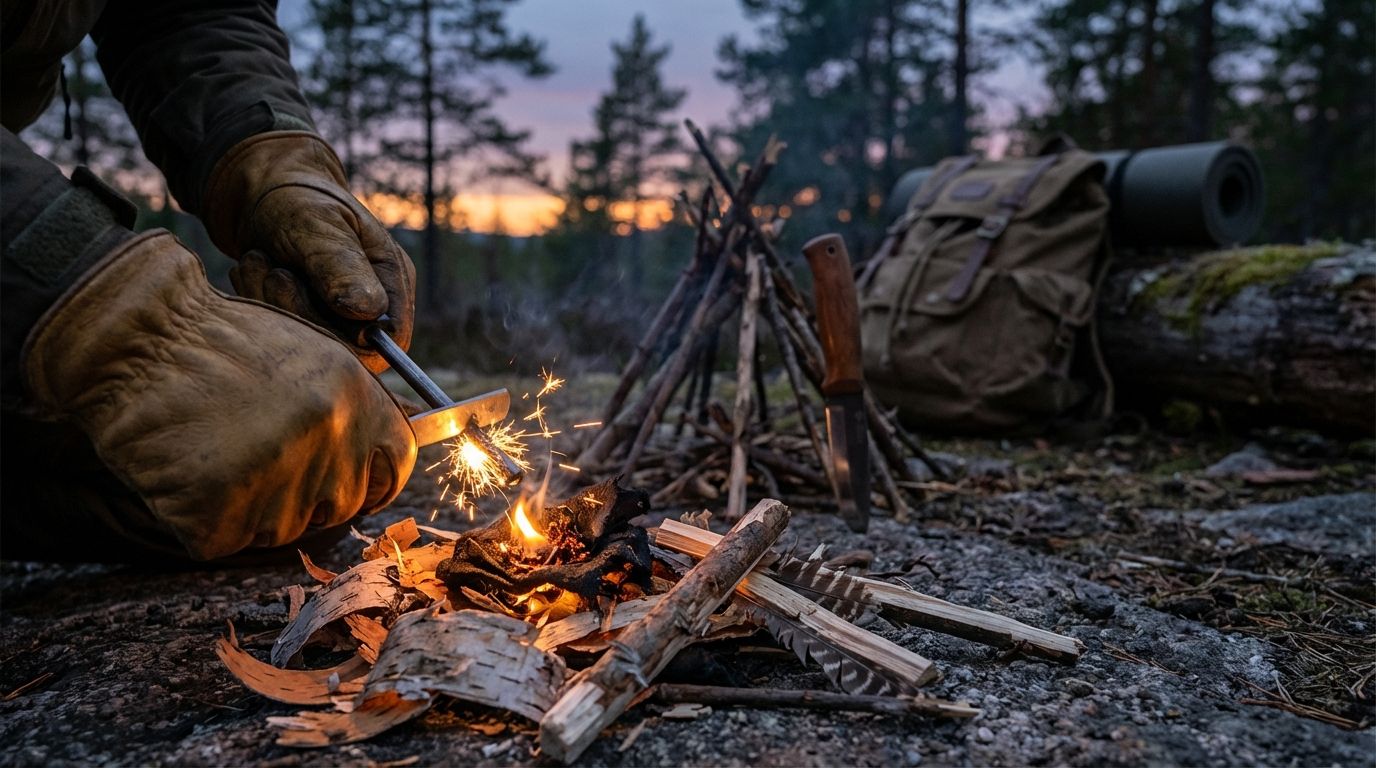
Making fire is one of the most important skills for outdoor enthusiasts and survivalists. Whether you’re on a remote trek, practicing ecotourism, or facing an emergency, knowing how to create and sustain fire without matches or a lighter can be lifesaving. This comprehensive guide covers time-tested methods, materials, safety rules, and troubleshooting strategies so you can build a reliable fire in the wild.
Why learning to make fire matters
Fire provides warmth, light, sterilization, water purification, and a means to cook food. In emergency situations it can signal rescuers and boost morale. Learning to make fire without modern ignition devices improves self-reliance and prepares you for scenarios when matches or lighters are lost, wet, or unavailable.
Core principles of fire-making
Every successful fire depends on three elements: heat, fuel, and oxygen—often called the fire triangle. Fire-starting techniques focus on creating sufficient heat to ignite a small, very dry fuel called tinder, then progressively adding finer and larger fuels (kindling and logs) into a structure that supports airflow.
- Tinder: Easily ignited materials such as dry grass, birch bark, cattail fluff, or char cloth.
- Kindling: Small sticks and twigs (pencil to thumb thickness).
- Fuel wood: Larger sticks and logs to sustain the flame.
- Fire structure: Teepee, lean-to, or log-cabin arrangements that balance flame contact and airflow.
Choosing a fire site and safety
Always prioritize safety. Choose a sheltered, flat site clear of overhanging branches and away from dry brush. Dig a small pit or use a rock ring where allowed, and clear combustible material for several feet around the fire. Keep water, sand, or dirt nearby to extinguish the fire. Adhere to local regulations and fire bans. For more safety best practices, consult the U.S. Forest Service or your local land management authority.
Proven methods to make fire without matches or a lighter
This section outlines practical methods ranked by reliability and commonness: spark-based tools, friction fire, lens ignition, and improvised techniques.
1) Ferrocerium rod (ferro rod) – spark-based (Recommended)
Overview: A ferrocerium rod produces hot sparks (up to 3,000°C) when scraped with a hard edge. It’s one of the most reliable and beginner-friendly fire-starting tools when you don’t have matches.
How to use:
- Gather a generous tinder bundle (e.g., dry grass, fluffy bark, or char cloth) and arrange kindling nearby.
- Hold the ferro rod close to the tinder at a slight angle. Use the spine of a knife, a striker, or a piece of flat metal to scrape the rod firmly toward the tinder.
- Aim sparks into the center of the tinder bundle. When an ember appears, gently blow to grow the ember and transfer it into the tinder to create flame.
Tips: Prepare feather sticks from dry wood to catch sparks more easily. Practice striking angles and pressure. Store the ferro rod dry and protected.
2) Flint and steel
Overview: Traditional method that creates sparks by striking high-carbon steel against a hard stone like flint. Sparks are fewer and cooler than ferro rods but effective with good tinder such as char cloth.
How to use:
- Use a sharp edge of flint and strike the steel at a sharp angle to shave off sparks into char cloth or fine tinder.
- Catch the ember on char cloth, then transfer it to a tinder bundle and blow until flame forms.
Tip: Carry or make char cloth (cotton burned in low oxygen) to make this method highly reliable.
3) Bow drill, hand drill, and other friction methods
Overview: Friction methods generate heat by rapidly rubbing two pieces of wood together until a hot coal forms. They require practice, suitable wood, and patience but require no metal tools.
Bow drill (most reliable friction method)
Materials: A bow (curved stick with cord), spindle (straight dry stick), hearth board (softwood with a notch), and a socket (handhold).
Steps:
- Cut a small depression in the hearth board and a notch leading out from it.
- Loop the cord of the bow once around the spindle. Place the spindle in the hearth depression and hold the socket on top.
- Move the bow back and forth briskly to spin the spindle. Apply downward pressure to increase friction heat until a dark, smoking coal forms in the notch.
- Transfer the coal to a tinder bundle and blow gently to ignite.
Tips: Use dry, non-resinous wood pairs like willow, poplar, or basswood. Practice technique and maintain steady pressure and speed. For a visual reference, see the friction fire article on Wikipedia.
Hand drill
Smaller and simpler but more physically demanding. It uses the same principle as the bow drill but requires faster rubbing between the hands and more endurance.
4) Lens and sunlight (magnifying glass or glasses)
Overview: Use focused sunlight through a lens to ignite tinder. Works best in bright sun and with highly combustible tinder (punk wood, dry grass, or char cloth).
How to use: Angle the lens so it concentrates sunlight to the smallest bright point on the tinder. Hold steady until smoke appears and then slowly nurture the ember into flame.
5) Battery + steel wool or metal foil
Overview: A common improvised method using a charged battery (AA, AAA, or 9V) and fine steel wool. The battery causes the steel wool to heat and ignite quickly.
How to use: Touch the battery terminals to the steel wool so the wool completes a circuit; it will glow and burn. Transfer embers to tinder and blow to flame.
Safety: This method can produce sudden flames and should be used with extreme caution.
6) Chemical and other improvised methods
Some chemicals (e.g., potassium permanganate plus glycerin) ignite spontaneously, but they are hazardous and not recommended for casual use. Improvised methods should only be used by trained individuals with proper precautions.
Building the fire: structures and techniques
Once you have an ember or spark, choosing the right fire structure accelerates success:
- Teepee: Small teepee of kindling around the tinder for a quick, hot flame.
- Lean-to: Use a larger log as a windbreak and lean kindling against it.
- Log cabin (shelter): Stack larger pieces around the kindling to create sustained heat for cooking or warmth.
Create feather sticks by shaving dry sticks into thin curls to catch sparks easier. Maintain airflow and gradually add larger pieces as flames strengthen.
Tinder and advanced tinder options
Quality tinder is the difference between success and failure. Examples of excellent tinder:
- Natural: Birch bark, dry grasses, punk wood, cedar bark, tinder fungus (inner layer), cattail fluff.
- Prepared: Char cloth, cotton balls with petroleum jelly, commercial tinder sticks, dryer lint sealed in a container.
Practice, troubleshooting, and common mistakes
Practice is essential. Common causes of failure include: wet materials, insufficient tinder, compacted tinder bundles that smother embers, and lack of persistence. Troubleshoot by:
- Checking dryness: split wood to access dry core.
- Using more or better tinder: add char cloth or fine fibers.
- Ensuring oxygen: keep the tinder loose so air reaches the ember.
- Improving technique: practice bow drill rhythm or ferro rod angle.
Recommended gear and preparation
For outdoor activities carry a small, dedicated kit: a ferro rod, a small piece of char cloth, a compact magnifying lens, and a few cotton balls in a waterproof container. Store tinder in sealed bags and rehearse methods at home before relying on them in the field. Consider taking a wilderness skills or survival course for hands-on coaching.
Environmental and legal considerations
Respect local fire restrictions and ecology. In fragile environments, avoid collecting excessive dead wood and follow Leave No Trace principles. Always extinguish fires completely—douse with water, stir ashes, and feel for heat before leaving.
Further learning and resources
To deepen your skills, consult trusted resources: REI’s fire-starting guide (REI) and field manuals such as the SAS Survival Handbook. Consider practicing under controlled conditions and joining a local outdoor skills group.
Quick reference: step-by-step for a ferro rod fire
- Prepare a dry tinder bundle and build a small teepee of kindling beside it.
- Place the ferro rod close to the tinder and scrape firmly with a sharp striker aimed at the tinder.
- When sparks land and an ember forms, gently blow to grow it and pull it into the tinder bundle.
- Place the tinder with ember into the teepee and add small kindling gradually until you have a stable flame.
Final tips
Mastery of fire-making comes from practice, patience, and preparation. Prioritize safe, legal use of fire and carry redundant ignition options if possible. With time you’ll gain the confidence to reliably make fire in a variety of conditions—an invaluable skill for any outdoor enthusiast, ecotourism practitioner, survivalist, or adventurer.
Making fire without matches or a lighter is a fundamental, empowering skill—learn it slowly, practice often, and always respect the environment.