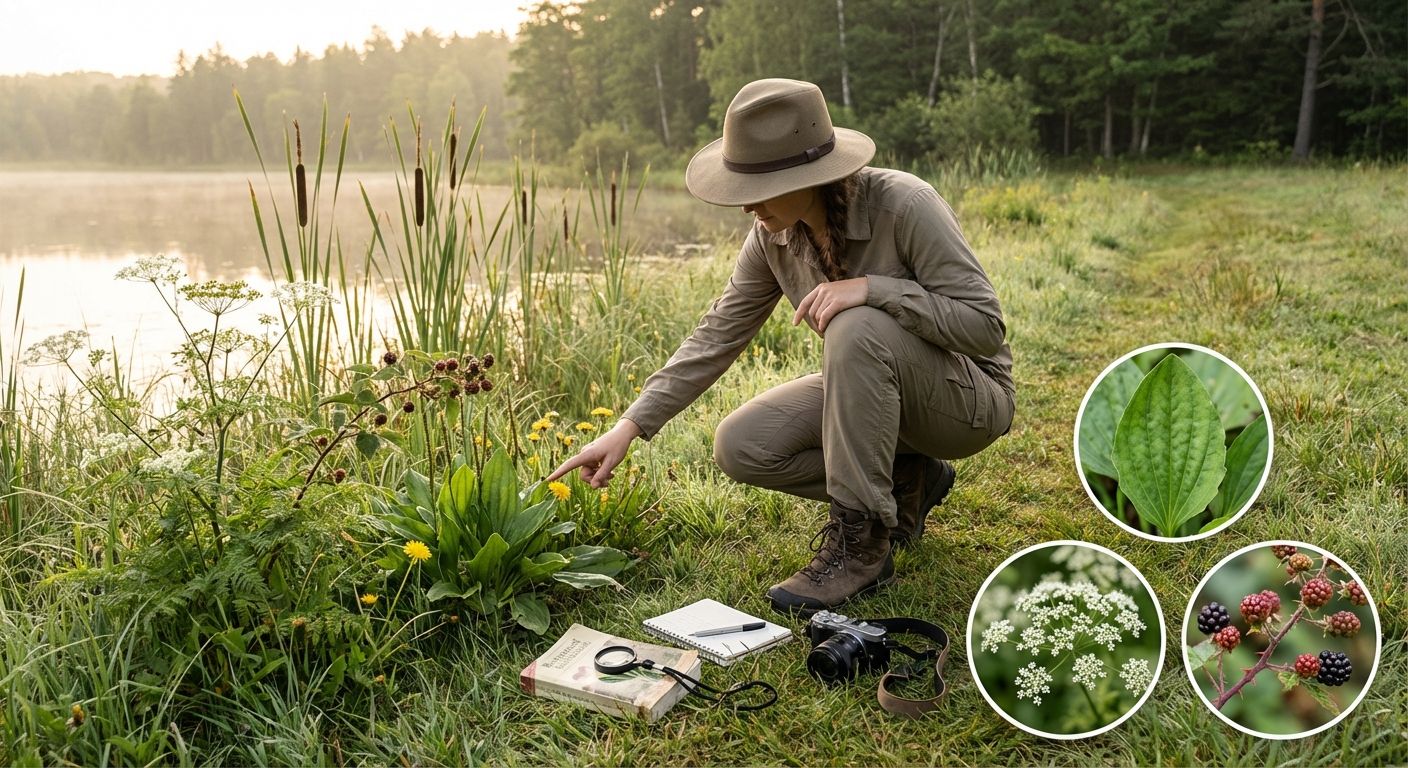
Identify plants confidently and safely in the field: this practical guide teaches straightforward identification methods, common species to recognize and essential rules to avoid dangerous mistakes. Whether you are a camper, bushcrafter, adventurer or nature lover, mastering these techniques will improve your safety and enjoyment outdoors.
Why plant identification matters
Being able to identify plants is not just about finding snacks—it’s a core survival skill. Correct identification helps you:
- Find safe, nutritious food in emergency situations.
- Use natural remedies when medical care is unavailable.
- Avoid toxic species that can cause severe illness or death.
- Respect ecosystems and follow ethical foraging practices.
Basic principles of plant identification
Start with simple, repeatable checks. Use the following checklist every time you try to identify a plant:
- Leaves: arrangement (alternate, opposite, whorled), shape, margin and texture.
- Flowers: color, symmetry, number of petals and blooming season.
- Fruit/seed: type (berry, capsule, nut), color, and attachment point.
- Stem: woody or herbaceous, presence of hairs, sap color.
- Habitat: wetland, meadow, forest edge, elevation and soil type.
- Smell and taste: only when you are trained—never taste unknown plants.
Use multiple characteristics
Never rely on a single trait (like leaf shape alone). Confident ID comes from matching several features and the plant’s overall growth habit.
Tools and references for reliable identification
Equip yourself with a mix of analog and digital tools:
- Field guide: regional pocket guide with photos and descriptions—ideal offline reference.
- Plant ID apps: apps like iNaturalist or Seek can help, but verify with guides.
- Hand lens and knife: for close inspection of leaves, hairs, and sap.
- Notebook and camera: document features for later confirmation.
Reliable external resources include the USDA PLANTS Database (plants.sc.egov.usda.gov) and Poison Help from the American Association of Poison Control Centers (poison.org).
Everyday edible plants to know
Learn a small, regionally-appropriate list well instead of a long, unfamiliar catalog. Common, broadly-distributed edibles to begin with:
- Dandelion (Taraxacum officinale): edible leaves, flowers and roots. Leaves are toothed and form a basal rosette.
- Plantain (Plantago major and P. lanceolata): broad, low leaves with parallel veins—useful as a poultice and as food.
- Cattail (Typha spp.): marsh plant with edible rhizomes and immature flower heads—highly caloric when processed.
- Blackberry and raspberry (Rubus spp.): aggregate fruits; recognize by thorny canes and pinnate leaves.
- Clover (Trifolium spp.): small trifoliate leaves and round flower heads—young leaves and flowers are edible.
Always confirm with at least two other characteristics (flower, fruit, habitat) before consuming.
Medicinal plants worth recognizing
Many common plants have useful medicinal properties. Learn safe preparation methods and dosages before using them:
- Yarrow (Achillea millefolium): feathery leaves and flat-topped white flowers; used for wound care and as an anti-inflammatory.
- Plantain (Plantago spp.): also medicinal—crushed leaves can soothe insect bites and minor wounds.
- Willow (Salix spp.): contains salicin, a precursor to aspirin—bark tea can relieve pain (use cautiously).
- Calendula (Calendula officinalis): bright orange flowers useful in salves for skin irritation.
Important: Medicinal use carries risk. If possible, cross-check with medical literature or a trained herbalist. For clinical guidance, see resources from university extension programs (for example, Penn State Extension).
Common poisonous plants and how to spot them
Some toxic species are widespread and dangerous. Familiarize yourself with these features and examples:
- Poison hemlock (Conium maculatum): purple-spotted stems, fern-like leaves and umbrella clusters of white flowers—**extremely toxic** if ingested.
- Oleander (Nerium oleander): evergreen shrub with leathery leaves and tubular flowers—**all parts are poisonous**.
- Foxglove (Digitalis purpurea): tall spikes of tubular flowers; contains cardiac glycosides—**do not ingest**.
- Belladonna / Deadly nightshade (Atropa belladonna): shiny black berries and purple bell flowers—**highly toxic**.
- Poison ivy (Toxicodendron radicans): “Leaves of three”—contact causes allergic dermatitis, not poisoning by ingestion in most adults.
Rule of thumb: If you cannot positively identify a plant as safe, assume it is harmful and avoid contact or ingestion.
Step-by-step field identification process
- Observe from a distance: Note growth form, habitat and grouping.
- Photograph details: Take close shots of leaves, underside, flowers and fruit.
- Check multiple traits: Leaves, flowers, stem, smell, and season.
- Cross-reference: Use a regional guide and an app; confirm with a second source.
- When in doubt: Do not eat. Mark the plant and re-check later or consult an expert.
Testing methods and why some old tests are dangerous
Ignore unreliable folklore tests (like silver coin blackening or animal taste tests). These methods are inaccurate and can be deadly. Modern best practice: rely on botanical features and trustworthy references. If you must perform a cautious test (only with a plant you strongly suspect to be edible):
- Do not taste if the plant resembles known toxins.
- Use a tiny skin patch test for contact allergies (apply a tiny piece to inner forearm), wait 24 hours.
- Never rely on taste as a sole test—many toxic plants taste mild before causing harm.
Foraging ethics and legal considerations
Be a responsible forager: take only what you need, avoid rare or protected species, and follow local regulations. Some public lands prohibit plant removal—check rules before harvesting. Good internal pages to link for more site-specific protocols: Foraging Basics and Bushcraft Safety.
First aid for plant-related injuries and poisoning
- Skin contact with irritants (e.g., poison ivy): wash with soap and water immediately; use barrier creams; seek medical help for severe reactions.
- Suspected ingestion of a toxic plant: do not induce vomiting unless instructed; contact emergency services or Poison Control at poison.org or your local emergency number.
- Allergic reactions: monitor breathing and consciousness; administer epinephrine if prescribed and seek emergency care.
Practice and learning strategies
Skill grows with deliberate practice:
- Start locally: Learn 10–20 plants common to your area—both useful and dangerous.
- Join guided walks: Local botanist-led forays and workshops accelerate learning.
- Keep a field journal: Record sightings, photos and notes about seasonality and habitat.
- Use mentorship: Pair with an experienced forager or herbalist before eating wild plants.
Further reading and trusted resources
Expand your knowledge with authoritative sources:
- USDA PLANTS Database: plants.sc.egov.usda.gov
- American Association of Poison Control Centers: poison.org
- Regional university extension services (search “[your state] extension plant identification”).
Conclusion
Learning to identify plants in the wild is an essential skill for campers, bushcrafters, adventurers and survival enthusiasts. Use systematic observation, trusted tools and conservative safety rules: if you are not sure, do not eat or use the plant. With steady practice—documenting sightings, consulting reliable references, and seeking expert guidance—you can build a practical and safe plant identification skillset that enhances your wilderness experiences.
Ready to practice? Begin by memorizing a short list of local edibles and toxins, carry a regional field guide, and join a guided foraging walk to solidify your knowledge.