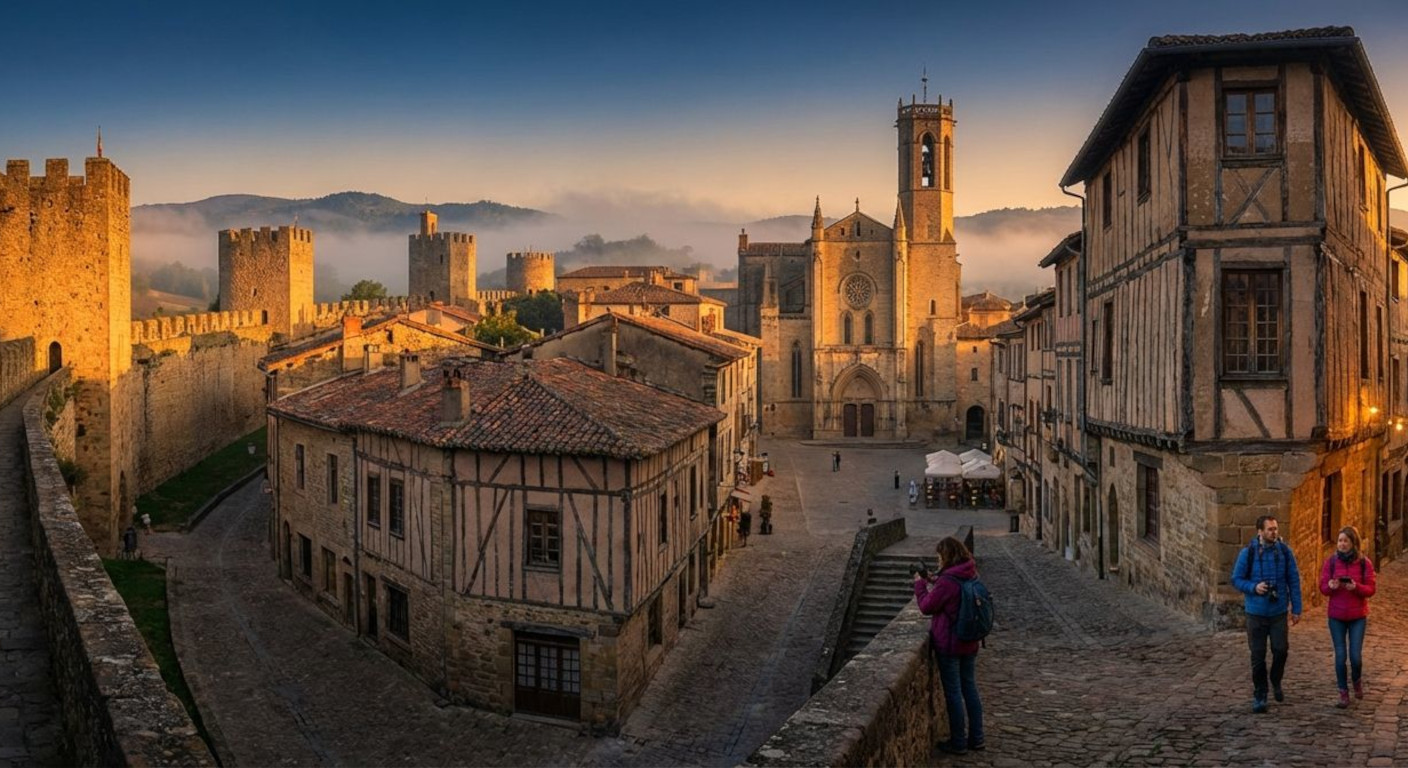
Medieval cities remain some of Europe’s most evocative destinations, where cobblestone streets, fortified walls and centuries-old churches create living time capsules. This guide presents a curated itinerary through the best-preserved medieval cities, offering practical advice, cultural context, and travel tips to help you plan an unforgettable historic journey.
Why Visit Medieval Cities?
Visiting medieval towns gives travelers a unique window into the past: urban layouts unchanged for centuries, visible layers of architectural styles, and living traditions. These places offer:
- Architectural authenticity: intact fortifications, towers, and medieval civic buildings.
- Cultural continuity: festivals, crafts, and cuisine rooted in local history.
- Immersive experiences: walking tours, night-time wall walks, and quiet plazas far from modern high-rises.
Top Well-Preserved Medieval Cities to Include
Below are selected cities noted for exceptional conservation, visitor experience and historical significance. Each entry includes highlights, curiosities, and practical tips.
Carcassonne, France
Highlights: Double ring of medieval walls, towers, Château Comtal and reconstructed ramparts. Carcassonne is one of Europe’s most iconic fortified cities.
Curiosities: Much of the visible restoration was performed in the 19th century by architect Eugène Viollet-le-Duc, blending conservation with romantic reconstruction.
Best time to visit: Late spring and early autumn for milder weather and fewer cruise-related day-trippers.
Rothenburg ob der Tauber, Germany
Highlights: Intact city walls, well-preserved timber-framed houses, the Medieval Crime Museum and the famous Plönlein intersection.
Curiosities: Rothenburg’s “Night Watchman Tour” is a theatrical guided walk that brings medieval stories to life.
Best time to visit: Autumn for fall colors and the Christmas market season.
Český Krumlov, Czech Republic
Highlights: Castle complex with baroque theatre, winding river setting and a compact, well-preserved Old Town listed as a UNESCO World Heritage Site (UNESCO).
Curiosities: The castle’s preserved baroque theatre is one of the few in Europe where original stages and machinery survive.
Tallinn Old Town, Estonia
Highlights: Medieval walls and towers, Toompea Hill with its ancient cathedral and parliament building, atmospheric streets with Hanseatic heritage.
Curiosities: Tallinn’s Old Town became a UNESCO World Heritage Site in 1997 and is famed for its harmonious medieval urban fabric.
Bruges, Belgium
Highlights: Canals, the Belfry of Bruges, Basilica of the Holy Blood and a city center that feels like an open-air museum.
Curiosities: Bruges was a major commercial hub in the medieval period; its wealth is visible in ornate guild houses and grand civic buildings.
Siena, Italy
Highlights: The Piazza del Campo, Siena Cathedral (Duomo), and a historic urban plan virtually unchanged since the Middle Ages.
Curiosities: The Palio horse race, held twice a year, is a living medieval tradition rooted in city rivalries.
York, England
Highlights: York Minster, the city walls, and the Shambles—one of the best-preserved medieval streets in Europe.
Curiosities: York was a Viking and medieval stronghold; its layered history is visible in street names, museums and the Jorvik Viking Centre.
Ávila, Spain
Highlights: Complete medieval walls encircling the city, Romanesque and Gothic churches, and the contemplative atmosphere of a walled monastic city.
Curiosities: The walls are illuminated at night—an atmospheric sight that transforms the cityscape after dark.
Dubrovnik, Croatia
Highlights: Remarkable city walls, Stradun street, and medieval fortresses overlooking the Adriatic.
Curiosities: Dubrovnik’s Old Town is a UNESCO World Heritage Site and has become popular with visitors for its stunning setting and cinematic use (notably as a filming location).
Planning Tips and Practical Advice
To make the most of your trip to medieval cities, follow these practical recommendations:
- Book accommodations early in peak seasons (summer and festival dates). Historic centers often have limited hotels; consider family-run guesthouses to support local preservation efforts.
- Travel light—narrow cobblestone streets and stairs make heavy luggage a challenge. Choose backpacks or soft-sided bags where possible.
- Wear comfortable shoes for uneven paving and steep alleys. A lightweight rain jacket is useful in variable European weather.
- Buy city passes where available to save on combined entry to castles, museums and towers.
- Respect local conservation rules—do not climb fragile structures or remove artifacts. Many sites have guided access to protect sensitive features.
Best Time to Visit
Season impacts both weather and crowd levels:
- Spring (April–June): Blooms, mild temperatures and fewer crowds—ideal for walking tours and photography.
- Summer (July–August): Warm weather and extended opening hours, but expect higher volumes of tourists and possible heatwaves.
- Autumn (September–October): Comfortable weather, harvest festivals and atmospheric light—excellent for cultural travel.
- Winter (November–March): Quieter towns and special seasonal events like Christmas markets; some attractions may have reduced hours.
Suggested Itineraries
Below are practical route options depending on how much time you have. Distances assume Europe-centered arrivals; adjust based on your starting point.
7-Day Classic Highlights (Compact)
- Day 1–2: Carcassonne — explore walls, Château Comtal and evening ramparts walk.
- Day 3: Transfer to Girona or Barcelona (for flight/train connections) or continue to Provence for a slower pace.
- Day 4–5: Rothenburg ob der Tauber — walk ramparts, visit museums and night watchman tour.
- Day 6: Český Krumlov — river views and castle complex (overnight).
- Day 7: Return via Prague or Munich depending on onward travel plans.
10–14 Day Immersive Route (Multi-country)
- Start in Bruges (2 days) — canal boat, Belfry climb and local chocolate/beer experiences.
- Train to York or fly to the UK (2–3 days) — city walls, Minster, and historical museums.
- Fly to Italy: Siena (2 days) — Duomo, Piazza del Campo and Tuscan surroundings.
- Move east to Český Krumlov and Prague (2–3 days) — castle, baroque theater, and Old Town exploration.
- End in Dubrovnik or Tallinn (2–3 days) depending on preference for Mediterranean or Baltic scenery.
How to Get Around
Regional trains are excellent for many routes in Central and Western Europe—comfortable, frequent and scenic. In places like Dubrovnik and some parts of Spain, buses or car hire may be more efficient. For compact itineraries, consider a mix of trains and short flights to save time.
Local Experiences and Cultural Tips
- Guided walking tours: Choose small-group or private walks for deeper historical context. Many cities offer themed tours (fortifications, trade routes, medieval crafts).
- Food and markets: Sample regional specialties—Siena’s pici pasta, Bruges chocolates, or Tallinn’s Estonian rye-based dishes. Visit local markets for artisanal products.
- Night walks and illuminated walls: Many walled cities become otherworldly at night; check local opening times for wall walks and viewpoint access.
- Festivals and reenactments: Coordinate travel dates to attend medieval fairs or living-history events for authentic experiences.
Suggested Links and Further Reading
For authoritative historical context and planning resources, consider:
- UNESCO World Heritage Centre — for official listings and preservation notes.
- Lonely Planet — practical travel guides and city-specific tips.
Packing Checklist for Medieval City Travel
- Comfortable walking shoes and moisture-wicking layers
- Compact umbrella or light rain jacket
- Portable charger and universal adapter
- City map (digital and a small printed map for narrow alleys)
- Copies of booking confirmations and travel insurance details
Sustainability and Responsible Tourism
Preserved medieval centers are fragile. Practice responsible tourism: support local businesses, follow paths and signage, avoid contributing to overtourism in peak hours, and consider visiting off-peak to reduce pressure on infrastructure.
Final Recommendations
When planning a trip focused on medieval cities, balance iconic highlights with lesser-known towns to gain richer cultural insight. Allow slow, walkable days to feel the layers of history and to discover small museums, artisan workshops and quiet chapels that give each city its unique character.
Next steps: Choose a 7-, 10- or 14-day route above, book accommodations early in the old towns, and download offline maps. Enjoy exploring these living chapters of history—where every street tells a story.