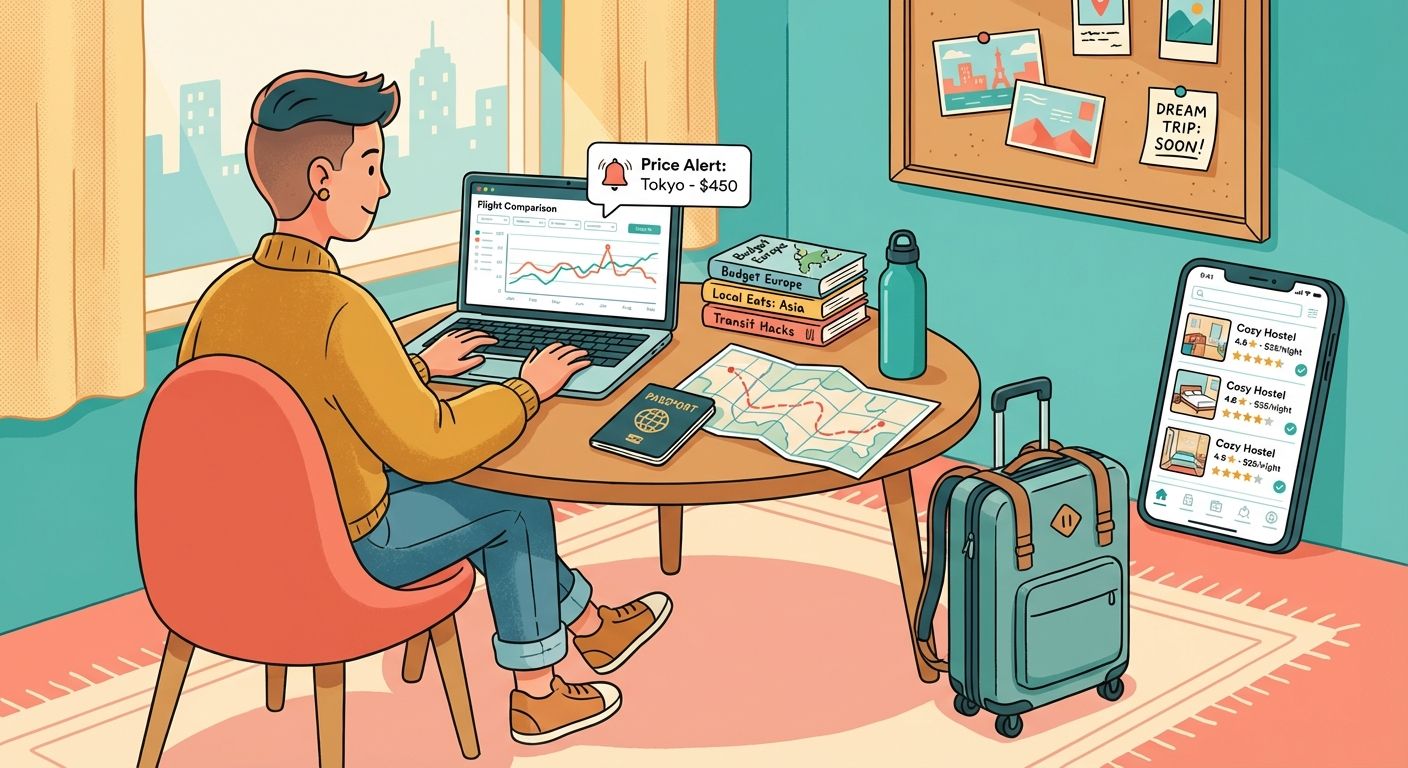
Saving money on travel starts with a few smart habits: flexibility, research, and knowing which tools to use. In the sections below you’ll find step-by-step tactics to pay less for flights and lodging without sacrificing comfort or safety.
Why focus on flights and accommodation?
Flights and accommodation often account for the largest share of travel expenses. By optimizing these two categories you can reduce the total trip cost dramatically — freeing budget for activities, food, or an extra night. Whether you’re a student, family on a tight budget, or a solo traveler, these tips are tailored to maximize savings.
Flight-Saving Strategies
1. Be flexible with dates and airports
Flexibility is one of the most powerful levers. If possible, search for flights across a range of dates rather than fixed departure and return days. Tools like Google Flights and Skyscanner display calendar views and price graphs that highlight cheaper combinations.
2. Use multiple search engines and price alerts
No single search engine finds every deal. Compare results on Kayak, Skyscanner and Google Flights, then set fare alerts. Price-drop notifications let you buy when fares dip. Consider browser extensions or apps like Hopper for predictive alerts.
3. Book at the right time — and know when not to book
While there’s no perfect minute to buy every ticket, studies show that for many routes booking several weeks to a few months in advance yields better prices for economy fares. For domestic travel aim for 1–3 months out; for international, 2–6 months. Avoid last-minute purchases unless a genuine flash sale appears.
4. Mix-and-match and consider budget carriers
Open-jaw itineraries or booking one-way tickets on different airlines can be cheaper than round-trips on a single carrier. Low-cost carriers (LCCs) are excellent for short flights — just watch extra fees (checked baggage, seat selection, priority boarding). Read fare rules carefully.
5. Use points, miles and creative credit card strategies
If you have loyalty points or transferable credit card points, they can slash or eliminate airfare costs. Explore award charts, transfer partners, and consider cards that offer sign-up bonuses useful for flights. Also, factor in annual fees and redemption restrictions.
6. Search in private/incognito mode and compare currencies
There’s mixed evidence that cookies raise prices, but searching in incognito/private browsing prevents some dynamic pricing tests. For international bookings, compare payments in different currencies — sometimes paying in a local currency through a trusted OTA is cheaper, but only if your card charges no foreign transaction fees.
Accommodation-Saving Strategies
1. Choose the right accommodation type
Options beyond traditional hotels can dramatically reduce costs:
- Hostels — great for solo and social travelers; many now offer private rooms.
- Vacation rentals (Airbnb, Vrbo) — useful for longer stays or groups where cooking saves on food.
- Guesthouses and B&Bs — often cheaper and more personal than hotels in many destinations.
- House-sitting and home exchanges — excellent for extended stays if you qualify.
2. Book with flexible cancellation but hunt for discounts
Flexible rates add security, but often standard non-refundable rates are cheaper. Compare prices on the property’s official website and OTAs like Booking.com. Some hotels will match or beat OTA rates if you contact them directly.
3. Opt for longer stays and negotiate
Many properties offer weekly or monthly discounts. For stays longer than a week, contact the host or property manager and ask for a better rate. Negotiation is easier in shoulder or low season.
4. Use location and amenities to save
Choosing a place slightly outside the main tourist area can reduce rates substantially. Factor in public transport costs — a slightly cheaper room near efficient transit is often a win. Likewise, amenities like a kitchenette or free breakfast can lower daily expenses.
5. Loyalty programs and alternative memberships
Hotel loyalty programs reward repeat stays; even budget chains often provide perks. Consider memberships like Hostelworld’s loyalty features or subscription services (e.g., some booking platforms or credit cards) that unlock discounted rates.
Planning and Budgeting Tips
1. Create a travel price spreadsheet
Track airfare, lodging, food, transport and activities. Use columns for target budget, actual costs and potential savings. Updating this sheet while planning helps you spot where to cut costs early.
2. Time your trips for shoulder season
Traveling during shoulder seasons (between peak and off-peak) often yields lower prices, fewer crowds, and good weather. Research climate and events for your destination to pick optimal windows.
3. Combine free and paid activities
Balance splurge experiences with free options — parks, self-guided walking tours, free museum days. Local tourism boards often list free or low-cost activities on their official sites; check the destination’s official tourism website first.
Tools and Resources
- Google Flights — fast search with calendar and price tracking.
- Skyscanner — great for multi-airport and whole-month searches.
- Kayak — compares many OTAs and offers fare alerts.
- Booking.com and Airbnb — good starting points for lodging comparisons.
- Hostelworld — find affordable dorms and private rooms.
Practical On-the-Ground Savings
1. Pack smart and avoid baggage fees
Traveling light saves on checked-bag fees and makes it easier to use cheaper carriers. Invest in a compact carry-on and learn to pack versatile clothing. Check airline baggage rules before booking.
2. Use local transport and discount passes
Public transit, bike-share systems, and multi-day transport passes usually cost far less than taxis. Research city cards and tourist passes — sometimes they bundle transit with discounted attractions.
3. Eat like a local
Street food, markets and neighborhood cafés often deliver great meals at a fraction of touristy restaurant prices. Shopping at supermarkets for a few meals further reduces costs.
Safety and Value — Don’t Sacrifice Comfort for Tiny Savings
While saving is important, always prioritize safety and reliable reviews. Read recent guest reviews, confirm cancellation terms and verify host or property credentials. A cheaper option isn’t worth major headaches or risks.
Quick Checklist Before You Book
- Compare multiple flight and hotel sites and set fare alerts.
- Check baggage and fee policies for low-cost airlines.
- Consider alternate airports and dates for big savings.
- Look for weekly/monthly lodging discounts if staying long.
- Use points, promos and loyalty perks where possible.
Conclusion
Saving money on travel is about smart choices, a little flexibility and using the right tools. Whether you’re trimming airfare with alerts and flexible dates or cutting lodging costs through alternative stays and negotiation, these tactics add up. Start with a plan, track expenses, and prioritize the strategies that suit your travel style.
FAQs
Is it better to book flights early or wait for deals?
Generally, booking in advance for popular routes yields stable prices, while monitoring deals can pay off for flexible travelers. Use price alerts to catch meaningful drops.
Are budget airlines always cheaper?
Not always. Budget airlines offer low base fares but add fees for bags and extras. Compare all costs before deciding.
Can I trust vacation rental reviews?
Most platforms vet listings, but read recent reviews and verify host responsiveness. Look for multiple consistent positive comments on cleanliness and location.
Ready to save on your next trip? Start by setting a fare alert today and comparing lodging options for your top destination — small steps that lead to big savings.