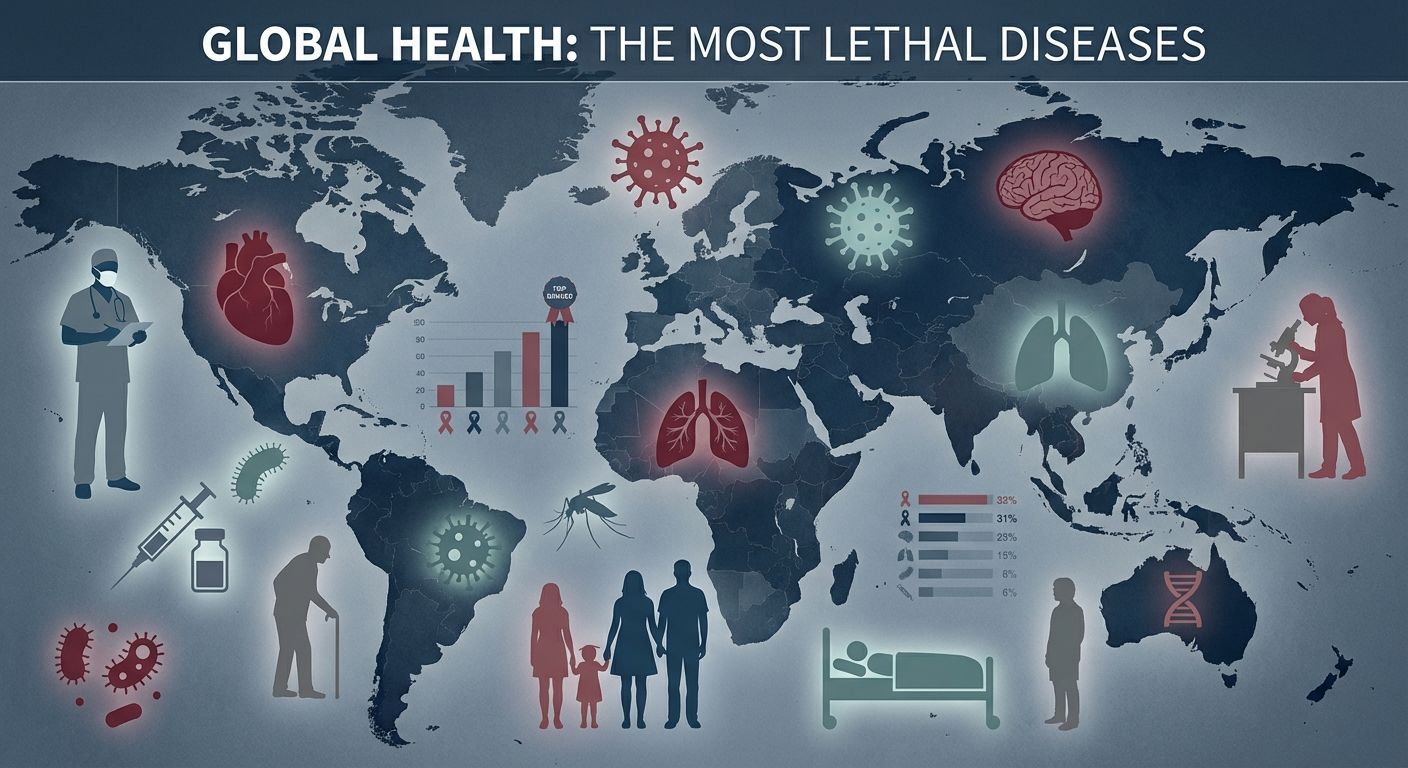
Most lethal diseases shape global mortality patterns and public health priorities. This ranked list of 50 conditions summarizes what makes each disease deadly, key risk factors, and practical prevention measures to reduce their burden worldwide.
How this list was compiled
This list synthesizes global public health evidence, including patterns from the Global Burden of Disease, World Health Organization (WHO) reports and major public health reviews. Rankings reflect relative global mortality impact and clinical lethality rather than local prevalence. For specific country-level figures, consult sources such as the WHO and the CDC.
The 50 most lethal diseases (ranked)
1. Ischemic heart disease (coronary artery disease)
Leading cause of death globally; results from atherosclerosis and reduced blood flow to the heart. Prevention: control blood pressure, cholesterol, smoking cessation, healthy diet and physical activity.
2. Stroke (cerebrovascular disease)
Acute loss of brain function from ischemia or hemorrhage. Hypertension is the dominant risk factor; prevention focuses on blood pressure control, anticoagulation when indicated and lifestyle changes.
3. Chronic obstructive pulmonary disease (COPD)
Progressive lung disease often due to tobacco exposure and air pollution. Early diagnosis, smoking cessation and pulmonary rehabilitation reduce mortality and improve quality of life.
4. Lower respiratory infections (including pneumonia)
A major killer, especially among children and older adults; caused by bacteria, viruses and fungi. Vaccination, sanitation, prompt antibiotics/antivirals and access to oxygen therapy are key.
5. Neonatal disorders
Complications of preterm birth, birth asphyxia and congenital conditions cause high newborn mortality. Skilled birth attendance, neonatal resuscitation and maternal care reduce deaths.
6. Lung cancer
Often linked to tobacco but also air pollution and occupational exposures. Early detection, smoking cessation and improved treatment access lower fatality.
7. Alzheimer’s disease and other dementias
Progressive neurodegeneration leading to loss of function and increased vulnerability to complications. Risk reduction includes cardiovascular risk control, cognitive stimulation and social support.
8. Diarrheal diseases
Commonly fatal in young children due to dehydration and infectious agents. Clean water, sanitation, ORS (oral rehydration solution) and rotavirus vaccines are proven preventive measures.
9. Diabetes mellitus
Chronic metabolic disease that increases risk of vascular complications, kidney failure and infections. Glycemic control, healthy diet, exercise and screening for complications save lives.
10. Chronic kidney disease
Progressive loss of kidney function leading to end-stage renal disease; frequently secondary to diabetes and hypertension. Early detection, blood pressure and glycemic control, and access to dialysis/transplant are critical.
11. Cirrhosis and chronic liver disease
Often due to viral hepatitis, alcohol use or metabolic causes; can lead to liver failure and cancer. Vaccination, treatment of hepatitis, alcohol harm reduction and surveillance for hepatocellular carcinoma are preventive strategies.
12. Tuberculosis (TB)
Airborne bacterial infection that remains a top infectious killer in many regions. Timely diagnosis, adherence to multidrug therapy, TB control programs and vaccination where available are essential.
13. HIV/AIDS
Untreated HIV leads to profound immunosuppression and opportunistic infections. Antiretroviral therapy (ART), testing, prevention of mother-to-child transmission and harm reduction reduce mortality dramatically.
14. Malaria
Parasitic infection transmitted by mosquitoes with high fatality in children in endemic areas. Vector control, bed nets, rapid diagnosis and effective antimalarial treatment are core interventions.
15. Colorectal cancer
Malignancy of the colon or rectum with rising global incidence. Screening (colonoscopy, FIT), healthy diet, physical activity and timely treatment reduce deaths.
16. Stomach (gastric) cancer
Linked to H. pylori infection, diet and smoking; often diagnosed late. H. pylori testing and eradication programs, dietary changes and early oncology care improve outcomes.
17. Liver cancer (hepatocellular carcinoma)
Often arises from chronic hepatitis B/C or cirrhosis. Vaccination against hepatitis B, antiviral therapy and surveillance in at-risk populations reduce mortality.
18. Breast cancer
Leading cancer cause of death among women in many regions. Screening, early diagnosis and widespread access to multimodal treatment save lives.
19. Pancreatic cancer
Highly lethal due to late presentation and aggressive biology. Research into early detection and improved therapies is crucial; risk reduction includes smoking cessation and weight management.
20. Prostate cancer
Common in older men; mortality varies by stage at diagnosis. Screening discussions, timely treatment and access to urologic care help reduce fatality where appropriate.
21. Leukemia
Malignancies of blood-forming tissues; mortality depends on subtype and treatment access. Early diagnosis and modern hematologic therapies improve survival.
22. Cervical cancer
Strongly linked to human papillomavirus (HPV). HPV vaccination, cervical screening (Pap/HPV tests) and timely treatment of precancerous lesions are highly effective preventive measures.
23. Hypertensive heart disease
Heart damage caused by long-standing high blood pressure leading to heart failure and arrhythmia. Population blood pressure control and adherence to antihypertensive therapy reduce deaths.
24. Rheumatic heart disease
Chronic valve damage following untreated streptococcal infections in childhood. Primary prevention with timely antibiotic treatment of strep throat and secondary prophylaxis are key.
25. Meningitis
Acute inflammation of the meninges from bacteria, viruses or fungi; bacterial meningitis can be rapidly fatal. Vaccination, early recognition and prompt antimicrobial therapy are lifesaving.
26. Sepsis (life-threatening organ dysfunction from infection)
Sepsis is a major cause of mortality across infections. Early recognition, timely antibiotics, fluid resuscitation and critical care access are essential to lower fatality.
27. Influenza (seasonal and pandemic)
Annual influenza strains and occasional pandemics cause significant mortality, especially in the elderly and immunocompromised. Vaccination, antiviral treatment and surveillance reduce impact.
28. Measles
Highly contagious viral disease with high mortality in under-immunized populations, especially children. Routine childhood immunization is extraordinarily effective at preventing deaths.
29. Dengue
Arboviral disease causing severe hemorrhagic fever in some cases. Vector control, early clinical management and dengue vaccines in selected settings reduce mortality.
30. Rabies
Almost uniformly fatal once clinical symptoms appear; usually transmitted by animal bites. Preventable through prompt post-exposure prophylaxis and animal vaccination programs.
31. Ebola and other viral hemorrhagic fevers
Severe zoonotic infections with high case fatality in outbreaks. Early detection, infection control, supportive care and vaccines (where available) are critical.
32. COVID-19
Global pandemic disease causing respiratory failure and multisystem complications; vulnerable groups suffer highest mortality. Vaccination, early antiviral therapy in high-risk patients and public health measures reduce deaths.
33. Viral hepatitis (B and C)
Chronic hepatitis leads to cirrhosis and liver cancer. Vaccination for hepatitis B, antiviral therapies and screening are central to prevention and mortality reduction.
34. Esophageal cancer
Aggressive malignancy often diagnosed late; risk factors include tobacco, alcohol and certain dietary exposures. Early detection initiatives and improved access to oncology care improve outcomes.
35. Ovarian cancer
Often detected at advanced stages; research into early biomarkers and improved surgical/medical therapies aims to reduce mortality. Awareness of risk, family history and genetic counseling help prevention in at-risk women.
36. Bladder cancer
Linked to smoking and occupational exposures; early detection and treatment of non-muscle-invasive disease lower mortality. Smoking cessation reduces risk significantly.
37. Brain and central nervous system tumors
Malignant brain tumors carry high lethality depending on type and location. Advances in neurosurgery, radiotherapy and targeted therapies improve survival in selected subtypes.
38. Non-Hodgkin lymphoma
Heterogeneous group of lymphoid malignancies with variable prognosis. Timely hematology/oncology care and modern therapeutics improve outcomes.
39. Cervicofacial and oral cancers
Tobacco, alcohol and HPV drive many head and neck cancers; late-stage diagnosis increases mortality. Prevention includes tobacco control, alcohol reduction and HPV vaccination.
40. Chagas disease
Parasitic infection causing chronic cardiac and digestive complications in Latin America. Vector control, screening of blood supplies and antiparasitic treatment in early stages reduce long-term mortality.
41. Schistosomiasis
Parasitic infection causing chronic liver, intestinal and urinary tract damage. Mass drug administration, improved water/sanitation and snail control lower disease burden.
42. Leishmaniasis
Parasitic disease with visceral forms causing high mortality if untreated. Vector control, timely diagnosis and antiparasitic therapy are essential.
43. Antimicrobial-resistant infections
Drug-resistant bacteria and other pathogens increase mortality by limiting effective treatment options. Stewardship, infection prevention and new drug development are vital.
44. Maternal conditions (pregnancy and childbirth complications)
Hemorrhage, hypertensive disorders and sepsis during pregnancy/childbirth remain leading causes of maternal deaths. Skilled care, emergency obstetric services and family planning save lives.
45. Congenital anomalies
Birth defects can lead to infant mortality depending on severity and access to corrective treatment. Prenatal care, screening and surgical interventions reduce fatal outcomes.
46. Protein-energy malnutrition and severe malnutrition
Malnutrition increases susceptibility to infection and is a direct cause of pediatric mortality. Nutrition programs, breastfeeding support and food security initiatives prevent deaths.
47. Pancreatitis and acute hepatic failure
Severe organ failure from toxin, alcohol or gallstone-related causes can be rapidly fatal. Early critical care, removal of causative factors and surgical management where appropriate improve survival.
48. Multiple myeloma
Plasma cell malignancy that can lead to organ failure and infections. Advances in targeted therapies and transplant have improved survival, but access remains unequal globally.
49. Hodgkin lymphoma
Lymphatic cancer with generally favorable outcomes when treated in time; however, it remains lethal without access to therapy. Early diagnosis and standardized chemotherapy protocols are effective.
50. Skin cancer (melanoma and advanced non-melanoma)
Melanoma can be fatal when metastatic; early detection through skin checks and sun protection reduces mortality substantially.
Key prevention strategies
- Vaccination: prevents diseases such as measles, HPV, hepatitis B and influenza.
- Risk factor control: tobacco cessation, healthy diet, physical activity and alcohol moderation.
- Early detection and screening: cancers, diabetes complications and hypertension.
- Universal health coverage and access: prompt diagnosis, timely treatment and critical care reduce fatalities.
- Public health measures: water, sanitation, vector control and antimicrobial stewardship.
Resources and further reading
For detailed statistics and country-level data consult the World Health Organization, the Global Burden of Disease data visualization and the Centers for Disease Control and Prevention. For clinical guidance on specific conditions, reputable sources include the U.S. Centers for Disease Control and Prevention (CDC) and specialty society guidelines.
Conclusion
Understanding the most lethal diseases informs public health priorities and individual prevention choices. While many of these conditions remain leading causes of death, substantial reductions in mortality are achievable through vaccination, risk-factor control, early detection and equitable access to care. Policymakers, clinicians and communities must collaborate to translate this knowledge into action.