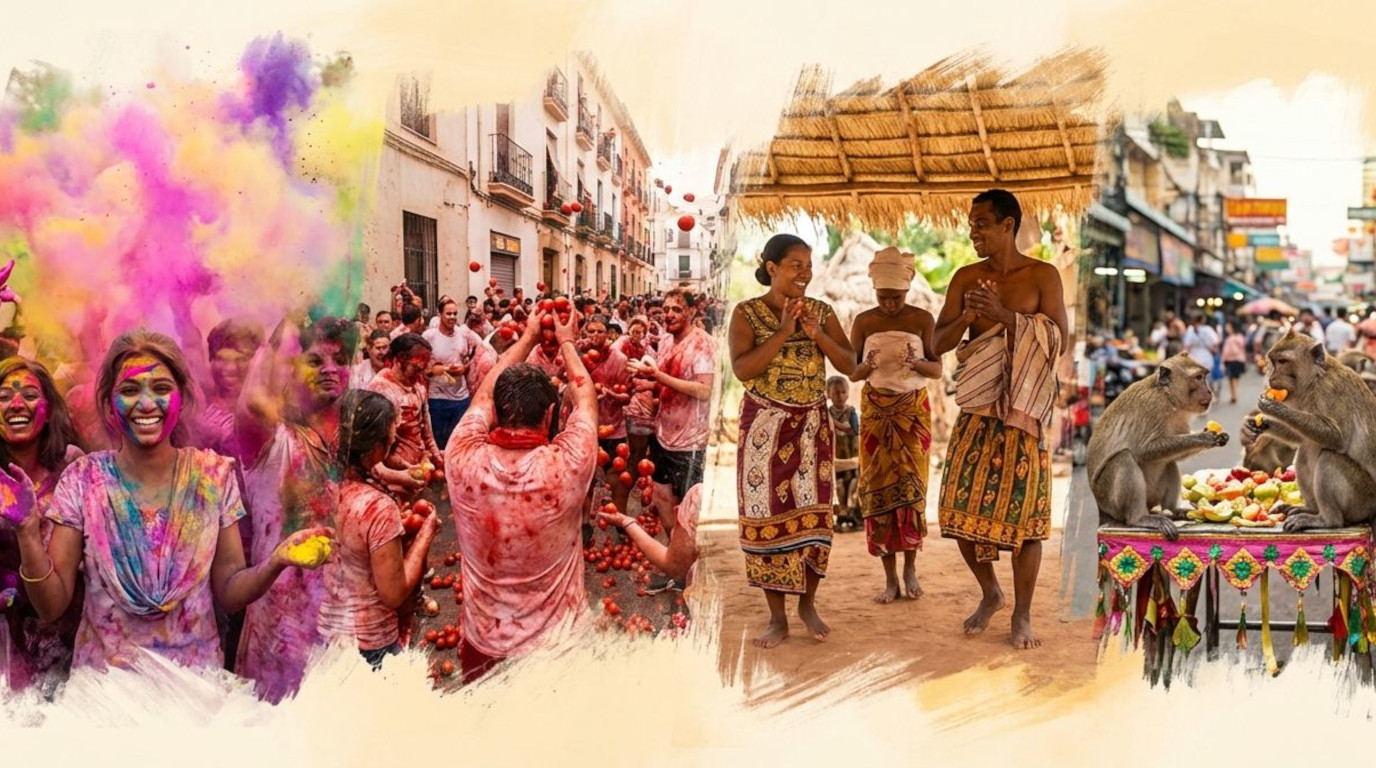
Unusual cultural traditions reveal the richness of human societies: they are expressions of identity, memory, belief and social cohesion. In the paragraphs below you will find 20 carefully researched traditions from different continents, each explained in terms of origin, cultural significance and context.
Why study unusual cultural traditions?
Studying unusual cultural traditions helps us understand how communities encode values into practices. These customs act as living archives of history and social norms. For travelers and students of culture, recognizing the meaning behind a ritual fosters respect and deeper curiosity. This list mixes well-known oddities and lesser-known practices to offer context and encourage responsible cultural engagement.
How this list is organized
Each entry includes: the tradition name, its location, a brief origin story, the cultural meaning and practical context for visitors or researchers. Sources include ethnographic studies and reputable media coverage such as BBC, National Geographic and UNESCO reports when applicable.
Top 20 Unusual Cultural Traditions
1. La Tomatina — Buñol, Spain
Origin: Began as a playful vegetable fight in the mid-20th century. Meaning: A cathartic, communal release and celebration of local identity. Context: Participants throw ripe tomatoes in a controlled festival setting. It’s both a tourist draw and a local tradition that symbolizes playful rebellion and community bonding. For practical advice see local tourism sites and event rules.
2. Night of the Radishes (Noche de Rábanos) — Oaxaca, Mexico
Origin: Colonial-era market tradition turned annual competition. Meaning: Showcases craftsmanship and agricultural pride. Context: Artists carve large radishes into intricate scenes; the festival celebrates harvest creativity and community identity. Coverage by Mexican cultural institutions provides historical context.
3. Baby Jumping (El Colacho) — Castrillo de Murcia, Spain
Origin: A baroque-era ritual linked to cleansing and sin removal. Meaning: Paraders dressed as devils jump over infants to cleanse them of original sin and ward off evil. Context: The festival is controversial but persists as a local rite tied to faith and folklore; see safety guidelines and anthropological discussion in journal articles.
4. Finger Amputation Ritual — Dani people, Papua, Indonesia
Origin: Traditional mourning practice among highland Dani groups. Meaning: Historically, amputation signified grief and social responsibility; it demonstrated the depth of sorrow and helped seal social bonds. Context: Many communities have abandoned or modified the ritual due to external influence and modern legal frameworks; read ethnographies for sensitive interpretation.
5. Thaipusam Kavadi — Malaysia and India
Origin: Hindu devotion ritual dedicated to Lord Murugan. Meaning: Devotees carry heavy, ornate kavadis and pierce their skin to show devotion, penance, or fulfillment of vows. Context: Deeply spiritual, it blends pain, trance and communal support. Observers should approach with reverence and consult local guides or religious resources such as temple authorities.
6. Baby Tossing Ceremony — India (various villages)
Origin: Folkloric practice intended to bless newborns by lowering them from rooftops into cloth or onto a safe surface. Meaning: Intended as a test of fate or blessing; modern versions emphasize safety. Context: Many authorities criticize or regulate the practice; understanding cultural motivations is important but safety must remain paramount.
7. Wife Carrying Competition — Finland
Origin: Folklore-based race purportedly inspired by historical raids. Meaning: A playful contest that celebrates teamwork and humour. Context: International sport with playful prizes; it has become a lighthearted tourist spectacle and a community tradition that subverts conventional sporting norms.
8. The Great Emu War (cultural memory) — Australia
Origin: A 1930s government campaign against emus, now remembered with humour. Meaning: Symbolizes man-versus-nature narratives in Australian rural memory. Context: Though not a ritual, it appears in local storytelling and satire, reflecting how odd historical episodes become cultural lore.
9. Dancing with the Dead — Malagasy Famadihana, Madagascar
Origin: Madagascar’s reburial ceremonies, centuries-old practice. Meaning: Famadihana celebrates ancestors by exhuming, rewrapping and dancing with their remains to renew family ties and transmit memory across generations. Context: A sacred, joyous event with deep social meaning; visitors should seek permission and guidance if invited. UNESCO and ethnographic sources contextualize its significance.
10. The Monkey Buffet Festival — Lopburi, Thailand
Origin: Modern festival to honor monkeys that live around Khmer ruins. Meaning: An offering of gratitude and a tourism-friendly celebration of human-animal relationships. Context: Locals and tourists provide fruits and food to macaques; it’s both ecological management and a playful spectacle covered widely by travel media.
11. Day of the Dead Costuming — Mexico
Origin: Pre-Hispanic ancestor veneration blended with Catholic observances. Meaning: Costumes and altars celebrate deceased loved ones, asserting a close relationship between life and death. Context: A major cultural expression with solemn and festive elements; UNESCO recognizes its intangible heritage value. Visit responsibly and honor altars and private spaces.
12. The Cooper’s Hill Cheese-Rolling — England
Origin: Likely pre-Christian fertility rites later evolving into a race. Meaning: Test of daring and communal revelry, symbolizing local identity and tradition. Context: Participants chase a rolling cheese down a steep hill — dangerous and spectacular; organizers and medical teams often prepare for injuries.
13. Holi — India and Nepal
Origin: Ancient Hindu festival marking spring and the triumph of good over evil. Meaning: Color-throwing and revelry symbolize renewal, social equality and the dissolution of hierarchical boundaries. Context: Widely celebrated; tourists should respect religious contexts and follow public guidelines on participation.
14. Kanamara Matsuri (Festival of the Steel Phallus) — Japan
Origin: Shinto fertility rite tied to local legends. Meaning: Celebrates fertility, strengthening marriages, protection against sexually transmitted diseases and historical beliefs about safe childbirth. Context: The festival is openly playful and ritualized; it draws attention to changing attitudes toward sexuality and health.
15. Finger Painting of Faces — Papua New Guinea (various tribes)
Origin: Body and face painting has longstanding tribal functions. Meaning: Marks status, rites of passage and group identity using pigments from the land. Context: Ceremonial painting is integral to dance and ritual; anthropological sources highlight meanings that vary by language group and region.
16. Baby Blessing by Cutting Hair — Amish & other communities
Origin: Religious or cultural rites of passage exist worldwide with hair-cutting motifs. Meaning: Hair cutting can symbolize purification, community acceptance or entry into a new social stage. Context: Practices vary widely; in conservative communities, private rites reflect communal values rather than spectacle.
17. The Cheese-rolling of Mount Keira — Australia (local variant)
Origin: Local adaptations of European rolling traditions. Meaning: Reinforces local identity and playful competition. Context: Many cultures adapt similar games to express continuity with ancestral customs in a modern setting.
18. Firewalking — Fiji, India, Greece and other locales
Origin: Ancient ritual present in several cultures. Meaning: Demonstrates faith, endurance and communal solidarity; often used in rites of passage or purification. Context: Rituals are usually led by community elders; safety and spiritual protocols are essential for participants.
19. Up Helly Aa — Shetland Islands, Scotland
Origin: Derived from Viking-themed fire festivals and winter community rituals. Meaning: Celebrates Norse heritage and community endurance through a procession of torch-bearing guizers and a galley burning. Context: A major cultural festival with strong local ownership; visitors can watch parades and museum exhibitions explaining history.
20. Gai Jatra (Festival of Cows) — Nepal
Origin: Newar festival commemorating deceased relatives; processions include cows or cow effigies. Meaning: The cow guides souls and helps families publicly grieve and celebrate life. Context: Combines satire, mourning and performance; local guides and cultural centers describe customs in detail for respectful visitors.
Common themes and cultural meanings
- Community cohesion: Many rituals strengthen social bonds and shared identity.
- Rite of passage: Traditions often mark life transitions like birth, marriage and death.
- Connection to nature and ancestors: Practices frequently express relationships with the environment and the dead.
- Adaptation: Globalization and regulation cause some traditions to change, be preserved or be contested.
How to approach unusual traditions respectfully
When encountering unusual cultural traditions, prioritize respect: seek permission before photographing private ceremonies, learn about local meaning from community members or credible sources, and follow local laws and safety standards. For further reading, consult ethnographies or reputable media like National Geographic and UNESCO’s intangible heritage pages.
Conclusion
Unusual cultural traditions provide windows into community values and human creativity. Whether through colorful festivals, solemn reburials, or playful competitions, these practices keep heritage alive and invite curiosity. Always engage with humility and seek to understand the deeper meanings behind what may first appear exotic or baffling.
Further reading: Explore anthropology texts, trusted journalism and UNESCO resources to deepen your understanding of any tradition listed here.