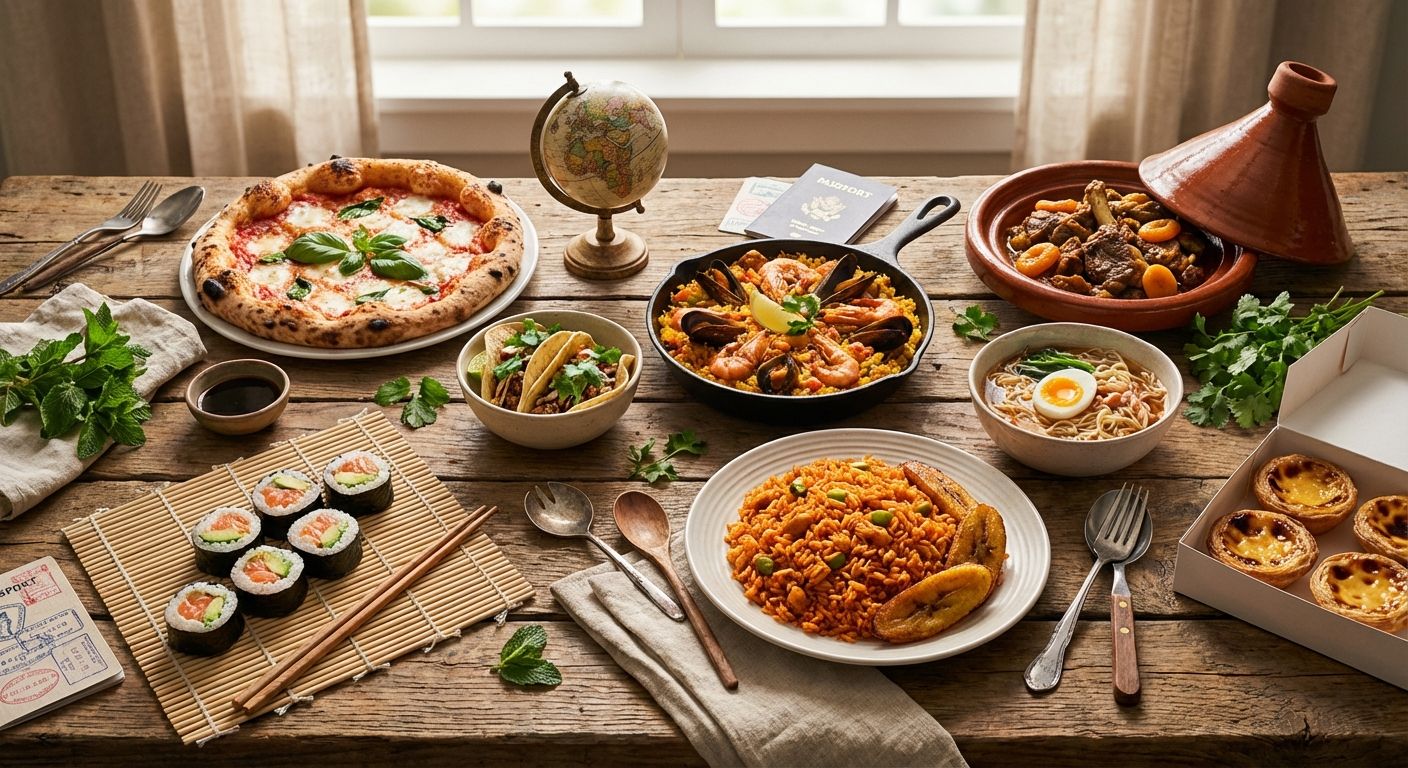
Typical foods connect us to places, history and culture. In this guide you’ll find the 100 most famous traditional dishes to taste, with short notes on flavor, origin and cultural curiosities to inspire your next trip or kitchen experiment.
Why try these typical foods?
Food is a gateway to culture. Trying a country’s local specialties reveals climate, history, migration and celebration. Many of the items below are national icons, street-food staples or regional masterpieces recognized by culinary experts and institutions like Wikipedia and UNESCO’s gastronomic listings.
How this list is organized
The list groups dishes by region for easier browsing, then presents names, origin country and a concise description. Entries include traditional dishes, street foods and desserts — all representative of local taste.
Top 100 Typical Foods (by region)
Europe (1–30)
- Pizza (Italy) — Neapolitan classic: thin crust, San Marzano tomatoes, buffalo mozzarella, simple and iconic.
- Pasta Carbonara (Italy) — Roman egg, pecorino and guanciale dish with rich, silky sauce.
- Bœuf Bourguignon (France) — Slow-braised beef in red wine with mushrooms and pearl onions.
- Coq au Vin (France) — Chicken braised in wine, aromatic and deeply savory.
- Paella (Spain) — Valencia’s saffron rice with seafood, rabbit or chicken and vibrant socarrat.
- Tapas (Spain) — Not a single dish but a culture of small plates: patatas bravas, gambas and more.
- Sauerbraten (Germany) — Marinated pot roast with a tart-sweet sauce, often served with red cabbage.
- Currywurst (Germany) — Popular street snack: sliced sausage with curry ketchup.
- Fish and Chips (United Kingdom) — Beer-battered white fish with thick fries and malt vinegar.
- Full English Breakfast (UK) — Plate-sized morning feast with eggs, bacon, beans and black pudding.
- Haggis (Scotland) — Spiced sheep’s offal pudding, a staple at Burns Night.
- Goulash (Hungary) — Paprika-forward beef stew with a smoky, warming profile.
- Moussaka (Greece) — Layered eggplant or potato casserole with seasoned meat and béchamel.
- Gyros (Greece) — Rotisserie meat wrapped in pita with tzatziki and salad.
- Pierogi (Poland) — Dumplings filled with potato, cheese, meat or fruit, boiled then pan-fried.
- Bigos (Poland) — Hearty hunter’s stew of sauerkraut, fresh cabbage and meats.
- Rösti (Switzerland) — Crispy shredded potato cake, ideal as side or main with toppings.
- Fondue (Switzerland) — Melted cheese communal pot served with bread and pickles.
- Souvlaki (Greece) — Skewered grilled meat, a beloved street-food staple.
- Risotto (Italy) — Creamy rice dish often cooked with saffron, mushrooms or seafood.
- Beef Wellington (England) — Fillet wrapped in pâté and pastry for special occasions.
- Crêpes (France) — Thin pancakes savory or sweet, from Brittany to Parisian cafés.
- Belgian Waffles (Belgium) — Crisp outside, fluffy inside; topped with fruit or cream.
- Choucroute Garnie (France/Alsace) — Sauerkraut with sausages and salted meats.
- Portuguese Pastel de Nata (Portugal) — Custard tart with caramelized top, flaky pastry.
- Bacalhau à Brás (Portugal) — Salted cod with potatoes, eggs and olives, a Portuguese classic.
- Pljeskavica (Serbia) — Spiced grilled meat patty often served with flatbread.
- Smørrebrød (Denmark) — Open-faced sandwiches with diverse gourmet toppings.
- Dolma (Turkey/Balkans) — Stuffed grape leaves or vegetables with rice and herbs.
Middle East & North Africa (31–45)
- Hummus (Levant) — Chickpea dip with tahini, olive oil and lemon; ubiquitous and versatile.
- Falafel (Egypt/Levant) — Deep-fried chickpea balls; a popular street sandwich ingredient.
- Shawarma (Middle East) — Slow-rotated meat carved into wraps with sauces and pickles.
- Tagine (Morocco) — Slow-cooked stews in conical pots with spices, dried fruits and nuts.
- Couscous (Maghreb) — Steamed semolina grains served with stews and vegetables.
- Persian Kebab (Iran) — Tender skewered meats served with saffron rice and grilled tomato.
- Mahshi (Egypt) — Stuffed vegetables like peppers and vine leaves with aromatic rice.
- Baklava (Ottoman region) — Layered pastry with nuts and honey syrup; a celebratory dessert.
- Manakeesh (Levant) — Flatbread topped with za’atar, cheese or meat; a regional favorite.
- Molokhia (Egypt/Levant) — Leafy green stew, earthy and often served over rice.
- Kebab Hindi (Iraq/Levant) — Regional variants of spiced meat dishes served with flatbread.
- Harira (Morocco) — Hearty soup of tomatoes, lentils and chickpeas, traditionally eaten at Ramadan.
Africa (46–55)
- Jollof Rice (West Africa) — Tomato-based spiced rice, a party centerpiece across the region.
- Piri Piri Chicken (Mozambique/Angola) — Spicy grilled chicken with chili marinade.
- Bobotie (South Africa) — Curried meat bake topped with egg custard, sweet and savory.
- Injera with Doro Wat (Ethiopia) — Spongy flatbread with spicy chicken stew; communal eating custom.
- Yassa (Senegal) — Marinated onion and citrus chicken or fish, tangy and fragrant.
- Fufu (West/Central Africa) — Starchy dough (cassava/plantain) used to scoop flavorful stews.
- Shakshuka (North Africa) — Eggs poached in spicy tomato-pepper sauce, now popular globally.
- Koshary (Egypt) — Comfort mix of rice, lentils, pasta and spiced tomato sauce.
- Suya (Nigeria) — Spicy skewered meat with peanut-based dry rub, a night-food favorite.
- Mafé (West Africa) — Peanut-based stew with meat and root vegetables, rich and hearty.
Asia (56–85)
- Sushi (Japan) — Vinegared rice with fish or vegetable toppings; refined and diverse.
- Ramen (Japan) — Umami-rich noodle soup with broth styles ranging from shoyu to tonkotsu.
- Tempura (Japan) — Lightly battered and fried seafood or vegetables.
- Peking Duck (China) — Crispy-skinned duck carved tableside, wrapped in pancake with hoisin.
- Dim Sum (China) — Bite-sized dumplings and snacks shared at brunch.
- Hot Pot (China) — Communal simmering pot where diners cook meats, seafood and veg.
- Kimchi (Korea) — Fermented vegetables (usually cabbage) with chili and garlic; cornerstone condiment.
- Bibimbap (Korea) — Mixed rice with vegetables, chili paste and egg — colorful and balanced.
- Pad Thai (Thailand) — Stir-fried rice noodles with tamarind, peanuts and shrimp or tofu.
- Tom Yum (Thailand) — Hot-sour soup with shrimp, lemongrass and fragrant herbs.
- Massaman Curry (Thailand) — Mild, coconut-milk curry with nuts and warm spices.
- Biryani (Indian subcontinent) — Layered rice and meat dish aromatic with saffron and spices.
- Butter Chicken (India) — Creamy tomato-based curry, rich and mildly spiced.
- Masala Dosa (India) — Crispy fermented rice-lentil crepe filled with spiced potato.
- Chaat (India) — Tangy, spicy street snacks combining textures and bold flavors.
- Nasi Goreng (Indonesia) — Fragrant fried rice often topped with a fried egg.
- Satay (Indonesia/Malaysia) — Grilled skewers served with peanut sauce.
- Laksa (Malaysia/Singapore) — Spicy coconut or tamarind noodle soup with complex layers.
- Hainanese Chicken Rice (Singapore) — Poached chicken with aromatic rice and chili-garlic sauce.
- Char Kway Teow (Malaysia) — Stir-fried rice noodles with soy, seafood and smoky wok hei.
- Pho (Vietnam) — Aromatic beef or chicken noodle soup with herbs and clear broth.
- Banh Mi (Vietnam) — French-influenced sandwich with pickles, pate and grilled protein.
- Adobo (Philippines) — Vinegar-and-soy-braised meat, tangy and comforting.
- Lechon (Philippines) — Whole roasted pig with crisp skin, served at celebrations.
- Mapo Tofu (China/Sichuan) — Spicy, numbing tofu with minced pork and fermented bean paste.
- Xiao Long Bao (China) — Soup dumplings with delicate skins and savory broth inside.
- Okonomiyaki (Japan) — Savory pancake with cabbage, meat and special sauces.
- Gulab Jamun (India) — Syrup-soaked milk dumplings, sweet and indulgent.
- Rendang (Indonesia) — Slow-cooked coconut beef curry, intensely spiced and tender.
Oceania (86–92)
- Meat Pie (Australia) — Comfort pastry filled with minced meat and gravy.
- Pavlova (Australia/New Zealand) — Meringue dessert with crisp shell and soft interior, topped with fruit.
- Hangi (New Zealand) — Earth-cooked feast where meats and vegetables are steam-roasted in an earth oven.
- Lamingtons (Australia) — Sponge cake squares coated in chocolate and coconut.
- Kangaroo Steak (Australia) — Lean, gamey red meat often grilled for a unique taste.
- Seafood Platters (Oceania) — Fresh prawns, oysters and fish reflecting coastal abundance.
Americas (93–100)
- Tacos (Mexico) — Corn tortilla filled with countless regional variations: carnitas, al pastor, barbacoa.
- Mole (Mexico) — Complex sauce blending chilies, nuts, chocolate and spices over chicken or turkey.
- Feijoada (Brazil) — Black-bean stew with pork, hearty and celebratory.
- Asado (Argentina) — Social barbecue ritual with assorted grilled cuts and chimichurri.
- Ceviche (Peru) — Citrus-cured raw fish with chili and red onion, bright and refreshing.
- Arepas (Venezuela/Colombia) — Corn cakes stuffed with cheese, meat or avocado for a versatile meal.
- Clam Chowder (USA – New England) — Creamy soup with clams, potatoes and herbs.
- Gumbo (USA – Louisiana) — Thick stew with roux, seafood or sausage and Creole spices.
Tips for discovering and enjoying typical foods
- Eat where locals eat: street stalls and market stalls often serve the most authentic versions.
- Ask about regional variations: Many dishes change dramatically from town to town.
- Balance adventurous tasting with safety: try freshly made items and be cautious with raw foods if you have sensitivities.
- Learn food customs: communal dishes, hand-eating or specific condiments may be part of the experience.
Sources & further reading
For deeper context on national dishes and food heritage, see resources like UNESCO, BBC Food and regional culinary guides.
Final thoughts
Exploring typical foods is one of the most rewarding ways to learn about a place. Whether you savor a delicate sushi piece in Tokyo, bite into a charred taco in Mexico City or share a steaming pot of tagine in Marrakech, each plate tells a story. Use this list as a starting point — keep exploring, tasting and asking questions. Bon voyage and bon appétit!