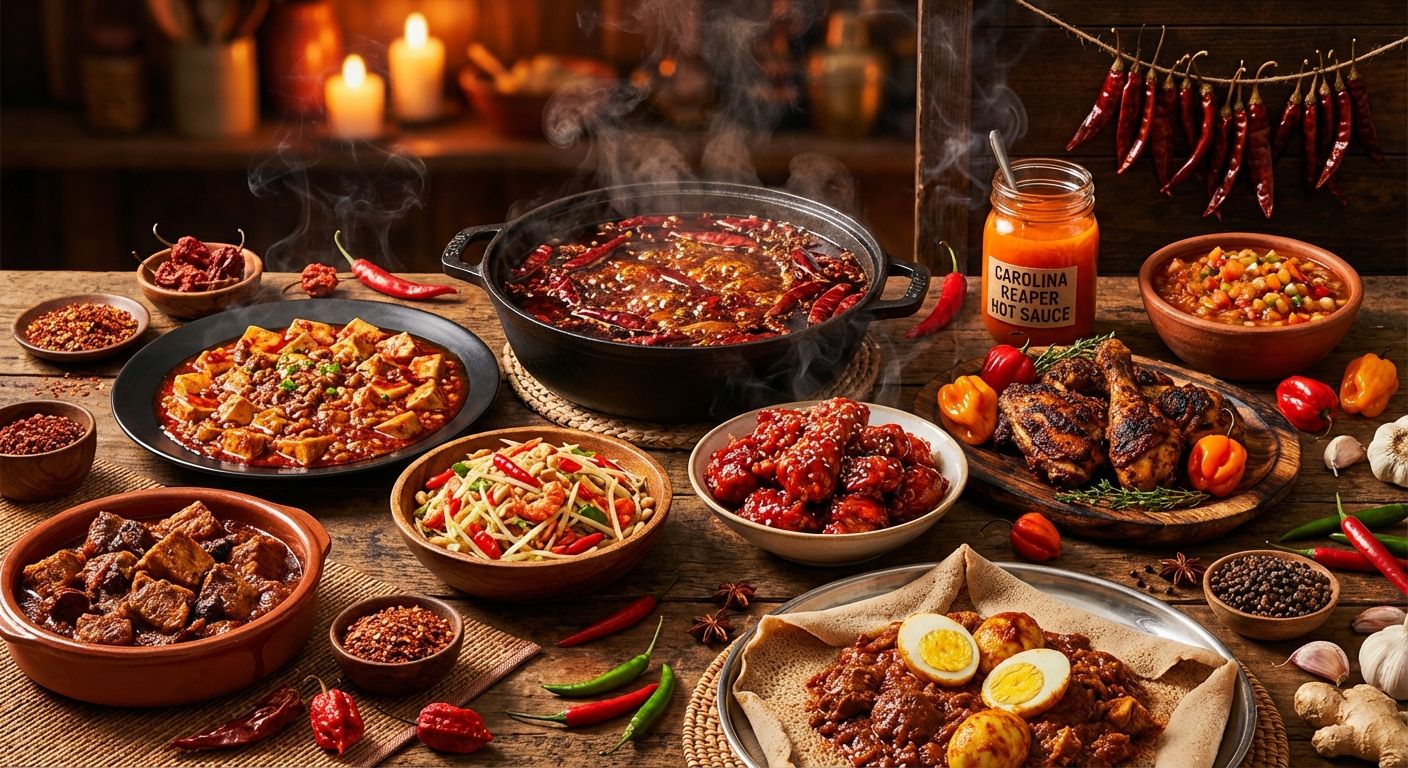
Spicy foods fascinate diners for their flavor intensity, cultural stories and the thrill of heat. In this guide you’ll find the world’s most notorious fiery dishes, each with origin, key ingredients, an assessed heat level and curious cultural notes. Whether you’re a spice lover or a creator looking for shareable content, this list helps you understand what makes each dish burn — and why many people love it.
Methodology: How we ranked heat
Not every dish can be measured strictly by Scoville Heat Units (SHU), since many recipes combine peppers, oils and numbing spices. We used a mixed approach:
- Primary chili SHU where possible (e.g., Carolina Reaper, Bhut Jolokia, Habanero).
- Preparation intensity (concentration of chiles, chiles-to-other-ingredients ratio).
- Sensory effect—numbing (Sichuan peppercorns), lingering burn, or quick bite.
- A 1–10 heat scale (1 = mild, 10 = extreme) plus an emoji cue for quick scanning.
Quick spice-handling tips
- Milk, yogurt or coconut milk help dissolve capsaicin better than water.
- Starchy sides (bread, rice) can cut heat intensity.
- Use caution with extreme peppers: very high SHU peppers can cause discomfort; try tiny amounts first.
Top 20 Spicy Foods (Origins, ingredients & heat)
1. Phaal (Indian-British curry) — Heat: 10/10 🔥🔥🔥
Origin: Developed in South Asian restaurants in the UK. Key ingredients: Ground super-hot chilies (often Bhut Jolokia or other superhots), tomato base, heavy spice blend. Why it’s so hot: Phaal is designed as one of the hottest curries available—chefs often add pureed superhot peppers. Cultural note: Phaal emerged as a “challenge” dish in curry houses and has become an internet-famous extreme-eating test.
2. Bhut Jolokia (Ghost Pepper) Curry/Chutney — Heat: 10/10 🔥🔥🔥
Origin: Northeastern India (Assam) and Bangladesh. Key ingredients: Bhut Jolokia (ghost pepper, ~800k–1M SHU), garlic, mustard oil. Why it’s so hot: The ghost pepper’s high capsaicin content produces a long, intense burn. Cultural note: Traditionally used in small amounts to preserve food and add warmth in cold climates.
3. Vindaloo (Goa, India) — Heat: 8–9/10 🔥🔥
Origin: Portuguese-influenced Goan cuisine. Key ingredients: Vinegar, garlic, red chilies (can be very hot varieties), meat (pork or lamb). Why it’s hot: A potent mix of dried chilies, vinegar and slow cooking concentrates heat. Cultural note: Authentic vindaloo balances heat with tang from vinegar—it’s not only about spiciness but depth.
4. Naga Morich / Naga Curry — Heat: 10/10 🔥🔥🔥
Origin: Bangladesh and Northeast India. Key ingredients: Naga Morich peppers (similar to Bhut varieties, ~1M SHU), mustard oil, local spices. Why it’s hot: Naga Morich ranks among the world’s hottest peppers; curries using it are intensely fiery. Cultural note: Often used sparingly in local cooking—in Westernized versions it’s amplified into challenge dishes.
5. Carolina Reaper Hot Sauce/Infused Dishes — Heat: 10/10 🔥🔥🔥
Origin: Developed in the USA. Key ingredients: Carolina Reaper pepper (1.5M–2.2M SHU), vinegar, sugar, preservatives in sauces. Why it’s hot: Carolina Reaper currently tops many Scoville lists; sauces pack concentrated heat for dramatic effect. Cultural note: Reaper-based sauces are marketed as extreme condiments and used in spicy-eating contests.
6. Trinidad Scorpion Pepper Sauce — Heat: 10/10 🔥🔥🔥
Origin: Caribbean (Trinidad). Key ingredients: Trinidad Scorpion pepper (~1M+ SHU), citrus, vinegar. Why it’s hot: Scorpion peppers rival other superhots in intensity; the sauce preserves the pepper’s immediate sting. Cultural note: Used sparingly at home; commercially bottled versions tone down heat for wider markets.
7. Sichuan Hot Pot (Huo Guo) — Heat: 9/10 🔥🔥
Origin: Sichuan province, China. Key ingredients: Dried red chilies, Sichuan peppercorns (numbing), chili oil, fermented bean paste. Why it’s hot: Combines capsaicin burn with a distinctive numbing tingle from Sichuan peppercorns—heat is layered and addictive. Cultural note: Hot pot is communal and social; heat level is often customized at the table.
8. Mapo Tofu (Sichuan) — Heat: 8–9/10 🔥🔥
Origin: Chengdu, Sichuan. Key ingredients: Doubanjiang (spicy fermented bean paste), ground chiles, Sichuan peppercorns, tofu. Why it’s hot: Doubanjiang provides mature chili heat and savory depth; peppercorns add numbing sensation. Cultural note: Mapo’s charm is the combination of texture (silky tofu) with reckless flavor.
9. La Zi Ji (Chongqing Spicy Chicken) — Heat: 9/10 🔥🔥
Origin: Chongqing, China. Key ingredients: Bite-sized fried chicken tossed with dozens of dried chilies, Sichuan peppercorns, garlic and green onions. Why it’s hot: The dish uses an avalanche of chilies that impart rapid, high heat. Cultural note: The chilies are often more for aroma and heat than eaten directly, but the dish is undeniably fiery.
10. Thai Pad Kra Pao (Holy Basil Stir-Fry) — Heat: 7–9/10 🔥
Origin: Thailand. Key ingredients: Bird’s eye chilies (prik kee noo), garlic, fish sauce, holy basil. Why it’s hot: Bird’s eye chilies are small but fierce; in Thailand they’re used liberally, producing a quick, sharp heat. Cultural note: Typically served with rice and a fried egg—perfect for balancing heat with comfort.
11. Som Tam (Thai Papaya Salad) — Heat: 7–9/10 🔥
Origin: Isan region, Thailand. Key ingredients: Green papaya, bird’s eye chilies, fish sauce, palm sugar, lime. Why it’s hot: Fresh chilies are pounded into the salad, distributing intense heat through crunchy textures. Cultural note: Versions vary by sweetness and saltiness; northeastern style is particularly fiery.
12. Korean Buldak (Fire Chicken) — Heat: 9–10/10 🔥🔥
Origin: South Korea (modern, viral street-food style). Key ingredients: Gochugaru (Korean red pepper flakes), gochujang (fermented chili paste), sugar, soy, and often extra hot sauces. Why it’s hot: Buldak sauce concentrates chilies and sugar for a sticky, searing glaze. Cultural note: Buldak spawned a challenge trend (ramen paired with Buldak sauce is a common challenge).
13. Tteokbokki (Spicy Korean Rice Cakes) — Heat: 7–8/10 🔥
Origin: Korea. Key ingredients: Gochujang, gochugaru, fish cake, rice cakes. Why it’s hot: Gochujang gives a concentrated sweet-spicy backbone; street-style versions can be pushed very hot. Cultural note: A beloved street snack—heat comforted by chewy rice cakes.
14. Kimchi Jjigae (Korean Kimchi Stew) — Heat: 6–8/10 🔥
Origin: Korea. Key ingredients: Aged kimchi, gochugaru, pork or tuna, tofu. Why it’s hot: Aged kimchi can be quite spicy and sour; stewing amplifies flavors and warmth. Cultural note: A staple Korean comfort dish; heat level varies by kimchi age and recipe.
15. Mexican Habanero Salsa — Heat: 8–9/10 🔥🔥
Origin: Yucatán and broader Mexican cuisine. Key ingredients: Habanero pepper (~100k–350k SHU), tomatoes, citrus, cilantro. Why it’s hot: Habanero’s fruity but powerful heat makes salsas explosively spicy in small amounts. Cultural note: Habanero is a regional staple in Yucatán—used to enliven seafood and grilled meats.
16. Salsa de Chile de Árbol (Mexican Arbol Chile Sauce) — Heat: 7–9/10 🔥
Origin: Mexico. Key ingredients: Chile de árbol (~15k–30k SHU per pepper but concentrated), garlic, vinegar. Why it’s hot: The sauce is often made with many dried arbol chilies, creating a punchy, immediate heat. Cultural note: Common table condiment—useful for adding a direct spike of heat to tacos and soups.
17. Jamaican Jerk Chicken — Heat: 7–9/10 🔥
Origin: Jamaica. Key ingredients: Scotch bonnet peppers (~100k–350k SHU), allspice, thyme, pimento. Why it’s hot: Scotch bonnet gives hot, fruity heat alongside the smoky jerk spices. Cultural note: Jerk is as much about aroma and smoke as it is about heat—grilling and slow cooking develop complex flavors.
18. Peri-Peri Chicken — Heat: 6–8/10 🔥
Origin: Mozambique/Portugal (African bird’s eye chili influence). Key ingredients: African bird’s eye chilies, lemon, garlic, oil. Why it’s hot: Bird’s eye chilies pack a fast, bright heat; marinades penetrate meat for consistent warmth. Cultural note: Popularized globally by restaurants; authentic versions vary greatly in heat.
19. Sambal Oelek / Sambal (Indonesia, Malaysia) — Heat: 7–9/10 🔥
Origin: Indonesia and Malaysia. Key ingredients: Red chilies, shrimp paste (terasi/belacan), sugar, lime. Why it’s hot: Fresh or cooked chilies yield direct heat; sambal varieties range from mild to ferocious. Cultural note: Sambal is a ubiquitous table condiment across Southeast Asia—different households have secret recipes.
20. Doro Wat (Ethiopian Spicy Chicken Stew with Berbere) — Heat: 6–8/10 🔥
Origin: Ethiopia. Key ingredients: Berbere spice blend (chiles, fenugreek, korarima, ginger), niter kibbeh (spiced butter), chicken. Why it’s hot: Berbere brings chile heat plus warm aromatics; the stew is both spicy and deeply savory. Cultural note: Traditionally eaten communally with injera; berbere defines Ethiopian flavor more than raw heat alone.
Understanding heat vs. flavor
Not all spicy foods prioritize maximum heat over taste. Some dishes—like vindaloo or doro wat—balance acidity, fat and aromatics to create complex flavors where heat is one element of many. Others, like Phaal or Reaper sauces, are meant to showcase capsaicin intensity as the main attraction. When exploring spicy cuisine, consider whether you want pure fire or layered complexity.
Further reading and sources
- Scoville scale overview — Wikipedia: Scoville scale
- Sichuan cuisine and numbing spice — Wikipedia: Sichuan cuisine
- Bhut Jolokia and superhot peppers — Wikipedia: Bhut Jolokia
Conclusion
This curated ranking of the top 20 spicy foods in the world blends measurable heat indicators with culinary context. From numbing Sichuan classics to pepper-forward challenge dishes, the global language of spice is diverse and culturally rich. Try these foods with respect for their traditional preparation and a plan to cool down if needed—your palate (and your followers) will thank you.