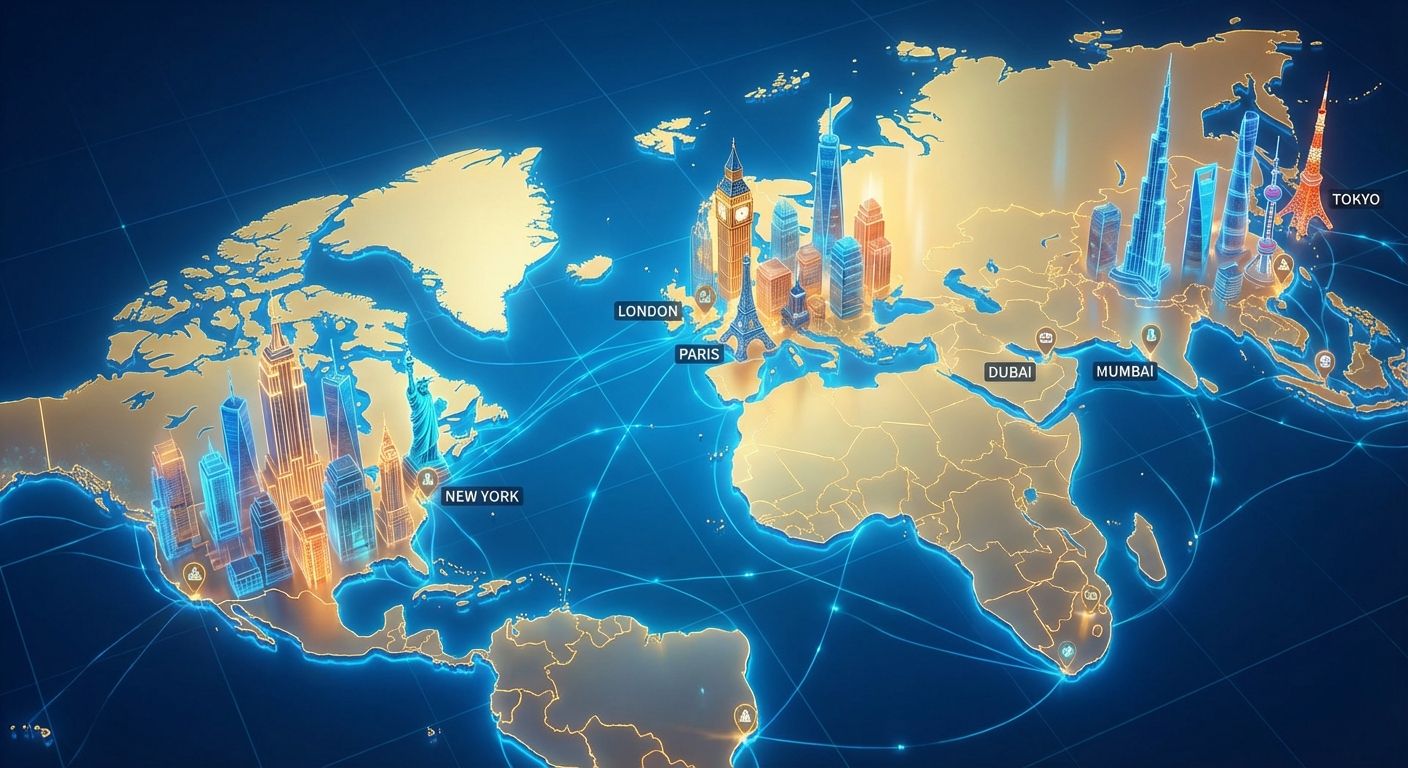
Largest cities shape global economics, culture and mobility. This guide presents the top 100 urban centers by estimated population (city proper/urban agglomeration where noted) and explains their geographic location, primary economic sectors, and cultural significance. Figures are approximate estimates as of 2024 based on United Nations and leading demographic sources such as UN World Urbanization Prospects and World Population Review. Use the list below for research, travel planning, education and urban comparison.
How this ranking was compiled
Methodology and notes:
- Population estimates refer primarily to city proper or the commonly reported urban agglomeration where city-proper data are inconsistent.
- Numbers are rounded and presented as estimates for readability.
- Sources include UN datasets, national statistical offices and international demographic aggregators.
- “Importance” highlights focus on economic output, financial services, cultural institutions, transport hubs, or political influence.
Key trends among the largest cities
Major observations about the largest cities globally:
- Asia dominates the top ranks — especially East, South and Southeast Asia — reflecting rapid urbanization.
- Many of the world’s largest cities are also critical economic engines (finance, manufacturing, technology).
- Cultural influence (media, arts, higher education) often aligns with population size but smaller cities can have outsized cultural impact.
- Population estimates vary by definition; always check whether a source uses city proper, metropolitan area, or urban agglomeration.
Top 100 largest cities — ranked overview (est. 2024)
Each entry: Rank. City, Country — Approx. population — Key significance
Note: Populations rounded for clarity.
- Tokyo, Japan — 37,400,000 — Global finance, technology and cultural hub
- Delhi, India — 31,000,000 — Political center, fast-growing economy
- Shanghai, China — 27,000,000 — Manufacturing and financial powerhouse
- So Paulo, Brazil — 22,000,000 — Largest economy in Latin America
- Mexico City, Mexico — 21,800,000 — Political and cultural capital
- Cairo, Egypt — 20,900,000 — Historic cultural hub, major regional center
- Mumbai, India — 20,700,000 — Finance, entertainment (Bollywood) and trade
- Beijing, China — 20,400,000 — Political capital and tech investment center
- Dhaka, Bangladesh — 20,200,000 — Rapid urban growth, textile industry
- Osaka, Japan — 19,200,000 — Industry, commerce, and regional transport node
- New York City, USA — 18,800,000 — Global finance, media, and culture
- Karachi, Pakistan — 16,100,000 — Port city and economic center
- Buenos Aires, Argentina — 15,600,000 — Cultural and economic hub of Argentina
- Chongqing, China — 15,500,000 — Major inland manufacturing and logistics center
- Istanbul, Turkey — 15,400,000 — Crossroads of Europe and Asia, strong tourism
- Kolkata, India — 14,900,000 — Historical trade and cultural center
- Lagos, Nigeria — 14,800,000 — West Africa’s largest commercial center
- Manila, Philippines — 14,200,000 — Trade, remittances and cultural influence
- Rio de Janeiro, Brazil — 13,500,000 — Tourism, entertainment and ports
- Tianjin, China — 13,400,000 — Industrial port city near Beijing
- Guangzhou, China — 13,300,000 — Manufacturing and export powerhouse
- Los Angeles, USA — 13,200,000 — Entertainment, tech, and trade
- Moscow, Russia — 12,700,000 — Political capital and cultural center
- Shenzhen, China — 12,500,000 — Tech manufacturing and innovation hub
- Lahore, Pakistan — 12,400,000 — Cultural and economic center of Punjab
- Bangalore, India — 12,300,000 — IT and startup capital
- Bogot, Colombia — 10,900,000 — Political and economic capital
- Chennai, India — 10,900,000 — Automotive and services industries
- Lima, Peru — 10,700,000 — Political and economic center of Peru
- Bangkok, Thailand — 10,600,000 — Tourism, commerce, and regional hub
- Hyderabad, India — 10,500,000 — Tech and pharmaceutical industries
- Seoul, South Korea — 9,800,000 — Technology, manufacturing and culture
- Nagoya, Japan — 9,500,000 — Industry and automotive manufacturing
- Ahmedabad, India — 8,900,000 — Commerce and industry in western India
- Khartoum, Sudan — 8,800,000 — Political and economic center
- Lima, Peru — 8,700,000 — (appears twice in some datasets due to metro definitions) see notes
- Pune, India — 7,900,000 — Education and expanding tech sector
- Surat, India — 7,700,000 — Textiles and diamond polishing industry
- Jaipur, India — 7,600,000 — Tourism and regional culture
- Riyadh, Saudi Arabia — 7,500,000 — Political capital, energy and finance
- Singapore, Singapore — 5,900,000 — Global trade, finance, and transport
- Kuala Lumpur, Malaysia — 7,400,000 — Finance and multicultural tourism
- Shenyang, China — 8,100,000 — Heavy industry and logistics
- Alexandria, Egypt — 5,200,000 — Historic port and cultural city
- Ankara, Turkey — 5,600,000 — Political capital with administrative importance
- Santiago, Chile — 6,700,000 — Financial and cultural center of Chile
- Miami, USA — 6,200,000 — Finance, tourism and trade gateway to Latin America
- Dallas, USA — 7,400,000 — Commerce, technology and logistics
- Houston, USA — 7,100,000 — Energy sector and medical research
- Hangzhou, China — 10,000,000 — Tech hub and growing innovation cluster
- Nanjing, China — 8,300,000 — Historical and economic center
- Cape Town, South Africa — 4,700,000 — Tourism and cultural landmark
- Montreal, Canada — 4,200,000 — Culture, education and industry
- Madrid, Spain — 6,700,000 — European finance and culture
- Barcelona, Spain — 5,600,000 — Tourism, tech and culture
- Berlin, Germany — 3,800,000 — Political capital and creative industries
- Rome, Italy — 4,300,000 — Historic center and tourism
- Baghdad, Iraq — 7,000,000 — Political and cultural center
- Tehran, Iran — 9,000,000 — Political capital and manufacturing center
- Kabul, Afghanistan — 4,100,000 — Political and historic city
- Beirut, Lebanon — 2,200,000 — Historical trade and cultural city (pre-crisis estimates)
- Dar es Salaam, Tanzania — 6,500,000 — Growing port and commercial hub
- Accra, Ghana — 5,000,000 — Political and economic center
- Addis Ababa, Ethiopia — 5,200,000 — Political and diplomatic center (AU headquarters)
- Zhengzhou, China — 10,000,000 — Transport and industrial hub
- Jinan, China — 5,500,000 — Regional manufacturing center
- Fukuoka, Japan — 2,600,000 — Regional commerce and transport
- Hyderabad (Sindh), Pakistan — 1,700,000 — Regional historical center
- Ulaanbaatar, Mongolia — 1,500,000 — National capital and economic center
- Hanoi, Vietnam — 8,000,000 — Political and cultural capital
- Ho Chi Minh City, Vietnam — 9,200,000 — Economic engine and port
- Yangon, Myanmar — 5,150,000 — Former capital and largest city
- Karaj, Iran — 2,500,000 — Industrial and residential expansion
- Budapest, Hungary — 3,300,000 — Cultural and political capital
- Warsaw, Poland — 1,800,000 — Economic and political hub
- St. Petersburg, Russia — 5,300,000 — Cultural capital and port
- Munich, Germany — 2,700,000 — Finance, engineering and culture
- Vienna, Austria — 2,900,000 — International diplomacy and culture
- Brussels, Belgium — 2,100,000 — EU institutions and diplomacy
- Prague, Czech Republic — 2,700,000 — Tourism and historic culture
- Lisbon, Portugal — 2,900,000 — Tourism and maritime heritage
- Dublin, Ireland — 1,500,000 — Tech and finance hub
- Auckland, New Zealand — 1,700,000 — Pacific trade and tourism
- Sydney, Australia — 5,300,000 — Finance, tourism and culture
- Melbourne, Australia — 5,000,000 — Culture, education and finance
- Perth, Australia — 2,200,000 — Mining and trade
<liParis, France — 11,200,000 — Global culture, tourism and finance
How to use this list
If you’re a traveler, researcher, or student, this list of the largest cities can help you:
- Identify major economic and cultural hubs to visit or study.
- Compare urban scale for research projects or presentations.
- Plan travel routes that connect significant global centers.
Further reading and external sources
- UN World Urbanization Prospects — Authoritative urban population projections
- World Population Review — City and country population estimates
- World Bank Data — Economic indicators by city/country
Final notes and caveats
Population ranking among the world’s largest cities will vary depending on the definitions used. Metropolitan area vs. city proper vs. urban agglomeration produce different orders and figures. For rigorous academic work, always cite primary demographic data and clarify the population definition used. This list is intended as a practical, digestible overview that combines population estimates with notes on global importance.
Want a printable or sortable dataset? Consider exporting official UN or national statistics and compare multiple definitions. For travel planning, consult city-specific guides and official tourism sites.
Last updated: 2024 — review data sources for the latest population releases.