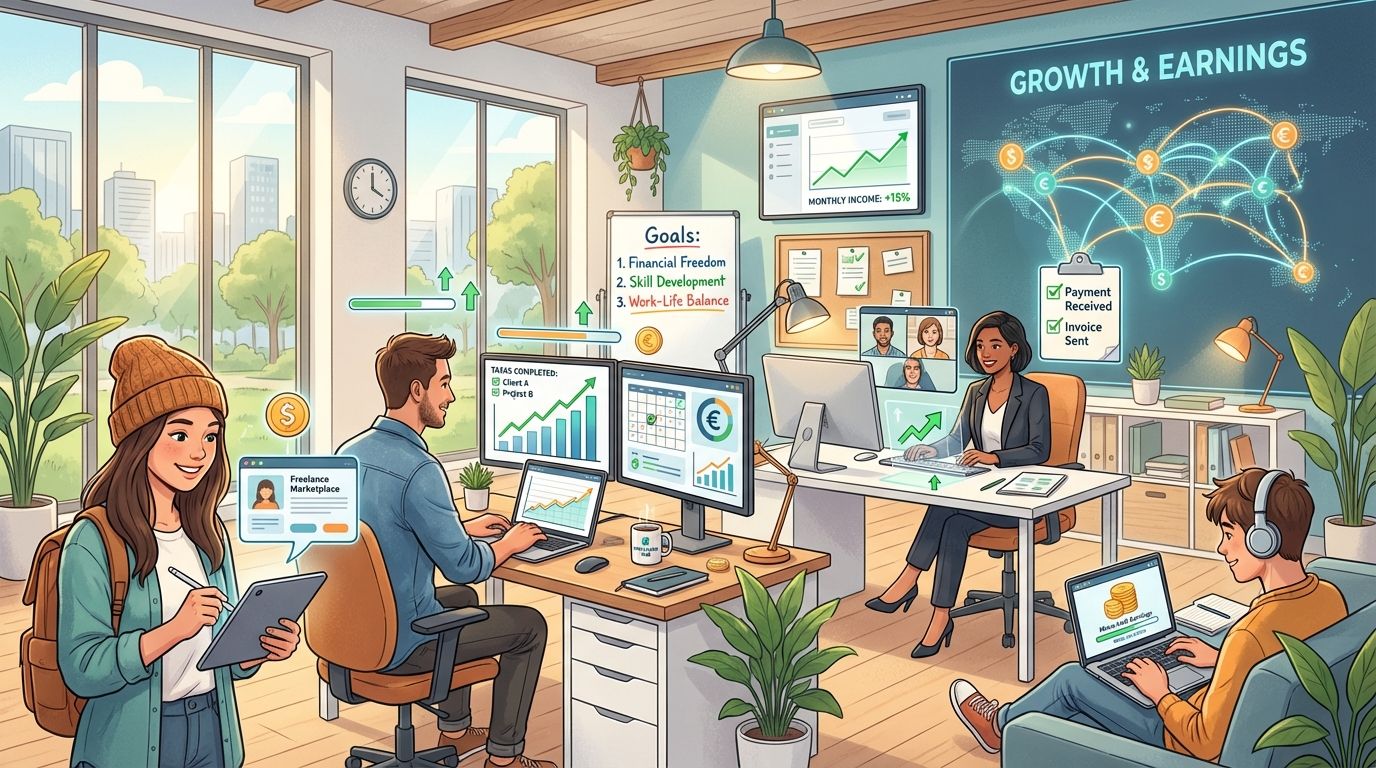
Earn money online is an achievable goal for professionals, students, freelancers and anyone who wants extra income or a full-time remote career. This comprehensive guide walks you through practical, legitimate methods, step-by-step strategies, and safety tips to start earning online efficiently.
Why pursue earning money online?
The internet lowered barriers to entry for income generation. Whether your objective is a side hustle, a part-time income stream, or a fully remote career, learning how to earn money online unlocks flexibility, global clientele, and scalable revenue opportunities.
Principles to follow before you start
- Validate demand: Confirm there is an audience willing to pay for your service or product.
- Focus on value: Prioritize solving real problems over chasing trends.
- Build credibility: Portfolio, testimonials, and consistent content increase conversion.
- Protect yourself: Use contracts, reliable platforms, and basic cybersecurity practices.
Top legitimate methods to earn money online
1. Freelancing and project-based work
Freelancing is one of the fastest ways to start earning online. Services in demand include web development, design, copywriting, virtual assistance, and digital marketing. Platforms like Upwork and Fiverr connect freelancers with clients globally.
- How to get started: Create a clear profile, showcase a portfolio, and bid strategically on projects.
- Advanced tips: Niche down (e.g., Shopify themes, UX writing for SaaS), offer packaged services, and focus on repeat clients.
2. Remote employment and part-time remote roles
Full-time remote jobs are increasingly common. Use job boards like Indeed, LinkedIn, and specialized remote sites such as Remote.co and We Work Remotely to find roles in customer support, engineering, marketing, and more.
- Pro tip: Tailor your CV for remote work by highlighting independent delivery, communication tools used, and timezone flexibility.
3. Selling products online (physical or digital)
You can sell physical goods via marketplaces or direct-to-consumer stores, and digital products such as templates, courses, and ebooks through platforms like Gumroad or Shopify.
- Digital products scale well because they require upfront work but little marginal cost.
- Physical products can be sold via dropshipping, print-on-demand, or inventory-backed stores; each has different operational needs.
4. Affiliate marketing and referral programs
Promote products you trust and earn a commission per sale. Bloggers, YouTubers, and social creators often use affiliate links in content. Use reputable affiliate networks and always disclose partnerships to maintain trust.
5. Content creation: Blogging, YouTube, and podcasting
Creating helpful, niche content can generate income from ads, sponsorships, memberships, and product sales. Content-first strategies take longer to monetize but offer strong, sustainable returns when executed consistently.
6. Online tutoring and coaching
Teach languages, academic subjects, professional skills, or life coaching. Platforms like iTalki (language instruction) or Teachable (course hosting) can accelerate growth. Niche coaching (e.g., interview coaching for engineers) often commands premium rates.
7. Microtasks and gig work
Microtasks—data labeling, simple transcriptions, and usability testing—can produce quick cash using platforms like Amazon Mechanical Turk. This method is best for supplemental income, not prime revenue.
8. Investing, trading, and decentralized finance (careful)
Online investing and peer-to-peer lending can produce returns but carry financial risk. This route requires strong research, diversification, and risk management. Avoid promises of guaranteed returns and consult qualified advisors when needed.
How to pick the best method for you
- Assess skills and interests: Choose paths that match your strengths (writing, coding, teaching, design).
- Estimate time commitment: Some methods (freelancing, tutoring) monetize quickly; others (content creation) require long-term effort.
- Consider scalability: If you want to grow income beyond hourly limits, prioritize products, courses, or affiliate marketing.
- Validate with small tests: Run quick experiments before major investments.
Step-by-step roadmap to start earning in 30–90 days
Weeks 1–2: Foundation
- Create or update your online profiles (LinkedIn, portfolio, freelancing platforms).
- Define 2–3 service or product offerings and set competitive prices.
- Set up basic tools (email, invoicing, project management).
Weeks 3–6: Launch and initial traction
- Apply to jobs/gigs, publish one piece of content, and begin outreach to potential clients.
- Gather first testimonials or small case studies.
Weeks 7–12: Optimize and scale
- Refine your offers based on feedback, increase prices for repeat clients, and automate administrative tasks.
- Introduce a passive element: productized service, mini-course, or affiliate funnel.
Essential tools and platforms
- Freelancing marketplaces: Upwork, Fiverr
- Sell digital products: Gumroad, Teachable
- E-commerce: Shopify, Etsy (for handmade goods)
- Communication and productivity: Slack, Zoom, Trello, Notion
- Payment: PayPal, Wise, Stripe
Safety, legitimacy checks and red flags
Protect yourself by knowing how to identify scams.
- Red flags: Requests for upfront payments from workers, unrealistic earnings claims, lack of verifiable reviews.
- Legitimacy checks: Verify company details, read platform TOS, ask for written contracts, and use escrow where available.
- Security: Enable two-factor authentication, avoid sharing sensitive personal documents unnecessarily.
How to grow income sustainably
- Specialize: Niche specialists often earn more than generalists.
- Diversify: Combine active income (freelancing) with passive channels (courses, affiliate marketing).
- Invest in skills: High-income skills like copywriting, web development, and paid ads management attract higher rates.
- Systematize: Document processes, templates, and hire contractors to scale operations.
External resources and research
For data and broader context, consult reputable sources such as Pew Research Center and the Bureau of Labor Statistics. For platform specifics, visit Upwork and Fiverr.
Frequently Asked Questions (FAQ)
Can anyone earn money online regardless of experience?
Yes. Beginners can start with microtasks, tutoring, or simple freelancing, while experienced professionals can leverage specialized skills for higher rates. The key is consistent learning and credibility building.
How long until I see steady income?
It depends on the method: freelancing and tutoring can produce results in weeks; content-driven approaches may take months to build sustainable revenue.
Is it safe to work with international clients?
Generally yes, if you use reputable platforms, clear contracts, and secure payment methods. Learn local tax obligations and contract law relevant to your jurisdiction.
Conclusion
Learning to earn money online combines practical skill-building, strategic positioning, and consistent execution. Start with one clear path, validate quickly, and reinvest earnings into scalable assets. With the right approach—focus on value, credibility, and safety—you can build reliable online income streams whether you aim for side income or a full-time remote career.
Next steps: Choose one method from this guide, set a 90-day plan using the roadmap above, and track progress weekly.