Exploring Asian Culture: Curiosities, Food, Stories and Traditions Across Asia
Asian culture is a tapestry of centuries-old traditions, mouthwatering cuisines and fascinating local stories that invite travelers to look closer and learn deeper. In this long-form guide we’ll explore surprising curiosities, iconic foods and everyday customs from East, South, Southeast and Central Asia, with practical tips for visitors and recommendations for further reading.
Why Asian Culture Captivates Travelers
The term Asian culture encompasses a vast range of languages, religions, arts and social norms. From the tea houses of Japan to the street markets of India and the ritual festivals of Indonesia, Asia offers layered experiences that appeal to culture lovers and curious travelers. Understanding context—history, religion, and region—helps visitors appreciate the symbolic meaning behind food, dress and ceremony.
Regional Curiosities and Stories
Asia is not monolithic. Below are compelling snapshots and curiosities from different regions:
East Asia (China, Japan, Korea)
- China: Home to the world’s oldest continuous civilization, China offers eccentric local stories like the legend of the Monkey King and regional culinary wonders such as Peking duck and Sichuan peppercorns. Many cultural practices—like the Lunar New Year—blend ritual, family gatherings and symbolic foods.
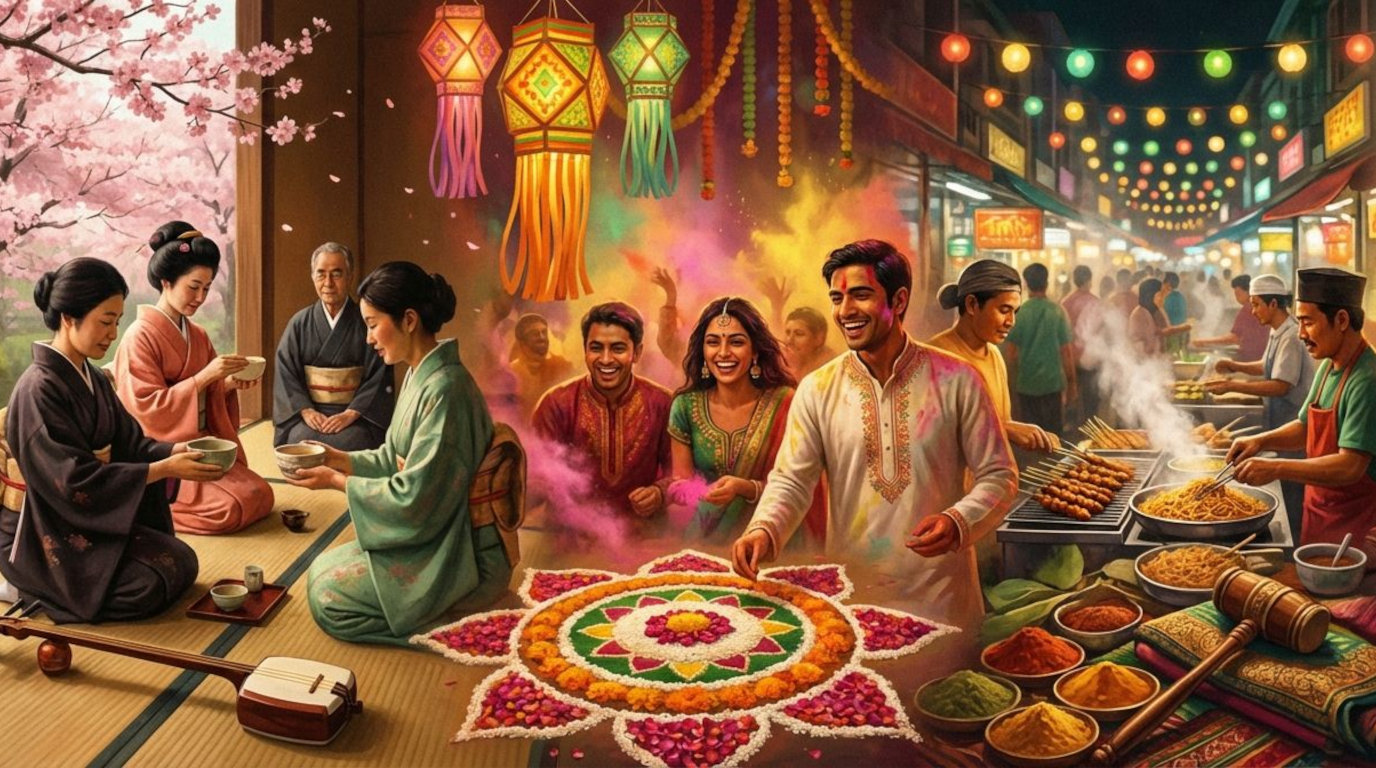
- Japan: Known for meticulous aesthetics and seasonal rituals. From the tea ceremony (chanoyu) to the reverence for cherry blossoms (hanami), Japanese customs emphasize impermanence and harmony. Curiosities include vending machines for nearly everything and centuries-old inns called ryokan.
- Korea: Offers powerful contemporary culture (K-pop, K-drama) alongside ancient traditions such as hanbok dress, communal kimchi-making (kimjang) and Confucian rites still observed in family life.
South Asia (India, Pakistan, Bangladesh, Sri Lanka)
- India: A mosaic of languages and religions, India’s stories include epics like the Mahabharata and rituals tied to life stages. Culinary diversity is staggering: from dosa and biryani to chai culture and street snacks that vary by state.
- Sri Lanka: Offers unique tea culture with Ceylon tea plantations and syncretic religious festivals that combine Buddhist, Hindu and folk traditions.
Southeast Asia (Thailand, Vietnam, Indonesia, Malaysia, Philippines)
- Thailand: Famous for vibrant markets, Buddhist temples and festivals like Songkran (water festival). Street food is central—try pad thai, mango sticky rice and local curries.
- Vietnam: Known for balance in flavors and communal eating; pho and banh mi showcase centuries of culinary exchange.
- Indonesia: An archipelago with diverse ethnic traditions; the island of Bali is renowned for temple ceremonies and dance, while Javanese courts preserve gamelan music and shadow puppetry.
Central and West Asia (Turkey, Iran, Central Asian republics)
- Iran: Persian literature and poetry have shaped cultural expression for centuries; hospitality and ceremonial tea are central to social life.
- Central Asia: Nomadic histories leave a legacy of felt yurts, horse games and hearty cuisines based on lamb and dairy products.
Signature Foods and What They Reveal About Culture
Food is a direct window into society—ingredients, preparation methods and eating rituals reflect history, climate and trade.
Staples and Iconic Dishes
- Rice and Noodles: Staples across much of Asia; rice bowls and noodle soups are often comfort food and social dishes.
- Fermented Foods: Kimchi in Korea, dosa batter in South India, fish sauces in Southeast Asia—fermentation is a culinary technique with preservation and flavor implications.
- Tea Culture: From Japanese tea ceremonies to Indian chai stalls and Chinese gongfu tea, tea rituals embody hospitality and philosophy.
Street Food: Culture on the Move
Street food is often where tradition and innovation meet. Markets and hawker centers are living museums of local taste. Examples include:
- Japan’s takoyaki and ramen stalls
- Malaysia and Singapore hawker dishes like laksa and chicken rice
- India’s chaat, samosas and tandoori breads
Festivals, Rituals and Social Customs
Festivals are times when cultural values are publicly enacted—through color, sound and food. Notable events include:
- Chinese New Year: Family reunions, red envelopes and symbolic foods.
- Diwali (India): Festival of lights celebrating victory of light over darkness.
- Songkran (Thailand): New Year water festival symbolizing cleansing and renewal.
- Nowruz (Persian New Year): Celebrated across parts of Central and West Asia with spring rituals.
Everyday Etiquette and Travel Tips
Respecting local customs makes travel more rewarding. A few universal guidelines:
- Learn basic greetings: A simple “hello” or bow in local languages shows respect.
- Remove shoes: Many Asian homes and temples require shoe removal—observe signs or follow locals.
- Dress modestly: When visiting religious sites, cover shoulders and knees.
- Eating etiquette: Some cultures favor communal dishes and using hands; follow hosts’ cues.
- Tip carefully: Tipping practices vary—research the country’s norms.
Curiosities and Lesser-Known Traditions
Beyond famous rituals, Asia has surprising customs worth discovering:
- Kintsugi (Japan): The art of repairing broken pottery with gold, celebrating flaws and history.
- Tea leaf reading (various regions): A folk practice that blends relaxation with fortune-telling.
- Floating lanterns in parts of Southeast Asia and China: A spectacle linked to wishes and ancestral remembrance.
Responsible Cultural Travel
Engage ethically: support local businesses, learn a few phrases, and prioritize experiences that benefit communities. Consult resources like UNESCO World Heritage for cultural sites and National Geographic Travel for destination insights.
Suggested Itineraries and Experiences
Ideas for travelers who want immersive cultural exposure:
- 7–10 days in Japan: Tokyo museums, Kyoto temples, tea ceremonies and a stay in a ryokan.
- 10–14 days in India: Delhi’s markets, Varanasi’s river rituals, Kerala’s food and backwaters.
- Southeast Asia food crawl: Bangkok, Penang, Hanoi and Singapore to taste regional street food diversity.
Recommended Reading and Resources
- UNESCO World Heritage Centre — for cultural and historical site information.
- BBC Travel — storytelling and context on cultural phenomena.
- National Geographic — deep dives into cultural landscapes and foodways.
Final Thoughts
The richness of Asian culture lies in its diversity—every country, region and community contributes unique flavors, rituals and stories that reward curiosity. Whether you’re a foodie chasing street flavors or a traveler seeking sacred festivals, approaching each experience with respect and openness transforms a visit into meaningful cultural exchange.
Ready to explore? Pack an open mind, learn a few key phrases, and let the tastes, sounds and stories of Asia reshape what you thought you knew about culture and travel.
Continue your journey by visiting our other blog for more engaging content and valuable insights.