Understanding the Bowing: Cultural Meaning Across Asian Countries
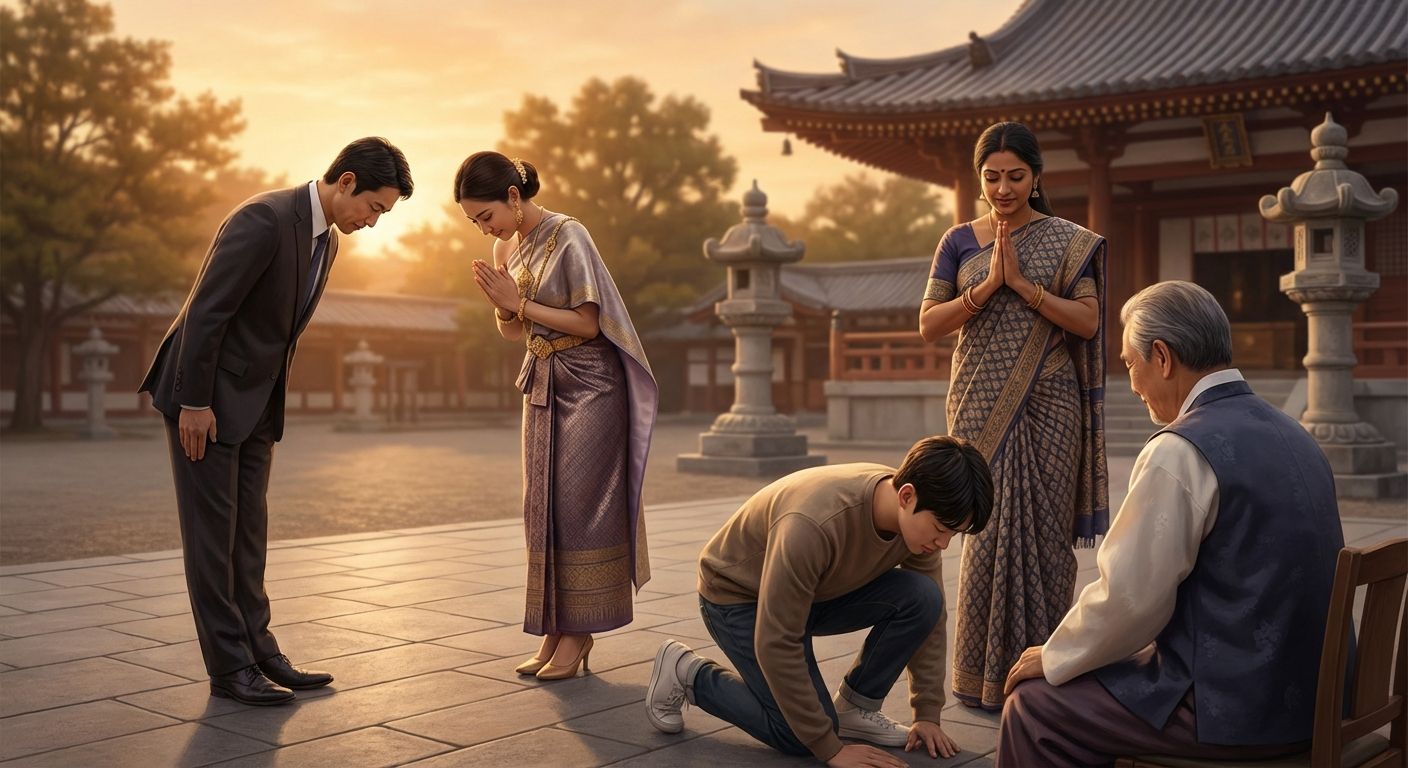
People from different Asian countries demonstrating various forms of bowing — Japanese ojigi, Thai wai, Indian namaste and Korean jeol — in a respectful temple or courtyard setting.

This article explores the cultural significance of the bowing across multiple Asian countries, explaining how variations in depth, duration and hand posture communicate respect, apology, or devotion. It highlights social contexts — from business to religion — and gives practical tips for travelers to navigate local etiquette.


Tetraphobia in Asia: Origins, Cultural Meanings, Practical Tips and Curious Facts

Elevator panel and urban skyline illustrating tetraphobia in Asia; fourth floor omitted or labeled differently, with cultural motifs representing China, Japan, South Korea and Taiwan.

Tetraphobia in Asia—the avoidance of the number four—shapes buildings, businesses and everyday life across East Asia. This article explains the linguistic roots, cultural significance and visible manifestations in architecture, hospitals, elevators and commerce, and offers practical tips for travelers and professionals.

Discover how China, Japan, South Korea and Taiwan deal with this superstition and the best ways to handle it respectfully during visits or business dealings.