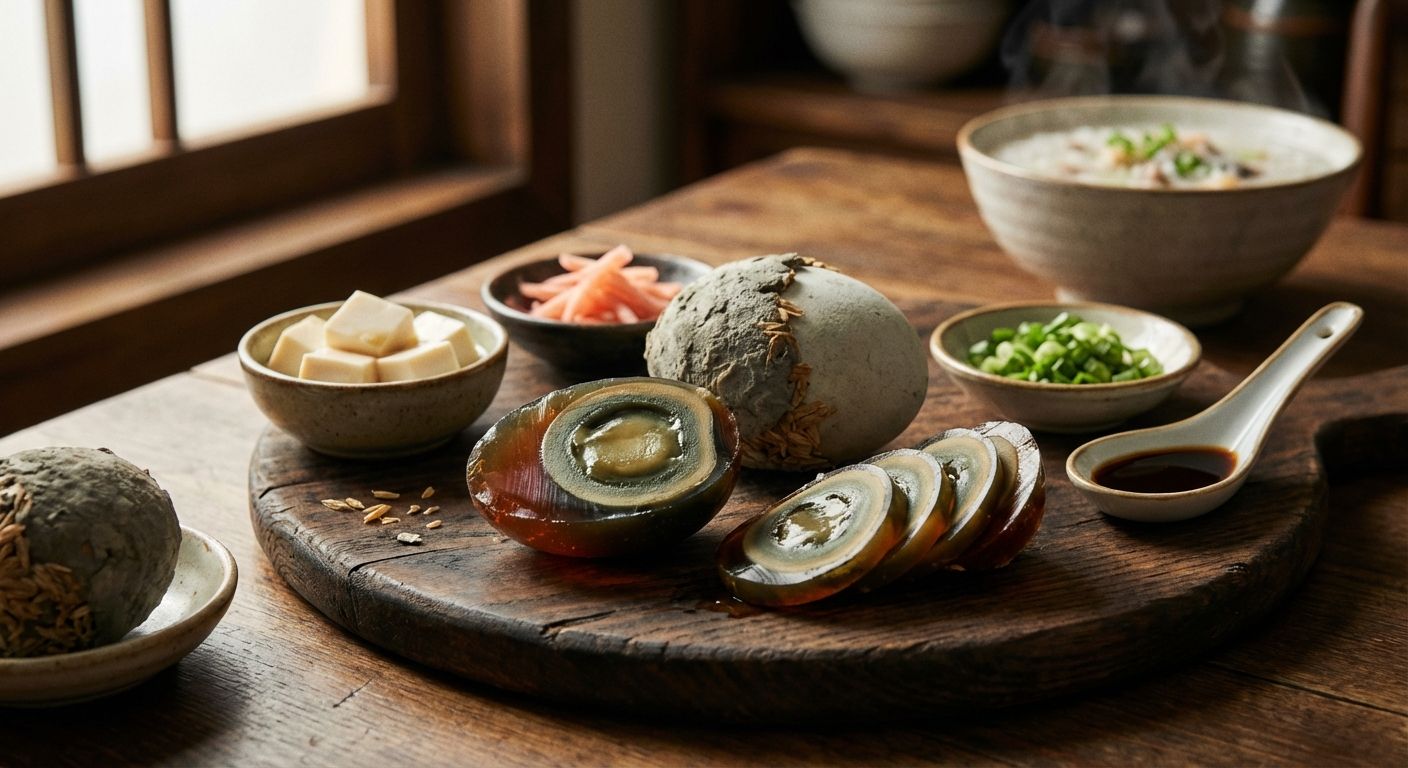
The thousand-year egg (pidan), often called the century egg or preserved egg, is a celebrated and sometimes controversial ingredient in Chinese and wider East Asian cuisine. In this comprehensive guide you will learn what a thousand-year egg is, where it comes from, how it is made (traditionally and commercially), how it tastes and smells, and how to prepare classic dishes that showcase its deep, savory character.
What is a thousand-year egg?
The thousand-year egg is a preserved egg—commonly made from duck, chicken or quail eggs—transformed through an alkaline curing process that changes both texture and flavor. The white turns into a dark, translucent jelly and the yolk becomes creamy, sometimes with a greenish or gray hue. Known in Chinese as 皮蛋 (pidan), the egg is not actually centuries old; the name evokes longevity and tradition.
Historical origins and cultural context
Ancient beginnings
Historical records suggest that some form of preserved eggs existed in southern China for centuries. References date back to Ming and Qing dynasty cookbooks and folklore. While exact origins are debated, the technique likely developed as a way to extend shelf life and add flavor to eggs before refrigeration.
Etymology and names
Common English names include thousand-year egg, century egg and preserved egg. In Mandarin it’s pidan or sometimes century egg in colloquial contexts. Other variations used by English speakers include hundred-year egg and simply century egg (pidan).
How the thousand-year egg is prepared
There are traditional household methods and modern commercial processes. The basic principle is curing eggs in an alkaline environment that chemically transforms proteins, fats and pigments.
Traditional method
Traditional recipes vary by region but often use a paste or mixture containing:
- Wood ash (alkaline)
- Quicklime (calcium oxide)
- Salt
- Clay or mud to encase the egg
- Tea, rice hulls or straw for aroma and insulation
Eggs are coated in the paste or buried in the mixture and left to cure for several weeks to months. The alkaline environment raises pH and induces Maillard-like reactions, protein denaturation and fat interactions that darken and transform the egg.
Modern and commercial production
Today many producers use controlled alkaline solutions (often sodium hydroxide or potassium carbonate) and standardized curing times to ensure consistent results and safety. Commercial products may have exterior coatings removed and be packaged for retail. Always buy from reputable sources if you are concerned about food safety.
Sensory characteristics: what to expect when tasting
The thousand-year egg offers a complex profile that can surprise first-time tasters:
- Appearance: Translucent, amber-to-brown gel-like egg white; yolk ranges from creamy orange to dark green or gray, often with a slightly oily sheen.
- Aroma: Earthy, sulfuric notes balanced by a fermented, mineral undertone. The smell is potent but not spoiled.
- Texture: A contrast between the firm, jelly-like white and the creamy, sometimes pasty yolk.
- Flavor: Rich, savory, umami-forward with subtle ammonia or sulfide notes; often described as smoky, savory, and complex.
For chefs and culinary students, the thousand-year egg is prized for its intense umami and its ability to add depth to simple dishes.
Food safety and myths
Several myths surround the thousand-year egg. Historically concerns included heavy metal contamination (lead) when improper materials were used. Modern regulations and improved methods have largely eliminated those risks in commercial products.
Key safety points:
- Buy eggs from reputable vendors and brands that adhere to food safety standards.
- If making at home, follow tested recipes and avoid unsafe additives; industrial chemicals should be handled with care.
- Visually inspect eggs: an off smell (putrid rather than pungent), slimy mold or cracks can indicate spoilage.
For further reading on safety and chemistry, see the Wikipedia overview and a food chemistry review: Century egg — Wikipedia.
Regional variations and cultural curiosities
Regional practices influence flavor and presentation. Some curiosities and cultural notes:
- In Cantonese cuisine, pidan is commonly paired with congee (rice porridge) and pickled ginger.
- In Sichuan dishes, century egg is sometimes diced and mixed with chili oil, sesame and vinegar for sharp contrasts.
- Young children in areas where the egg is common are often introduced to it via simple preparations like sliced pidan with tofu.
- The name thousand-year egg is partly poetic—an attraction to tradition rather than literal age.
Classic recipes using thousand-year egg
Below are detailed traditional dishes and a few modern suggestions that highlight the ingredient.
1. Century Egg and Pork Congee (蛋粥)
One of the most iconic pairings. The rich, savory yolk and the mild, warming rice porridge make a comforting and balanced dish.
- Ingredients: rice, water or stock, minced pork (or shredded chicken), diced thousand-year egg, ginger, scallions, soy sauce, white pepper, sesame oil.
- Method (brief): Simmer rice until it breaks down into porridge. Stir in minced pork and cook through. Add diced thousand-year egg near the end to warm without overcooking. Finish with scallions and sesame oil.
2. Century Egg with Silken Tofu (皮蛋豆腐)
A cold, refreshing starter that contrasts silky tofu and savory preserved egg.
- Ingredients: silken tofu, diced thousand-year egg, light soy, rice vinegar, toasted sesame oil, sliced scallions, bonito flakes (optional).
- Method: Plate chilled silken tofu, top with diced pidan, drizzle sauce (soy + vinegar + sesame oil) and garnish.
3. Sliced Thousand-year Egg with Pickled Ginger
A minimalist way to enjoy the flavor: slice the egg and serve with thin strips of pickled ginger to cleanse the palate between bites.
4. Modern: Century Egg Salad with Avocado and Sesame
A contemporary twist—combine diced pidan with ripe avocado, cucumber, toasted sesame, light soy, lime and chili for a fusion starter that balances richness and acidity.
Buying, storing and using thousand-year eggs
Tips for consumers and chefs:
- Buying: Choose well-packaged eggs with clear labeling. Commercially produced or refrigerated products from trusted markets are safest.
- Storing: Keep refrigerated after purchase; unopened preserved eggs can last for months but follow label guidance.
- Preparation: Rinse gently if necessary, then crack into water and peel—the alkaline coating can make peeling easier but messy. Slice with a sharp knife for clean presentation.
Pairings and culinary uses
The thousand-year egg pairs well with mild, neutral elements that let its umami shine:
- Soft rice and porridge
- Silken tofu and chilled starters
- Pickled vegetables and bright acidic condiments (to cut richness)
- Light beers, dry sherry or aromatic whites for beverage pairings
Common questions (FAQ)
Is the thousand-year egg safe to eat?
Yes—when produced by reputable methods. Modern commercial production follows food safety standards. Avoid eggs with signs of spoilage or from dubious sources.
Why does it smell like ammonia?
Pungent sulfurous and ammonia-like notes are normal due to protein breakdown in an alkaline environment; they should be sharp but not offensive. Proper pairing (rice, ginger, vinegar) reduces perceived intensity.
Can I make them at home?
Traditional home methods exist, but handling strong alkalis and ensuring safe, non-toxic materials requires experience. Beginners should try cooking with store-bought preserved eggs first.
Further reading and references
For more technical background on the chemistry and history, consult:
- Century egg — Wikipedia
- Scholarly articles on food chemistry and preservation (search PubMed/NCBI for studies on preserved eggs)
Conclusion
The thousand-year egg (pidan) occupies a special place in Asian culinary traditions: a humble ingredient turned into a complex, umami-rich flavor enhancer through preservation. Whether enjoyed in classic congee, paired with silken tofu, or incorporated into modern fusion dishes, it rewards curiosity and thoughtful preparation. Try it with an open mind—its texture and depth make it a unique ingredient for chefs and food lovers eager to expand their palate.
Keywords and variations used: thousand-year egg, pidan, century egg, preserved egg, century egg recipes, Chinese preserved egg.