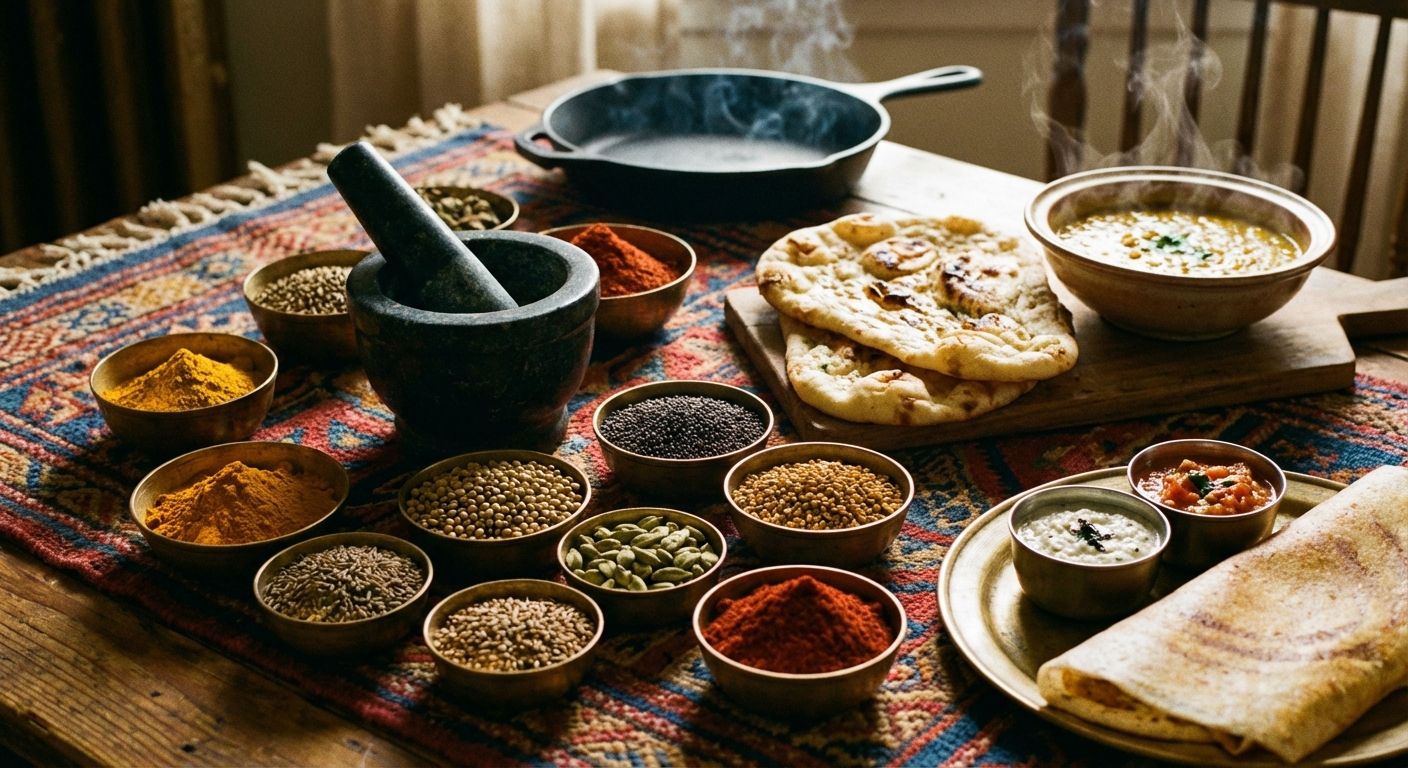
Indian cuisine opens a world of bold aromas, layered flavors and living traditions — a culinary map shaped by trade, empires, faith and home kitchens. In this guide you’ll learn the essential spices that define regional palettes, the food customs that structure daily life and festivals, and the historical stories behind signature dishes like biryani, dosa and butter chicken. Whether you’re a curious food lover or an aspiring cook, this article will help you appreciate and experiment with the rich heritage of Indian food.
Why spices matter: the backbone of Indian cuisine
Spices are not mere seasonings in Indian cooking — they are the grammar of flavor. Understanding a handful of core spices lets you reconstruct many classics and invent new combinations. Here are the essential ones every pantry should hold:
1. Turmeric (Haldi)
- Flavor & use: Earthy, slightly bitter, vibrant yellow. Used in curries, rice, marinades and as a health tonic.
- Benefits: Anti-inflammatory properties; central to Ayurvedic cooking.
2. Cumin (Jeera)
- Flavor & use: Warm, nutty. Used whole for tempering and ground in spice blends and masalas.
- Regional note: Key in North Indian dals and Western Indian snacks.
3. Coriander (Dhania)
- Flavor & use: Citrusy, floral. Seeds are used whole or ground; fresh coriander leaves are ubiquitous as garnish.
4. Mustard seeds and mustard oil
- Flavor & use: Pungent when tempered. Mustard oil is dominant in Bengal, parts of Punjab and Eastern India.
5. Cardamom, cloves and cinnamon (the warm trio)
- Flavor & use: Aromatic spices used in biryanis, desserts and chai. Green cardamom gives floral notes; black cardamom lends a smoky depth.
6. Fenugreek (Methi)
- Flavor & use: Bitter-sweet; seeds and leaves (fresh or dried) are used in curries, pickles and flatbreads.
7. Asafoetida (Hing)
- Flavor & use: Pungent when raw, turns onion/garlic-like when fried in oil. Key in lentil stews (dals) and vegetarian cooking.
8. Red chilies and Kashmiri chili
- Flavor & use: Heat and color. Kashmiri chili provides color and mild fruitiness without excessive heat; bird’s eye chilies add intense fire.
9. Garam masala
- Flavor & use: A finishing spice blend (commonly includes cinnamon, cloves, cardamom, peppercorns). It adds warmth and rounded aroma when sprinkled at the end of cooking.
LSI keywords: masala, curry spice blends, tandoori masala, whole spices, tempering (tadka), chutney, pickles.
How to build a basic Indian spice pantry
Start with whole spices when possible; they keep longer and release fresher aromas when toasted and ground. A starter list:
- Whole cumin and coriander seeds
- Mustard seeds (black and yellow)
- Cinnamon sticks, cloves, green and black cardamom
- Turmeric powder, red chili powder (or Kashmiri chili)
- Fenugreek seeds and dried fenugreek leaves (kasuri methi)
- Asafoetida (hing) and curry leaves (fresh or frozen)
- Garam masala (ready-made or homemade blend)
Practical tip: Toast whole spices on a dry pan for 20–60 seconds and grind them immediately for the most aromatic results.
Customs and food traditions
Food in India is entwined with religion, social rituals and seasonal cycles. Understanding customs gives deeper appreciation for why dishes are prepared a certain way.
Daily habits and dining etiquette
- Meals: Most households eat two to three main meals: breakfast, lunch and dinner. In many regions, the largest meal is lunch.
- Eating with hands: Using the right hand to eat is common and considered an intimate way to connect with food. Finger foods and breads (rotis, dosas) facilitate this practice.
- Sharing: Meals are often communal — dishes are shared family-style from central plates.
Religious and regional dietary patterns
Religions influence what is eaten and when:
- Hinduism: Many Hindus follow vegetarian diets or abstain from beef. Festivals such as Navratri come with fasting rules and special sattvic foods.
- Islam: Muslim communities contribute iconic dishes like biryani and kebabs; halal meat and celebratory feasts mark Eid.
- Sikhism: Langar (community kitchen) at gurdwaras demonstrates the value of free, communal vegetarian meals.
Festival foods and seasonal specialties
From modak (a sweet dumpling offered to Ganesha) to phirni (rice pudding) and savory fried snacks at Diwali, festivals shape menus. Seasonal produce also drives cuisine — mangoes in summer (mango chutney, aamras), mustard greens in winter (sarson ka saag).
The history behind iconic dishes
The variety within Indian cuisine is largely the outcome of centuries of cultural exchange, migration and empire. Here are key historical threads:
Mughal influence and the rise of rich, aromatic dishes
The Mughal Empire (16th–19th century) introduced richness: layered rice preparations, dairy-enriched gravies and the use of saffron and nuts. Biryani (a fragrant layered rice with meat or vegetables) and korma (a cream-based curry) display Persian and Central Asian techniques fused with Indian spices. For background, see Britannica on biryani.
Coastal trade and global ingredients
India’s long coastline made it a hub for trade. Portuguese sailors brought chili peppers and tomatoes in the 16th century; those ingredients transformed countless dishes, enabling the creation of what we now recognize as many modern Indian staples. Read more at BBC Food: What made Indian food.
Regional kingdoms and local adaptations
Regionality is crucial: South India emphasizes rice, coconut and tamarind (e.g., dosa, sambar), while North India highlights wheat-based breads (naan, roti), dairy (paneer, ghee) and tandoor cooking. Eastern India has sweets built from chhena (fresh cheese), while Western India shows Gujarati sweet-savory balances.
Representative dishes and their stories
Biryani
Origin: A marriage of Persian pilaf techniques and Indian spice palettes. Variants include Hyderabadi, Lucknowi (Awadhi) and Kolkata biryani.
Masala Dosa
Origin: A South Indian staple — a fermented rice and lentil crepe filled with spiced potato. It reflects the genius of fermentation for flavor and nutrition.
Butter chicken
Origin: A modern classic from Delhi, born in Punjabi restaurants that developed creamy tomato-based gravies to appeal to diverse diners.
Techniques that define the cuisine
- Tadka (tempering): Frying whole spices in hot oil or ghee to bloom their flavors — foundational to dals and many curries.
- Bhuna: Slow frying onions, tomatoes and spices to concentrate flavors before simmering with meat or vegetables.
- Fermentation: Used for idli, dosa and dosa batter — it adds tang, texture and nutritional benefits.
- Steaming & layering: Techniques used in dishes like idli and certain sweets; biryani layering creates aromatic depth.
How to experiment at home: pantry recipes and pairing ideas
Try these approachable experiments to bring Indian cuisine into your kitchen:
- Basic tadka dal: Cook lentils, finish with a hot oil tempering of cumin, mustard seeds, garlic and a pinch of asafoetida. Serve with rice or rotis.
- Simple garam masala chicken: Marinate chicken in yogurt, turmeric, chili powder and garam masala; roast or pan-sear for a quick curry base.
- Vegetarian thali at home: Assemble a plate with a dal, a dry vegetable, a leafy stir-fry, rice, pickles and yogurt for balance.
Pairings: Cooling raita (yogurt with cucumber and spices) tames heat; mango chutney or lime pickle add sweet-tart contrast. For breads, freshly cooked rotis or naan are ideal; for rice dishes, long-grain basmati enhances aroma.
Shopping and sustainability tips
- Buy whole spices in small quantities and store them airtight in a cool, dark place.
- Support local South Asian grocers for authentic ingredients like curry leaves, tamarind and regional dals.
- Use seasonal produce — Indian cooking adapts beautifully to what’s fresh.
Further reading and resources
To deepen your knowledge explore:
- Britannica — Indian food for historical context
- BBC Food — Indian recipes and guides for practical recipes and techniques
- Smithsonian Magazine for cultural stories and features
Final thoughts: approach Indian cuisine with curiosity and respect
Indian cuisine is not a single monolith but a mosaic of regional traditions, religious customs and adaptive innovations. By learning the core spices, honoring the cultural contexts and practicing foundational techniques like tempering and fermentation, you can both respect tradition and creatively explore flavors. Start with a small spice kit, try a simple dal or dosa, and let the stories behind each dish guide your palate.
Call to action: Try one new spice this week — perhaps fenugreek or hing — and cook a simple dish that highlights it. Share your experience with fellow food lovers and expand your culinary journey into the vibrant world of Indian cuisine.