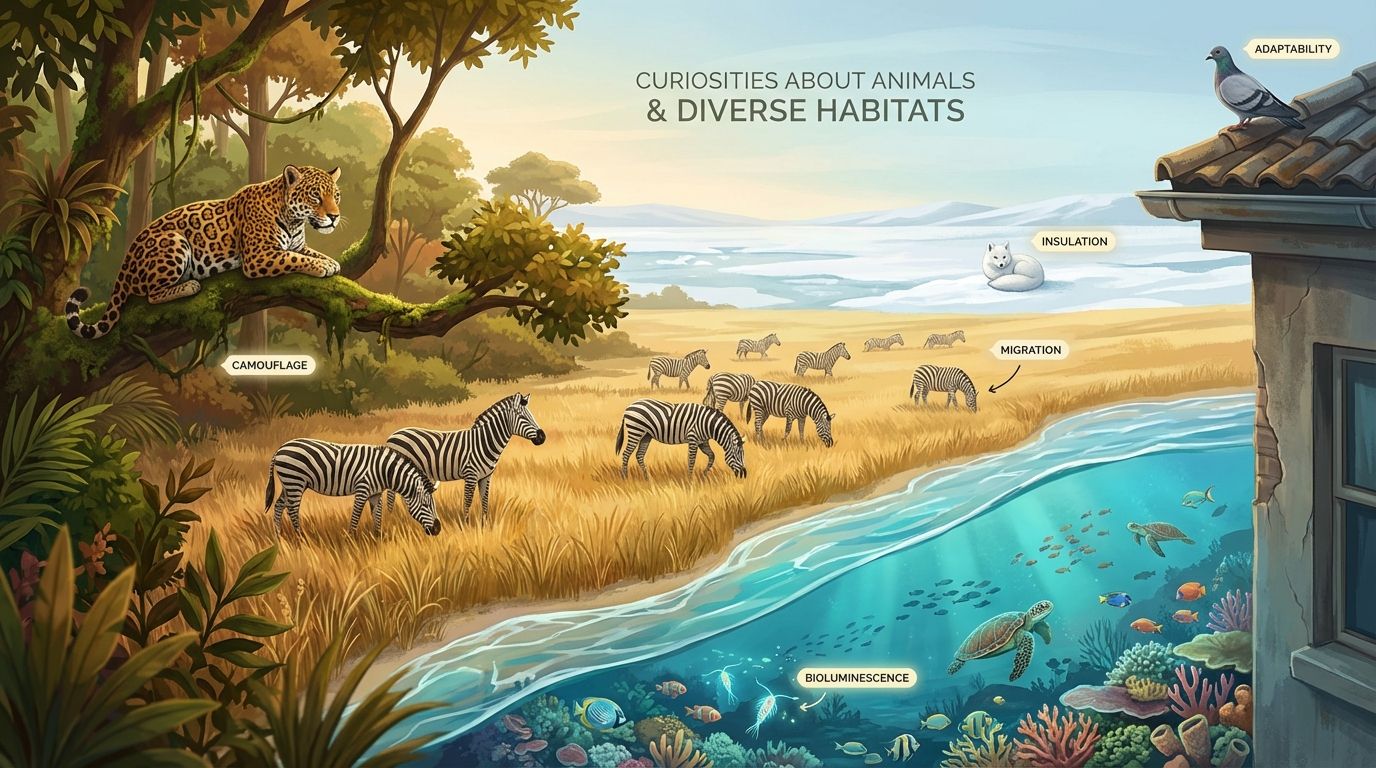
Fascinating aspects of animals begin with understanding where they live—habitats shape behavior, adaptations and survival strategies. In this comprehensive guide you’ll find clear explanations of major habitat types, remarkable animal adaptations, intriguing trivia, conservation context, and practical pet care tips tailored for animal lovers, biologists, students and wildlife enthusiasts.
Introduction: Why study animal and habitats?
Animals are not just subjects of fascination; they are key players in ecosystems. Studying animal reveals how species evolve, interact and adapt to environments from deep oceans to city streets. For students and researchers, these insights inform conservation strategies. For pet owners, understanding natural behaviors improves care and welfare.
Major habitats and what makes each unique
Habitat is the physical environment where a species lives. Each habitat offers distinct resources, challenges and niches. Below we break down the main habitat types and notable species and adaptations found in each.
Forests and woodlands
Forests—tropical, temperate and boreal—are biodiversity hotspots. They provide layered structures (canopy, understory, forest floor) that create microhabitats supporting diverse life.
- Tropical rainforests: High rainfall and stable temperatures support dense, vertically stratified communities. Iconic residents include jaguars, toucans and dozens of amphibian species.
- Temperate forests: Seasonality shapes life cycles—many mammals hibernate or migrate. Oak, maple and beech-dominated forests host deer, foxes and myriad bird species.
- Boreal forests (taiga): Cold-adapted conifers dominate; species like moose, lynx and boreal owls thrive here.
Adaptations common in forests include camouflage, climbing ability and acoustic communication suited to dense vegetation.
Grasslands and savannas
Open areas dominated by grasses, grasslands and savannas support large herbivores and their predators. Migration, grazing dynamics and fire regimes are central ecological processes.
- Temperate prairies: Bison, prairie dogs and ground-nesting birds shape the landscape.
- African savannas: Iconic megafauna—elephants, lions, zebras—use extensive ranges and seasonal water sources.
Deserts
Deserts challenge life with extreme temperatures and scarce water. Yet, many species possess extraordinary adaptations.
- Nocturnality: Many desert animals (fennec foxes, kangaroo rats) are nocturnal to avoid daytime heat.
- Water conservation: Specialized kidneys, burrowing behavior and metabolic water production are key strategies.
Freshwater habitats
Lakes, rivers, wetlands and streams are biodiversity-rich and essential for humans. Freshwater ecosystems host fish, amphibians, aquatic plants and countless invertebrates.
- Rivers and streams: Species adapt to currents—streamlined bodies, suction feeders and anchoring behaviors.
- Wetlands: Provide breeding grounds for birds, amphibians and act as natural filters for water quality.
Marine environments
The ocean is the planet’s largest habitat, ranging from coastal mangroves to the deep sea. Marine species exhibit adaptations to pressure, salinity and light availability.
- Coral reefs: High productivity and species richness—home to colorful fishes, corals and crustaceans.
- Open ocean and pelagic zones: Migratory giants like whales and schooling fish dominate these vast waters.
- Deep sea: Bioluminescence, slow metabolism and specialized feeding strategies are common in deep-sea fauna.
Tundra and polar regions
Cold climates demand thermal insulation and seasonal strategies. Polar bears, Arctic foxes and penguins illustrate different solutions to cold living.
Key adaptations: thick fur or blubber, seasonal coloration changes, and specialized hunting techniques (e.g., ice-edge foraging).
Urban habitats
Cities create novel ecosystems where certain species thrive—pigeons, rats, raccoons and some raptors. Urban ecology studies how wildlife adapts to human-dominated landscapes.
- Behavioral flexibility: Urban animals exploit anthropogenic resources, alter activity patterns, and sometimes evolve distinct traits.
- Corridors and green spaces: Parks and river corridors serve as crucial refuges and movement routes.
Remarkable adaptations and curious traits
Understanding adaptations is key to appreciating the unique traits of animals. Here are fascinating examples across different taxa:
Sensory superpowers
- Electroreception: Sharks and some fish detect electric fields produced by prey.
- Magnetoreception: Migratory birds and sea turtles sense Earth’s magnetic field for navigation.
- Extreme olfaction: Bloodhounds and sharks can detect scents at incredibly low concentrations.
Locomotion and physical feats
- Flight extremes: Hummingbirds hover with rapid wingbeats; albatrosses glide across ocean gyres for thousands of kilometers.
- Speed and strength: Cheetahs accelerate rapidly for short sprints; leafcutter ants lift weights many times their body mass.
Camouflage and mimicry
Camouflage ranges from static patterns to dynamic color change (e.g., cephalopods). Mimicry can be defensive (harmless species resembling harmful ones) or aggressive (predators resembling harmless objects).
Top curiosities and surprising facts
Below are bite-sized, memorable facts suited for teaching, presentations or simply satisfying curiosity:
- Octopus intelligence: Octopuses use tools, solve puzzles and show individual personalities.
- Longest migrations: Some birds (like the Arctic tern) travel over 70,000 km annually between breeding and wintering grounds.
- Regeneration: Starfish and some amphibians can regrow limbs or tails; research into regeneration has biomedical implications.
- Communication: Elephants communicate using infrasound below human hearing, enabling long-distance signaling.
- Bioluminescence: Fireflies, some jellyfish and deep-sea fish produce light for attraction, camouflage or defense.
Conservation: threats and what we can do
Many of the animals that spark our curiosity face severe threats: habitat loss, climate change, pollution, invasive species and overexploitation. Understanding habitats helps target conservation actions.
Practical steps:
- Support habitat protection and restoration (e.g., protected areas, rewilding).
- Reduce single-use plastics and chemical runoff that harm aquatic life.
- Support reputable conservation organizations (e.g., WWF, National Geographic, IUCN Red List) to back science-driven efforts.
For students and researchers, primary literature and reputable databases (e.g., IUCN, GBIF) are essential. Cite and engage with peer-reviewed studies when investigating species-specific questions.
Practical pet care tips grounded in natural history
Pet care benefits when informed by an animal’s evolutionary background and natural behavior. Below are evidence-based tips for common pets.
Dogs
- Social needs: Dogs are social and thrive with regular interaction, training and enrichment that mimic pack activities.
- Exercise: Breed-specific exercise requirements matter—herding breeds typically need sustained activity; brachycephalic breeds require careful heat management.
- Health: Regular veterinary check-ups, vaccination, dental care and parasite prevention are essential.
Cats
- Territorial and predatory instincts: Provide vertical space, scratching posts and interactive toys to satisfy natural behaviors.
- Diet: Obligate carnivores need high-quality protein and certain nutrients.
Small mammals, reptiles and birds
- Research species-specific environmental needs (temperature gradients, humidity, social housing).
- Provide enrichment that stimulates natural foraging and problem-solving.
- Consult specialist veterinarians for husbandry and health advice.
Tip: Always adopt from reputable shelters or breeders, and consider the long-term commitment before acquiring an exotic pet. Illegal wildlife trade devastates populations and ecosystems—never support it.
How to learn more and engage
If you’re a student, biologist or curious reader, practical ways to deepen your knowledge include:
- Enroll in online courses (e.g., Coursera, edX) on ecology, animal behavior and conservation biology.
- Volunteer with local conservation groups, wildlife rehabilitators or citizen science projects (e.g., eBird, iNaturalist).
- Visit natural history museums, aquariums and national parks to observe species and habitats first-hand.
Quick reference and further reading
Reliable external resources for deeper exploration:
- World Wildlife Fund (WWF) — conservation initiatives and species profiles.
- National Geographic — accessible articles and multimedia on wildlife.
- IUCN Red List — species conservation status and distribution data.
- Global Biodiversity Information Facility (GBIF) — biodiversity occurrence data for research.
Final thoughts
Curiosities about animals are gateways to deeper appreciation and responsibility. Whether you study ecosystems professionally or enjoy wildlife from your backyard, learning the stories of species and their habitats builds empathy and informs conservation. Use fascination as motivation: observe, learn, and act to protect the remarkable diversity of life on Earth.
Author’s note: For species-specific care or conservation queries, consult peer-reviewed literature or certified professionals. If you enjoyed this guide, explore our related posts on habitat conservations and species profiles.
Continue your journey by visiting our other blog for more engaging content and valuable insights.